
✉ Join the Dispatch — a calm weekly note, every Thursday. Free.
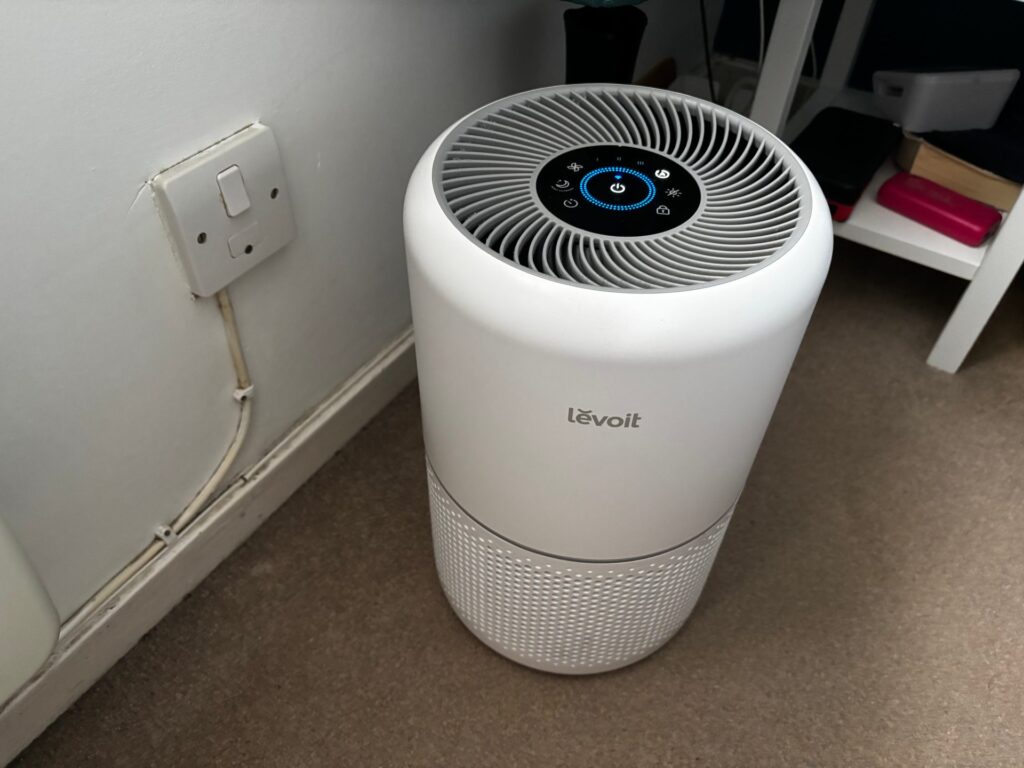
Most of what we publish is researched rather than lived with. This one is different. My wife has allergies, so the Core 300S went into our bedroom six weeks ago and has run there ever since. Everything below (the noise, what sets it off, the dirty filter and the electricity) comes from our own unit, plugged into our own energy monitor.
The verdict
★★★★★: we’d buy it again. It’s quiet, it’s cheap to run, and its sensor reacts to real things in a real home. The catch is the filters: at our usage, they cost several times what the electricity does.
- Best for: a bedroom or small room up to about 21–27 m²
- Electricity: 3 W measured at idle, roughly £7–£21 a year running round the clock
- Filters: about £66 a year on our usage
- Watch out for: the 108 m² coverage claim on the listing (more on that below)
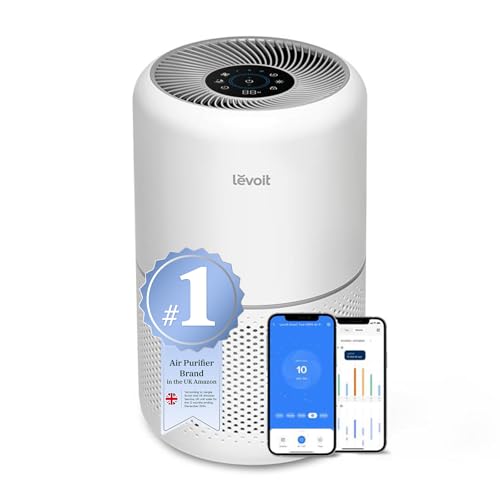
Levoit Smart HEPA Air Purifier for Bedroom Home, 258m³/h, 108m², Core 300S | Laser sensor with Auto Mode, App control, For allergy & pet homes, remove 99.97% Pollen/Dust/Odour
What it is
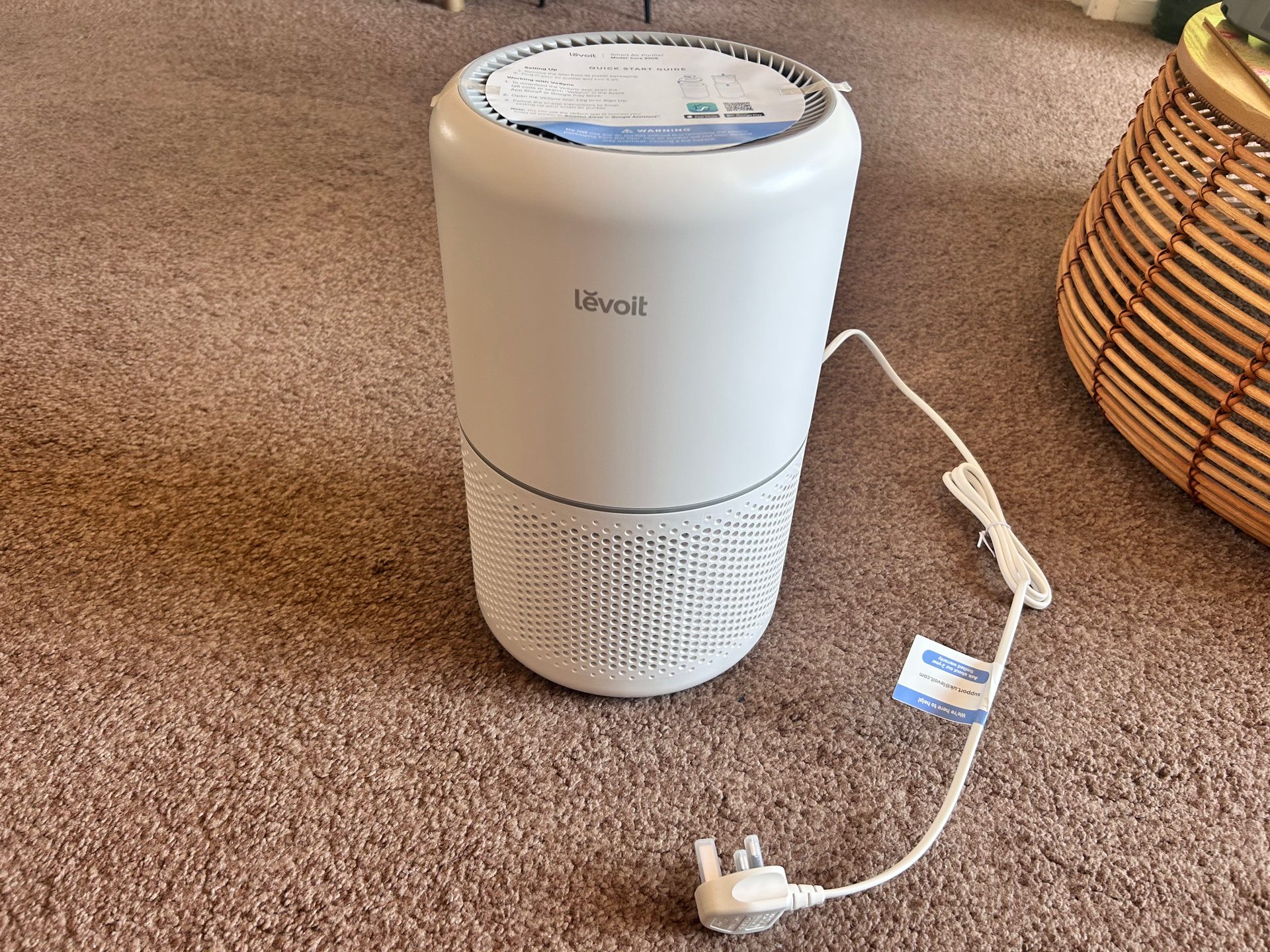
The Core 300S is Levoit’s small smart purifier: a white cylinder 36 cm tall, with a three-stage filter (a pre-filter, a HEPA layer and activated carbon) and a particle sensor Levoit calls AirSight Plus. It connects to the VeSync app, though after setup we’ve barely needed it.
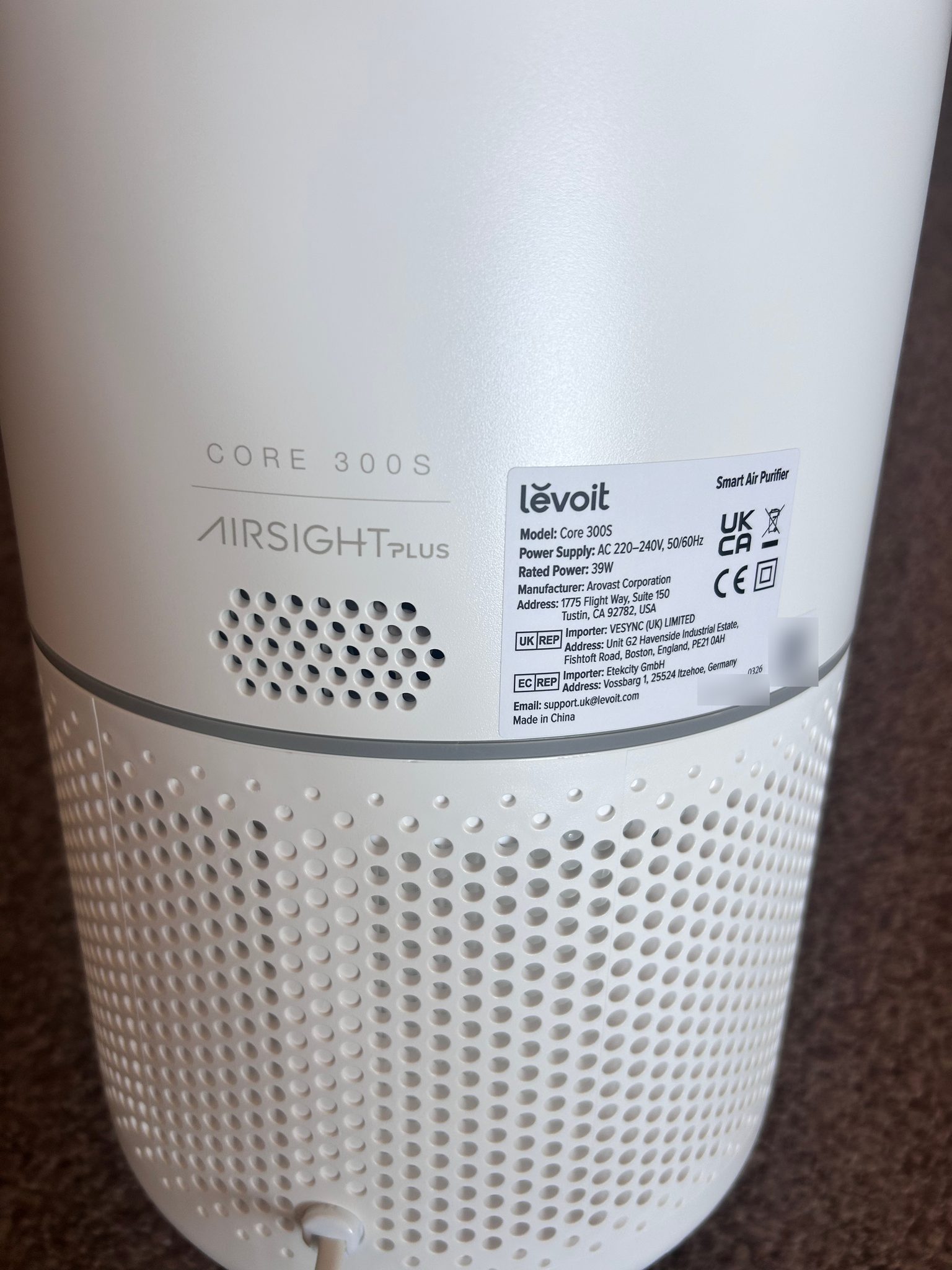
Ours is the UK-spec model. The rating plate on the back reads 220–240 V, UKCA marked, 39 W rated power, with VeSync (UK) Limited as the importer. That’s worth checking if you buy one from a marketplace seller, because imported versions turn up.
| Levoit Core 300S | |
|---|---|
| Rated power (from our unit’s plate) | 39 W |
| Measured: idle on auto | 3 W |
| Measured: working on auto | 9 W |
| Clean air delivery rate (UK listing) | 258 m³/h |
| Size and weight | 22 × 22 × 36 cm · 3 kg |
| Replacement filter | Core 300-RF |
The room, and the 108 m² problem
Our bedroom is 3.75 × 3.15 m with a standard 2.4 m ceiling: about 28 m³ of air. At its rated airflow, on its top speed, the Core 300S turns that over about nine times an hour, which is plenty. On its lower settings it moves less, and Levoit doesn’t publish a figure for those.
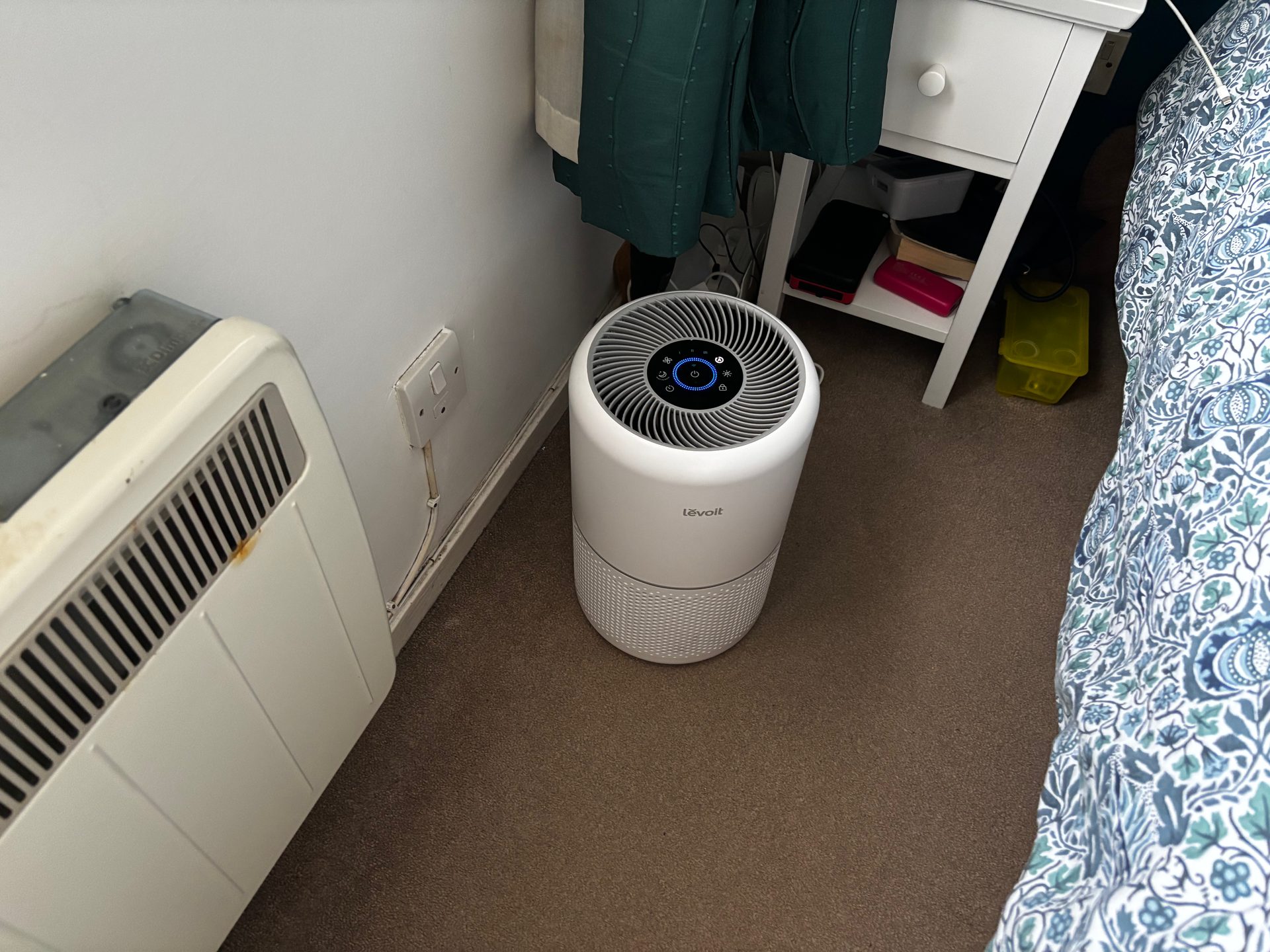
The listing says it covers up to 108 m². That figure is real, but it’s what you get if the purifier cleans the room’s air once an hour. For a bedroom, four to five air changes an hour is the usual aim, and at that rate the honest coverage is about 21–27 m². Put it in a bedroom, a home office or a small living room, and it’s well matched. Put it in an open-plan kitchen-diner and it will be working hard to keep up. We explain the maths in how big a room an air purifier really covers.
Six weeks: from a schedule back to auto
This was the part we didn’t expect to learn.
For most of the six weeks we ran it on a schedule: auto during the day, and fixed on medium overnight, because with my wife’s allergies we wanted it working steadily while we slept rather than waiting for the sensor to decide. Medium is audible: a steady white noise, the sort of sound you stop hearing after the first night. We slept through it without trouble.
A few days ago we switched it to auto round the clock, to see whether the sensor could be trusted with the night shift. It can. Overnight on auto it sits quietly at its lowest setting and only lifts if something changes in the room. It’s the quieter option of the two, and we haven’t gone back.
What sets it off
On auto, the Core 300S idles until its sensor picks up particles, then raises the fan. Two things wake ours reliably:
- Cooking. Toast, frying, the oven: even with the bedroom door mostly shut, it notices.
- An open window. Outside air coming in is enough to lift it a speed.
That’s a better sign than it sounds. A sensor that never reacts is decoration; one that reacts to the toaster two rooms away is doing its job.
The filter at six weeks
This is the photo that convinced us.
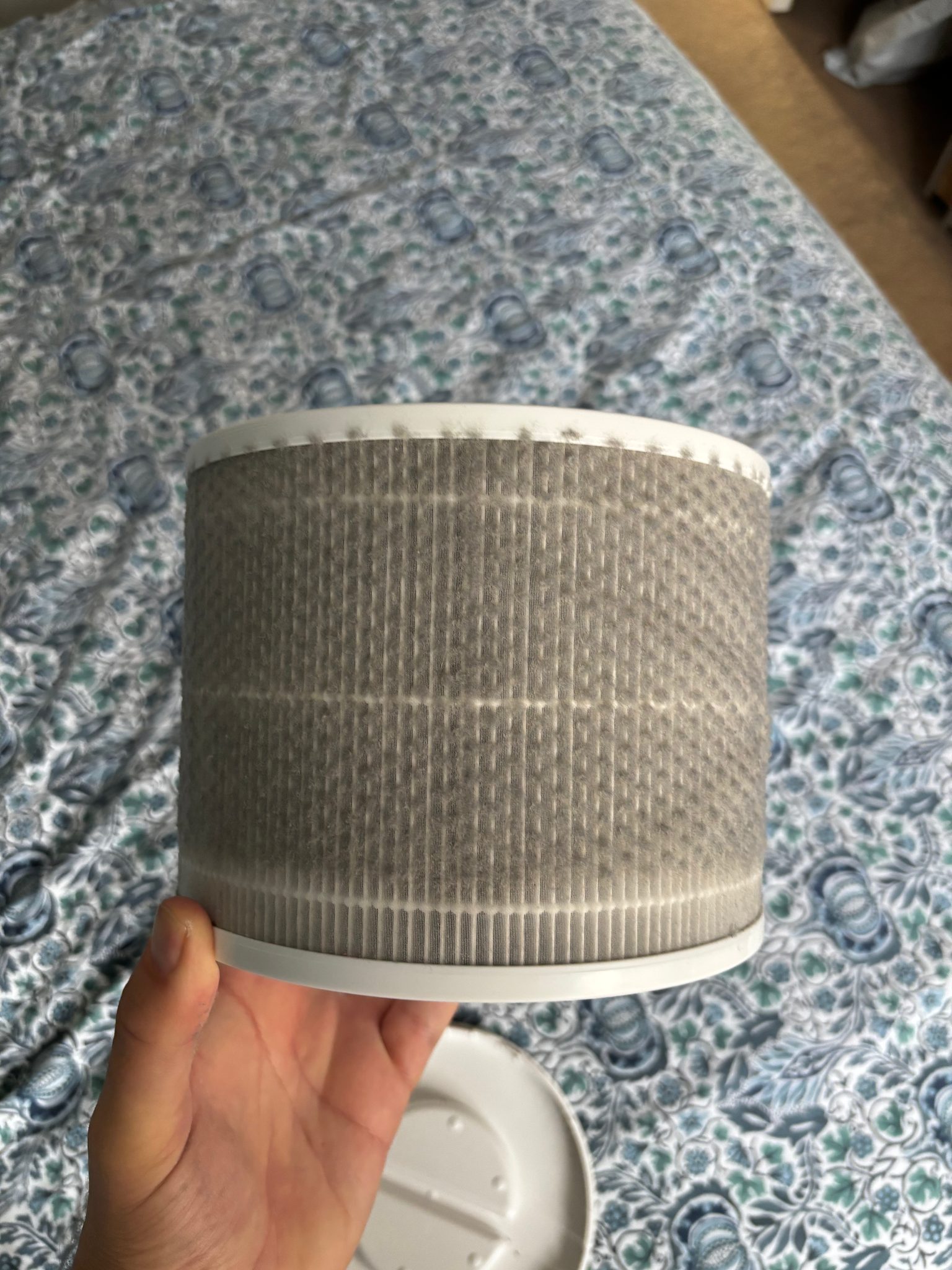
Six weeks in, the filter is visibly grey. That’s six weeks of what one ordinary bedroom’s air was carrying. The app puts it at 70% life remaining. That figure counts hours of running rather than measuring the filter itself, Levoit confirmed to us, so the photo is the better guide to what it has caught.
What it costs to run
We put the Core 300S on a plug-in energy monitor (a Tapo P110; our guide shows how to read one) and took spot readings on auto: 3 W idling and 9 W when the sensor has it working. Costed at the October–December price cap rate of 26.32p per kWh:
| Running round the clock at… | Per day | Per year |
|---|---|---|
| 3 W (idle on auto) | 1.9p | £6.92 |
| 9 W (working on auto) | 5.7p | £20.75 |
| 39 W (the rated maximum, for comparison) | 24.6p | £89.92 |
Because it spends most of its time idling, our real figure sits towards the bottom of that range. The rated 39 W is a ceiling it barely touches on auto.
Then there are the filters. Our first one lost 30% of its rated life in six weeks of round-the-clock running, so on our usage a filter lasts about 20 weeks. That’s quicker than the six to nine months Levoit recommends, because ours never switches off. That’s roughly 2.6 filters a year. At typical replacement prices, that’s about £66–£78 a year.
Which means the honest running cost of this purifier isn’t the electricity at all. On our usage, the filters cost several times what the power does.
See the genuine Core 300-RF replacement filter on Amazon
What we’d change
Only the filter cost. It’s not unusual for a purifier of this size, and you can stretch it by running the unit less, but if you plan to leave it on round the clock (which is how we’d use it), budget for a new filter roughly every four to five months, not twice a year.
Should you buy it?
If you want clean air in a bedroom or a small room, yes. It’s quiet enough to sleep beside on any setting we tried, its auto mode responds to real things in a real home, and it costs a few pence a day in electricity. For my wife’s allergies, it’s been very good. That’s one household’s experience rather than medical advice, but it’s the reason it’s staying. Go in knowing the filters are the real running cost, and ignore the 108 m² on the listing. For a bigger room, our air purifier guide covers larger machines.
★★★★★: we’d buy it again.
Levoit Smart HEPA Air Purifier for Bedroom Home, 258m³/h, 108m², Core 300S | Laser sensor with Auto Mode, App control, For allergy & pet homes, remove 99.97% Pollen/Dust/Odour
Questions
Is the Levoit Core 300S quiet enough for a bedroom?
Yes. On auto it idles at its lowest setting overnight and is close to silent. Even fixed on medium, it’s a steady white noise we slept through from the first night.
How much does the Core 300S cost to run?
We measured 3 W idling and 9 W working on auto, which works out at roughly £7–£21 a year in electricity running 24/7 at the current price cap. Filters cost more: about £66 a year on our usage, at the filter price on 6 October.
How big a room does it cover?
The 108 m² claim assumes one air change an hour. For the four to five changes an hour you’d want in a bedroom, it suits a room of about 21–27 m² with a normal 2.4 m ceiling.
How often do you need to change the filter?
Levoit recommends changing it every six to nine months. Running ours round the clock, we’re on course for about 20 weeks per filter.
Was this useful?