Eating well on about £50 a week for two takes some thought, and anyone who tells you otherwise probably isn’t doing it. But it is very doable, with a little planning, some flexibility and cooking from scratch most of the time. Cooking for one or two has its own catch: most packs, offers and recipes are sized for four, so the real skill is buying in amounts you actually get through and making the extra portions work rather than go off. This guide is for people who are genuinely trying to make it work, not just people looking for aesthetic meal prep inspiration.
What about £50 a week for two actually gets you
Shared between two, about £50 a week is enough to eat well, but not enough to waste: it means cooking from scratch most nights, not much branded food and very little going in the bin. On your own, the same habits bring the bill well under that. The key is understanding where the money goes most efficiently, and buying in amounts a small household actually uses.
Protein is the biggest challenge at this budget. Meat every night isn’t realistic — a slow cooker is one of the best tools for making cheaper cuts taste genuinely good. Which means leaning on eggs, tinned fish, lentils, beans, and cheaper cuts cooked low and slow as your protein foundations. Carbohydrates are your friend — rice, pasta, oats, and potatoes are all filling and pennies per serving. Vegetables are best bought as frozen or as whatever’s on offer — frozen peas, sweetcorn, and spinach are nutritionally excellent and often cheaper than fresh.
Stock the cupboard first
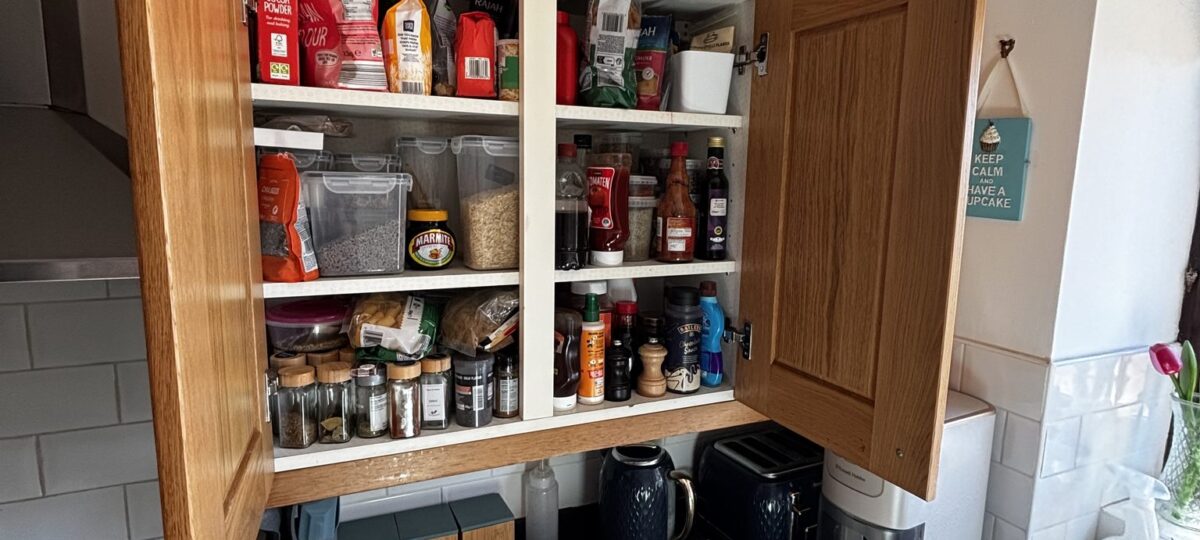
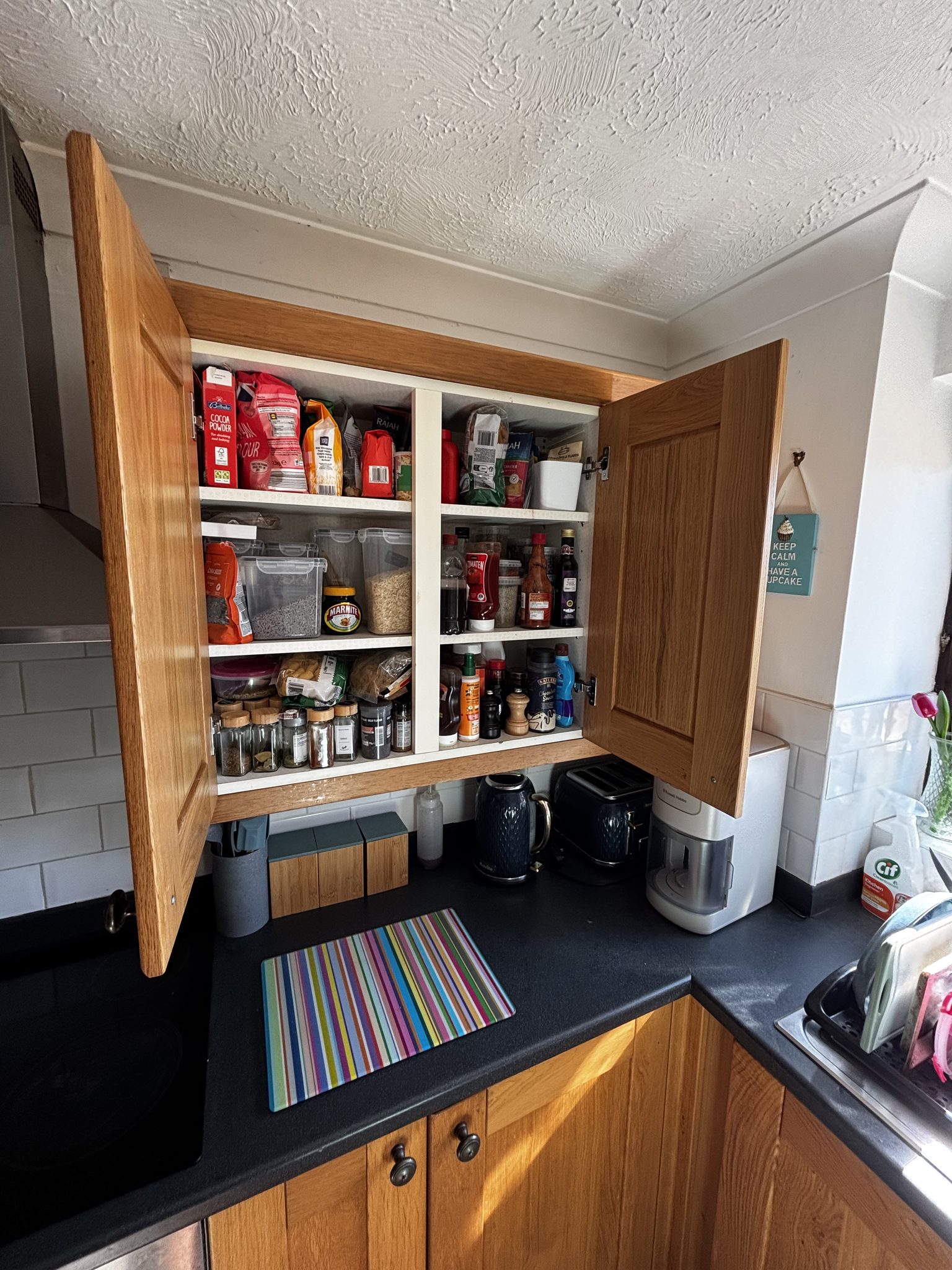
The biggest lever on a small weekly shop is what’s already in the kitchen. Keep a stock of dried lentils, tinned tomatoes, pasta, rice, oats, tinned beans, stock cubes and oil, and the weekly shop shrinks to fresh food and protein instead of starting from scratch each time. Most of these keep for months, which matters when there are only one or two of you: nothing goes off before you get round to it.
There’s no need to buy it all at once. Add one or two staples to each shop over a few weeks, own-brand throughout: for anything that gets cooked, supermarket own-label tins, pasta, rice and oats are hard to tell from the branded versions (our own-brand vs branded guide covers where the difference does show). Once it’s built, a half-empty fridge plus a stocked cupboard is still dinner.
Where to shop — and what to buy where
At this budget, Aldi and Lidl are your first choice for most staples. Their own-brand dried goods, frozen vegetables, eggs, and dairy are consistently cheaper than the equivalent at Tesco or Sainsbury’s, and the quality is comparable. A weekly Aldi shop will stretch £50 further than anywhere else.
For fresh produce, check what’s reduced at the end of the day at any supermarket — items approaching their use-by date are often 50–75% off and perfectly good for immediate cooking or freezing. Tesco Clubcard prices and Sainsbury’s Nectar deals also bring certain items in line with Aldi pricing if you’re using them strategically.
Watch the middle aisle at Aldi and Lidl: the special buys are where the savings quietly go. A practical pattern is to do most of the shop there and top up elsewhere only for what you can’t get. Shop with a list and after a meal, never hungry or in a rush: those are the two biggest drivers of impulse buys. Shopping online helps too, because you see the running total as you go and nothing ambushes you at the end of an aisle.
Buy the biggest bags of rice, pasta, oats, flour, and lentils you can store. The unit cost drops significantly, and these are items you’ll use every week regardless of what else you’re cooking. That applies to dry goods only. For fresh food, a big pack is only cheaper if you finish it: buy fruit and veg loose, so two people buy two carrots rather than a kilo bag that goes soft in the drawer.
A realistic weekly meal framework
Rather than a prescriptive meal plan, think in patterns that you can rotate based on what’s cheap that week. Cooking for one or two, most of these make more than one meal’s worth: plan for the extra portions to become tomorrow’s lunch or a meal in the freezer, rather than eating the same dish three nights running.
- Two pasta nights — pasta with a tomato-based sauce (tinned tomatoes, onion, garlic, whatever veg is available) is one of the cheapest hot meals per serving. Add a tin of tuna or some grated cheese to boost protein and flavour.
- One rice-based meal — egg fried rice using leftover rice, a couple of eggs, frozen peas and sweetcorn, and a dash of soy sauce. Filling, quick, and costs around 30–40p per serving.
- One soup or stew night — a large pot of lentil soup, minestrone, or vegetable stew made with whatever’s in the fridge. Served with bread, the whole pot costs well under £1, and one pot gives two people supper, lunch the next day and a portion or two for the freezer.
- One egg-based meal — omelette, frittata, or baked eggs with vegetables. Eggs are one of the best value proteins available and are endlessly versatile.
- One bean or lentil dish — dal, bean chilli, or a chickpea curry served with rice. These are nutritionally complete meals that cost very little per head and are genuinely satisfying.
- One cheap meat meal — chicken thighs (far cheaper than breasts), sausages, or mince used in small quantities stretched with vegetables and pulses. A pack of sausages is more than two people need at once: half into a sausage and bean casserole, the rest frozen for a toad in the hole another week.
- One flexible night — leftovers, jacket potatoes, or a fridge-clear scramble based on what hasn’t been used.
The cheapest proteins, bought for one or two
Protein is where the cost adds up, and where pack sizes catch a small household out. The best-value options in a UK supermarket, and how to buy them when there are only one or two of you:
- Eggs — a box of twelve usually works out cheaper per egg than six, and they keep well in the fridge until their best-before date. Spread them across breakfasts, suppers and baking.
- Tinned pulses — lentils, chickpeas and kidney beans. Half a tin goes into tonight’s dish; tip the rest into a covered container in the fridge for tomorrow’s lunch.
- Chicken thighs rather than breasts — usually much cheaper per kilo and more forgiving to cook. Split a big pack into twos and freeze them flat.
- Frozen fish fillets — take out only what tonight needs; the rest stays good in the freezer.
- Pork mince — divide it into portions before it goes in the freezer, so you only ever defrost one meal’s worth.
A useful rule: the more a cut of meat has worked (legs, shoulders, thighs), the cheaper it is and the better it is cooked slowly. The dearest cuts are the ones that need nothing from you, like fillet steak or a skinless chicken breast. Our guide to the cheapest high-protein meals has dishes built on them.
Breakfast and lunch on a tight budget
Breakfasts are the easiest place to keep costs low. Porridge made with rolled oats is about 10–15p per adult serving and genuinely filling. Toast with eggs or beans is another cheap, nutritious option. Avoid branded cereals — they’re poor value and not particularly filling.
For packed lunches, build around leftovers. A portion of last night’s pasta or soup in a flask saves far more than buying sandwich ingredients. If you do make sandwiches, cheese, egg, or tuna are the cheapest protein fillings. Fruit (bananas and apples are the cheapest) rounds things out without much cost.
The strategies that actually make a difference
Cook double and use leftovers deliberately. If you’re making a lentil dal, make twice as much. The second portion costs almost nothing extra in ingredients and saves you a meal’s worth of effort later in the week.
Use the freezer properly. Bread going stale, meat on its use-by date, leftover cooked meals — all of these can be frozen rather than wasted. At about £50 a week, wasted food is money you can’t spare.
Plan before you shop. Even a loose plan — “pasta Tuesday, rice Thursday, soup Friday” — stops you buying things you don’t use. Unplanned shopping at this budget is where money disappears.
Don’t overbuy fresh produce. Buy only what you’ll use in the next two to three days fresh, and rely on frozen for the rest of the week. Frozen spinach, frozen peas, and frozen mixed vegetables have essentially the same nutritional value as fresh and don’t go off.
Batch cooking for a small household
Cooking from scratch for one or two every night is where both time and money leak: half-used ingredients, and the pull of a ready meal when it’s only you. A couple of hours on whichever day suits can turn out a pot of soup, a pan of lentil stew or bolognese, a tray of roast veg and some cooked rice or grains. Portion it into single or double servings, label it, and freeze whatever won’t be eaten in the next couple of days.
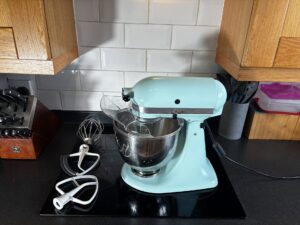
A slow cooker suits this well: pork shoulder or chicken thighs go in during the morning, and the evening needs only rice or bread. Most recipes are written for four, which is no bad thing here: cook the full amount and freeze the rest in portions. Our guide to meal prep on a budget has more.
Being honest about the challenges
Eating on about £50 a week is repetitive. There’s no avoiding that. You’ll be making variations on the same core meals — pasta, rice, soup, eggs — week after week. That’s the reality of cooking at this budget.
It also takes time. Cooking from scratch rather than buying convenience food saves money but costs effort. On tired evenings, this is genuinely hard. Having a few fallback quick meals that are still cheap — egg fried rice takes 10 minutes, beans on toast takes five — helps on the difficult nights.
If £50 a week is genuinely your limit right now, you might also want to look at what you’re entitled to. A free online benefits calculator, such as those listed on GOV.UK, takes a few minutes and can turn up help you didn’t know you could claim. Food banks, while not a long-term solution, exist precisely for moments when the budget breaks. There’s no shame in using the support that’s there.
Further Reading
🛡 Our standards: How we research · Editorial policy · Affiliate disclosure · Corrections · Last reviewed: April 2026

About Gareth
Gareth Isherwood is the editor of Danbury & Lovejoy. He has baked bread at home for 25+ years and has 15 years of growing experience across gardens, containers and other growing spaces, including an East Sussex allotment for the past three years. Read his full story →
Was this useful?