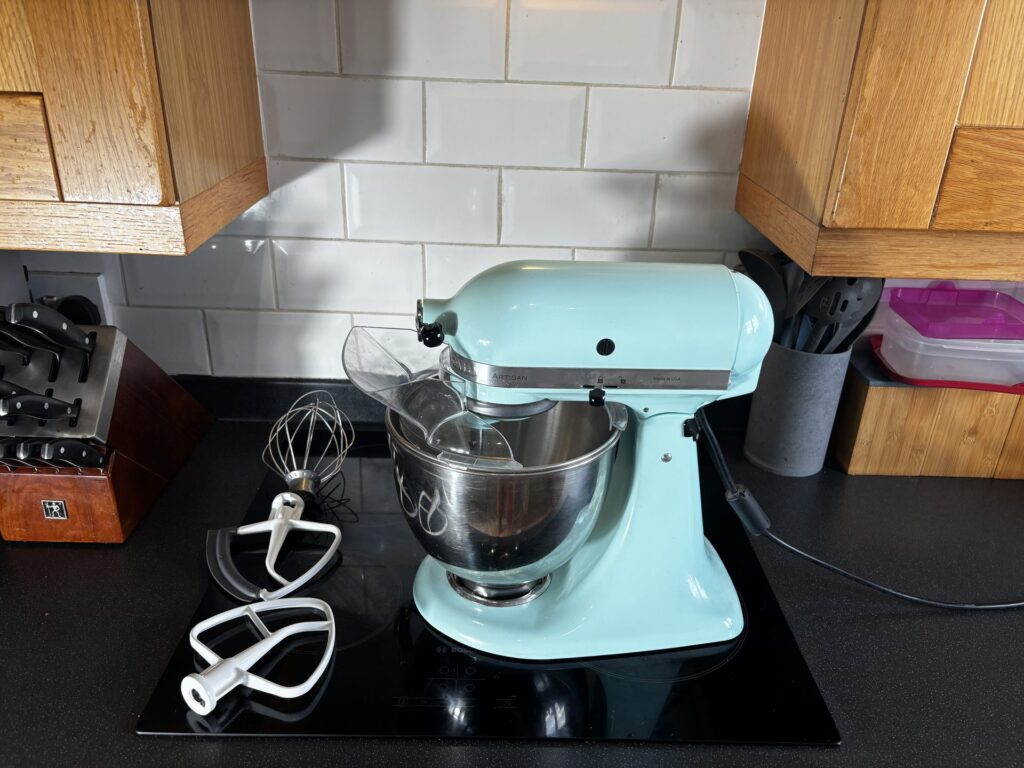


A stand mixer is the one piece of kitchen equipment that genuinely changes what’s possible — bread dough kneaded hands-free, cake batter properly aerated, meringue to stiff peak in four minutes instead of twenty. But it’s also a large, expensive machine that earns its counter space only if you bake often enough. This guide covers the best stand mixers in the UK for 2026 — from a budget workhorse to the KitchenAid that will outlast most of your kitchen — and, just as importantly, how to decide whether you need one at all. For independent lab testing, Which? stand mixer reviews are the most thorough available.
✉ Join the Dispatch — a calm weekly note, every Thursday. Free.
Part of our Buying Guides collection — trusted UK equipment guides for home cooks and bakers. See also our guide to baking bread at home and our best cake tins.
How we chose these mixers
We matched bowl size to real baking (4.8–5L handles a double loaf or a triple cake batch; 6.5L+ only for larger batches), then compared motor power under bread dough, attachment range, and how stable each stays when kneading. These are researched picks, not first-hand reviews, and we don’t accept payment for placement. Read our full methodology →
At a glance
| Model | Best for | Bowl / power | Price tier | Our verdict | |
|---|---|---|---|---|---|
| KitchenAid Artisan 4.8L | Best overall | 4.8L / 300W DC | ££££ | The benchmark — all-metal, beautiful, lasts decades. | Check price → |
| Aucma 6.2L Stand Mixer | Best budget | 6.2L / 1400W | £ | A genuine workhorse for the price; sensible first mixer. | Check price → |
| Kenwood Chef XL KVL4100W | Bread & big batches | 6.7L / 1200W | £££ | Huge bowl, strong motor, vast attachment range. | Check price → |
| Kenwood KMix KMX754BK | Best mid-range | 5L / 1000W | ££ | Metal bowl and tools, capable, well-priced step up. | Check price → |
| KitchenAid Professional 6.9L | Serious bread bakers | 6.9L / 325W DC | ££££ | Bowl-lift muscle for large, heavy, frequent doughs. | Check price → |
Before the picks, the honest part. A stand mixer is one of the few kitchen machines that’s genuinely transformative — and one of the easiest to buy and never use. Whether it earns its place comes down to one question: do you bake more than twice a month? If yes, it more than repays the counter space. If not, read the next two sections before you spend anything.
Best Stand Mixer for Each Need
- Best overall: KitchenAid Artisan 4.8L — all-metal, beautiful, a 20-to-30-year machine
- Best budget: Aucma 6.2L — a big-bowl workhorse
- Best for bread & big batches: Kenwood Chef XL KVL4100W — 6.7L bowl, 1200W
- Best mid-range: Kenwood KMix KMX754BK — metal tools, capable
- Best for serious bread bakers: KitchenAid Professional 6.9L — bowl-lift power for heavy dough
Prices below are a guide; each product card shows the live price and stock.
Do you actually need a stand mixer?
The honest case for not buying one first. Most home baking — including the bread, biscuits and preserves we cover across the rest of the baking section — can be done entirely by hand. If you bake occasionally and your repertoire is relatively simple, a stand mixer is an expensive machine that will mostly occupy a cupboard.
The case for buying one: if you bake bread regularly, a dough hook does ten minutes of kneading in about seven, with no effort and more consistent gluten development. If you make cakes, it creams butter and sugar more thoroughly than most people manage by hand. And if you ever make meringue or Italian buttercream, a stand mixer is effectively non-negotiable — whisking egg whites to stiff peak by hand is twenty minutes of sustained effort that a stand mixer does in four while you weigh out the sugar.
The threshold question is simple: do you bake more than twice a month? If yes, a stand mixer earns its place. If not, a good handheld electric mixer (£25–£40) handles most of the same tasks for a fraction of the cost and counter space — see the handheld section near the end. After twenty-five years of baking bread at home, the machines I reach for most are the ones that disappear into the routine; a stand mixer only does that if the routine is there to begin with.
What to look for
- Bowl size: A 4.8–5L bowl handles a double loaf of bread dough (around 1kg flour) or a triple batch of cake mixture, and suits most home bakers. A 6.5–6.9L bowl is worth it if you bake bread regularly or in big batches. Smaller 3.5L bowls are fine for cakes but limiting for dough.
- Motor — and how it behaves under load: Quoted wattage is only a rough guide. What matters is whether the motor holds its speed against stiff dough. A well-engineered 300W DC motor (KitchenAid) can out-perform a budget 1000W+ AC motor that bogs down. Read reviews specifically for bread performance, not just headline watts.
- Attachments: Every stand mixer ships with a flat beater (cakes, pastry, biscuits), a whisk (cream, egg whites, meringue) and a dough hook (bread). Beyond that, the attachment ecosystem matters: KitchenAid and Kenwood both turn the mixer into a pasta roller, mincer or spiraliser via the power hub, which genuinely extends what the machine earns its space doing.
- Build quality: An all-metal bowl, head and gears outlast plastic equivalents by years. This is the single biggest reason a KitchenAid can be cheaper per year than a budget machine — see the running-cost section below.
- Tilt-head vs bowl-lift: Tilt-head mixers (most KitchenAid Artisans, the KMix) are easier to load and fit under wall units; bowl-lift designs (the KitchenAid Professional, larger Kenwoods) are sturdier for heavy, frequent dough but need more counter depth and height.
- Noise and footprint: All stand mixers are loud at full speed. Measure your counter — and the gap to the wall units above — before buying; a tilt-head needs clearance to lift.
Our top stand mixer picks
Best Overall
KitchenAid Artisan 4.8L (5KSM125)
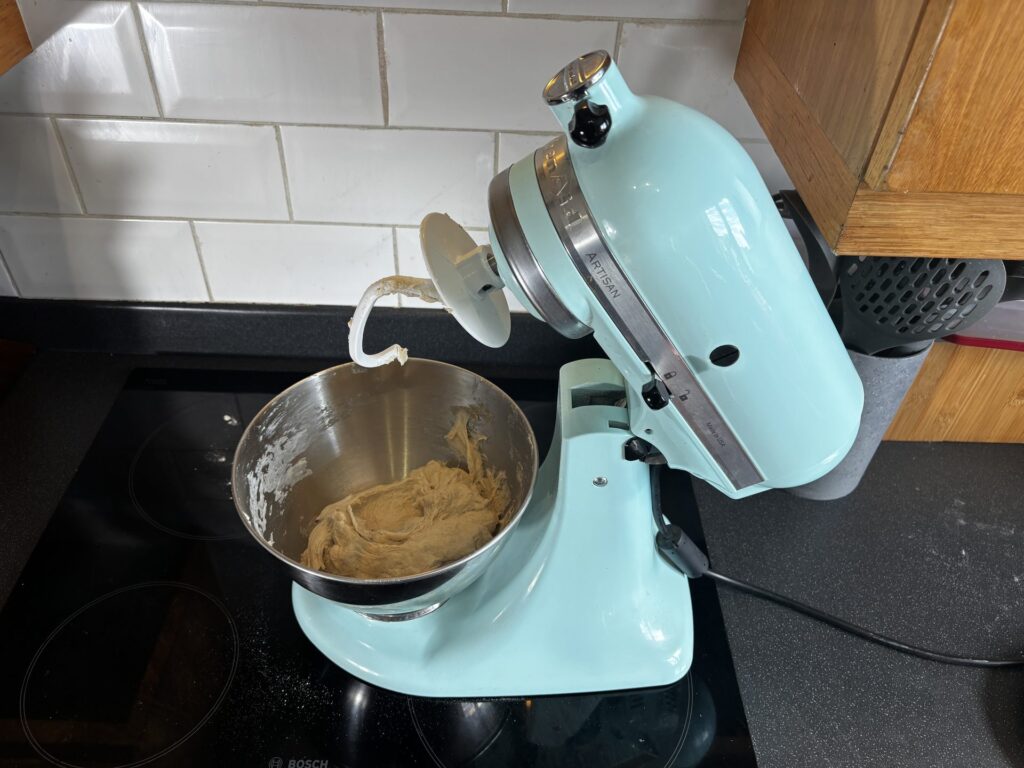
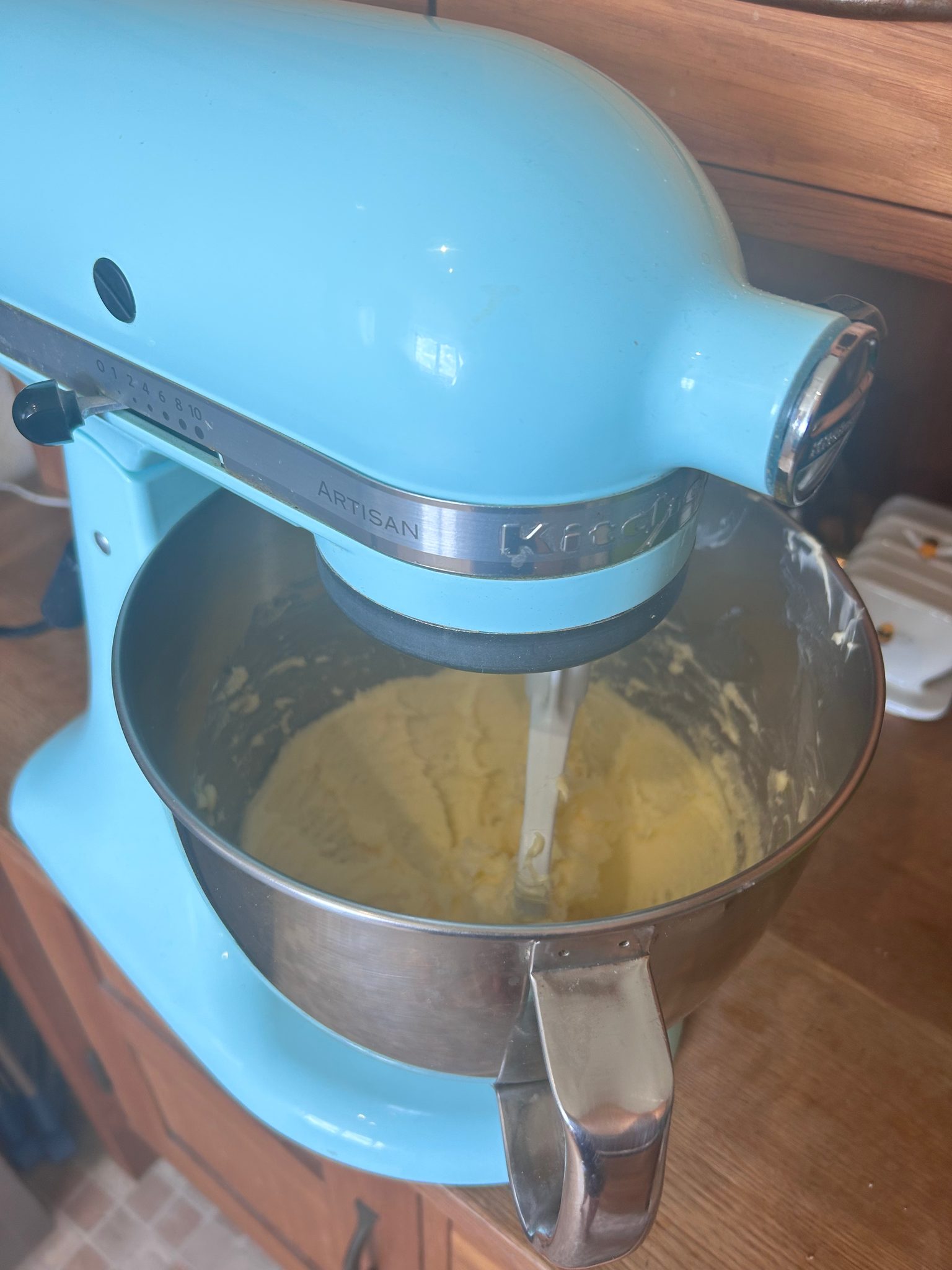
Why we like it: The Artisan is the benchmark every other mixer is measured against, and it earns it. The 4.8L all-metal bowl, the famously efficient 300W DC motor, and the precision of the tilt-head and attachment fit are all best-in-class. It’s also, genuinely, beautiful — the colour range is enormous and it looks right on a worktop in a way nothing else quite matches. The planetary action reaches the whole bowl, so you’re not stopping to scrape down half as often.
- Bowl: 4.8L, all-metal
- Motor: 300W DC (holds speed well under dough)
- Type: Tilt-head
- Attachments: Beater, whisk, dough hook + full power-hub ecosystem
- Price: see the product card for today’s price
Our honest take: The case for spending this much is durability — maintained properly, a KitchenAid lasts twenty to thirty years, which makes the cost-per-year calculation far kinder than the sticker suggests. It’s available through John Lewis with a five-year guarantee, worth factoring against cheaper alternatives. If you bake regularly and want one machine that outlasts most of your kitchen, this is where to spend.
Affiliate link — we may earn a small commission at no extra cost to you.
Check price on Amazon →
Best Budget
Aucma 6.2L Stand Mixer
Why we like it: The Aucma is the sensible answer to “I want a stand mixer but I’m not spending £400.” For far less you get a genuinely large 6.2L stainless bowl, a 1400W motor with six speeds, and the full set of tools — dough hook, wire whip and beater — plus a splash guard. It has thousands of UK reviews and a deserved reputation as the budget stand mixer that actually copes with bread, not just cake batter.
- Bowl: 6.2L stainless steel
- Motor: 1400W max, 6 speeds + pulse
- Type: Tilt-head
- Attachments: Dough hook, wire whip, beater, splash guard
- Price: see the product card for today’s price
Our honest take: It won’t last the decades a KitchenAid will, and it’s louder, but as a first stand mixer — or for anyone testing whether they’ll really use one — it’s hard to argue with. The big bowl is a real advantage for bread. Start here before committing to a premium machine.
Affiliate link — we may earn a small commission at no extra cost to you.
Check price on Amazon →
Best for Bread & Big Batches
Kenwood Chef XL KVL4100W
Why we like it: The Chef XL is the bread baker’s mid-to-upper pick. The 6.7L bowl swallows a large dough or a double cake batch, the 1200W motor has real authority under heavy mixes, and the all-metal construction is built to last. Kenwood’s attachment range is the most extensive of any brand here — pasta roller, mincer, food processor, grain mill — so the machine keeps finding new jobs.
- Bowl: 6.7L
- Motor: 1200W
- Type: Bowl-lift
- Attachments: K-beater, dough hook, whisk + large power-hub ecosystem
- Price: see the product card for today’s price
Our honest take: If you bake bread weekly and want capability without KitchenAid pricing, this is the considered choice. The big bowl and strong motor handle enriched doughs — brioche, stollen — that make cheaper machines struggle.
Affiliate link — we may earn a small commission at no extra cost to you.
Check price on Amazon →
Best Mid-Range
Kenwood KMix KMX754BK

Kenwood KMX754BK Stand Mixer 5L Capacity 1000W Motor Black
Why we like it: The KMix is the most capable mid-range mixer. It handles bread dough and cake mixture well, the 5L bowl and the attachments are metal and dishwasher-safe, and the motor is more than adequate for normal home baking. Build quality sits below a KitchenAid — there’s plastic where the KitchenAid uses metal — but at this price it’s genuinely good value for a baker who wants a proper stand mixer without the premium outlay.
- Bowl: 5L
- Motor: 1000W
- Type: Tilt-head
- Attachments: Beater, dough hook, whisk (dishwasher-safe)
- Price: see the product card for today’s price
Our honest take: The natural step up from a budget machine for someone who bakes often but doesn’t need the Chef XL’s bowl. A sensible middle ground on price, capability and looks.
Affiliate link — we may earn a small commission at no extra cost to you.
Check price on Amazon →
Best for Serious Bread Bakers
KitchenAid Professional 6.9L (5KSM7990X)

KitchenAid Professional 325 W Stand Mixer 5KSM7990XBWH, White, Capacity: 6.9 Litre, 10 Speed, Planetary Mixing Action - Includes Stainless Steel Whisk, Flat Beater, Dough Hook & Wire Guard, CB575
Why we like it: The Professional pairs a 6.9L bowl-lift design with a more powerful motor built for large batches of heavy dough. For most home bakers it’s more than necessary — but for anyone making multiple loaves at a time, big batches of enriched dough, or semi-professional volumes, the extra muscle is perceptible the moment the dough stiffens.
- Bowl: 6.9L, bowl-lift
- Motor: 325W DC, 10 speeds
- Type: Bowl-lift
- Attachments: Whisk, beater, dough hook + power-hub ecosystem
- Price: see the product card for today’s price
Our honest take: Overkill for the occasional baker, and it needs real counter height. But if bread is a serious habit and you bake in volume, the larger bowl and stronger motor are exactly what the cheaper machines lack.
Affiliate link — we may earn a small commission at no extra cost to you.
Check price on Amazon →
What a stand mixer actually costs to run
The electricity is almost nothing. A stand mixer draws somewhere between 300W and 1400W, but only for the few minutes it’s actually running — a typical cake or a batch of bread dough is five to ten minutes of motor time. That works out at well under 1p per bake at the current UK price cap (around 25–26.32p per kWh). You could mix every day for a year and not notice it on the bill. Electricity is not the cost that matters with a stand mixer.
The cost that matters is the upfront price spread across the machine’s life — and this is where the expensive option can quietly become the cheap one. Spread over its life, a KitchenAid that lasts 25 years can cost less per year than a budget mixer that lasts five or six years of regular bread-making — and you’ll have bought two of them in the time the KitchenAid is barely run in. That doesn’t make the budget pick wrong; if you’re not sure you’ll use it, spending less to find out is the sensible move. But it does mean “expensive” and “dear to own” aren’t the same thing. For the same sums on longer, lower-power cooking, see our slow cooker running-cost guide.
Handheld mixers: the cheaper alternative
If counter space or budget is the limiting factor, a good handheld electric mixer does most stand-mixer tasks except heavy bread dough. For cakes, meringue and whipped cream, a handheld is entirely adequate, costs £25–£50, and tucks into a drawer. The Kenwood and Breville handheld ranges both perform well. It won’t knead a stiff loaf — but for everything else in the baking repertoire short of bread, a handheld quietly does the job. If you bake bread specifically, that’s the line that pushes you towards a stand mixer; if you don’t, you may not need one at all.
Which one?
One machine for most bakers, bought to last: KitchenAid Artisan 4.8L.
A stand mixer without the outlay, or testing whether you’ll use one: Aucma 6.2L.
You bake bread weekly and want a big bowl and a strong motor: Kenwood Chef XL KVL4100W.
A capable step up from budget: Kenwood KMix KMX754BK.
Serious, high-volume or heavy enriched doughs: KitchenAid Professional 6.9L.
Considered but didn’t include
Smeg SMF03 — a striking design and a genuine workhorse, but the price sits well above the Artisan for what is functionally a similar 4.8L machine, and attachments are limited compared to the KitchenAid ecosystem.
Sage the Bakery Boss — capable and well-built, but Sage have quietly raised UK prices through 2025 and the bowl-lift design takes up more counter depth than most UK kitchens comfortably allow.
Tower T12033 — tempting on price, but owners report it is noticeably louder than the Kenwood Chef, and verified buyer reviews show gearbox issues emerging within the second year of regular use.
A stand mixer as a gift
A stand mixer is a big present, and the test at the top of this guide applies twice over: it suits someone who bakes more than twice a month. For a keen baker, the KitchenAid Artisan is the one that feels like a gift: the colour range is enormous, it looks right on a worktop and, looked after, it lasts twenty to thirty years. For someone who bakes bread every week, the Kenwood Chef XL has the bigger bowl and the motor for heavy dough. For a first mixer, or for someone who may not use it much, the Aucma has a large 6.2L bowl for far less.
Check two things quietly before you buy: whether there is room on the worktop (bowl-lift machines such as the Chef XL need more height and depth), and whether they already own one. For an occasional baker, a handheld mixer is the kinder present.
Frequently Asked Questions
Is a stand mixer worth it for occasional baking?
Honestly, no. If you bake fewer than about twice a month, a £25–£40 handheld electric mixer covers cakes, cream and meringue, and most bread and biscuits are easily done by hand. A stand mixer earns its counter space when baking is a regular habit — especially bread — rather than an occasional one.
KitchenAid or Kenwood — which is better?
Both are excellent; they’re built around different priorities. KitchenAid wins on durability, resale value and looks — an Artisan can last decades and holds its value. Kenwood wins on capability for the money: bigger bowls, strong motors and the widest attachment range. For pure baking and longevity, KitchenAid; for big batches, bread and versatility per pound, Kenwood.
What size bowl do I need?
For most home bakers, 4.8–5L is right — it handles a double loaf or a triple cake batch. If you bake bread regularly or in big batches, step up to 6.5–6.9L. Bowls under about 4L are fine for cakes but limiting for dough, which expands as it kneads.
Can a stand mixer knead bread dough?
Yes — that’s one of the main reasons to own one. Fit the dough hook and a mixer kneads in about seven minutes what takes ten by hand, with more consistent results. The caveat is to respect the maximum flour quantity in the manual and watch a budget motor for signs of strain (heat, slowing) on stiff doughs.
Tilt-head or bowl-lift?
Tilt-head mixers are easier to load and fit better under wall units, which suits most kitchens. Bowl-lift designs are sturdier for heavy, frequent dough and large batches, but need more counter depth and height. If you bake bread in volume, bowl-lift; otherwise tilt-head is the more practical everyday choice.
How long does a stand mixer last?
A well-maintained KitchenAid or Kenwood can run 15–30 years; budget machines typically give five to eight years of regular use before the gearbox or motor tires. Spread across its life, a premium mixer often costs little more per year than a cheap one — see the running-cost section above.
Are stand mixer attachments worth it?
If you’ll use them, yes — pasta rollers, mincers, spiralisers and grinders turn the mixer into several appliances and save cupboard space. Buy them as you need them rather than upfront; the motor is the investment, the attachments are extras.
Is a stand mixer a good gift?
For someone who bakes more than twice a month, yes. The KitchenAid Artisan is the classic gift: a huge colour range and, looked after, twenty to thirty years of use. For a weekly bread baker the Kenwood Chef XL has the bigger bowl, and the Aucma is a sensible first mixer. For an occasional baker, a handheld mixer is the better present.
Related Guides
Related guide: our cordless kitchen guide — for the new battery-powered hand mixers and the KitchenAid Go system.
— Gareth
🛡 Our standards: How we research · Editorial policy · Affiliate disclosure · Corrections

About Gareth
Gareth Isherwood is the editor of Danbury & Lovejoy. He has baked bread at home for 25+ years and has 15 years of growing experience across gardens, containers and other growing spaces, including an East Sussex allotment for the past three years. Read his full story →
Was this useful?