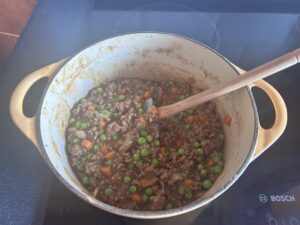
Meal prepping — cooking in bulk at the start of the week so you have meals ready to go — is one of the most effective ways to reduce food costs and cut down on weeknight takeaways. Done well, it can halve your food bill and mean you eat better through the week than you would otherwise. Done badly, it results in containers of identical food you lose interest in by Tuesday.
Here’s how to do it properly on a UK budget.
Quick answer: cooking in bulk at the start of the week can halve a UK food bill and means you eat better through the week than you otherwise would. Done badly it leaves you with containers of identical food you have lost interest in by Tuesday — so the whole skill is building in enough variety to keep eating it.
Why Meal Prep Saves Money
The savings come from several directions at once. Buying ingredients in larger quantities reduces cost per portion — a 500g bag of lentils makes four to six servings for under £1 total, compared to a convenience portion that might cost three times that. Cooking at home rather than buying lunch out every day is one of the biggest single savings available to working people in the UK.
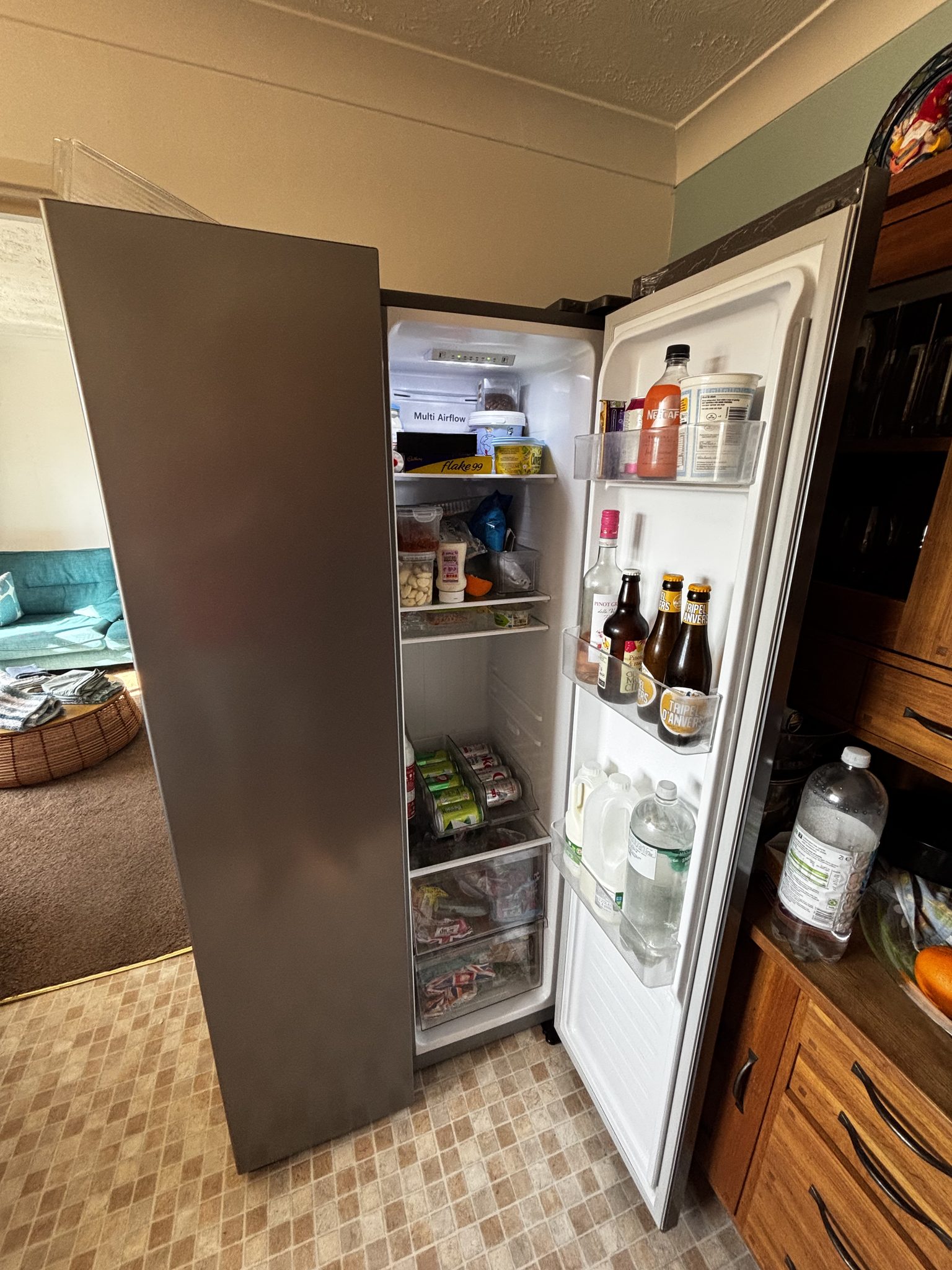
Meal prepping also significantly reduces food waste. When you plan your meals for the week before shopping, you buy exactly what you need rather than buying loosely and throwing away what you didn’t get around to using. According to WRAP, the average UK household wastes around £700 of food per year — much of that is preventable with basic planning.
Finally, having food ready reduces the “I can’t be bothered to cook” moments that lead to expensive takeaways and deliveries.
What to Meal Prep: Start With Components, Not Full Meals
The most flexible — and least boring — approach to meal prep is to cook components rather than complete identical meals. Instead of making five identical portions of chicken curry on Sunday and eating exactly that all week, prep the building blocks that can be combined in different ways. Bulk prep like this goes faster with a food processor for the chopping — and it turns a batch of cooked dal into a smooth soup base in seconds.
A practical session for a week of lunches and dinners might produce:
- A big pot of grains — rice, pearl barley, or quinoa
- A batch of roasted vegetables — whatever was reduced in the supermarket
- A protein — roasted chicken thighs, a batch of dal, or a tin of chickpeas cooked with spices
- A sauce or dressing — a simple tomato sauce, tahini dressing, or yoghurt with garlic
These four components can be mixed into bowls, stuffed into wraps, served over pasta, or eaten with flatbreads — different meals each day from the same prep session.
The Best Budget Meal Prep Ingredients in the UK
Some ingredients offer far better value than others when cooking in bulk. These are the workhorses of budget meal prep in the UK:
Lentils — Red lentils are around 80p–£1 per 500g and make excellent dal, soups, and sauces. They cook in 20 minutes without soaking and absorb spices brilliantly. Green and brown lentils hold their shape better and work well in salads.
Tinned beans and chickpeas — Around 50–70p per tin, providing two to three portions of protein-rich, filling food. Chickpeas roast well for snacking, blend into hummus, and bulk out curries and stews. Kidney beans and black beans work in chilli and burritos.
Chicken thighs — Significantly cheaper than breast (often £2.50–£3.50 for a pack of six bone-in thighs), more forgiving to cook, and taste better in longer-cooked dishes. Season and roast in batches, then eat the cooked meat within two days or freeze it — that is the UK guidance for cooked leftovers.
Root vegetables — Carrots, parsnips, sweet potatoes, and onions are cheap, filling, and store well. They roast from raw in around 30–40 minutes and can be used in soups, stews, or grain bowls throughout the week.
Frozen vegetables — Frozen peas, sweetcorn, spinach, and broccoli are nutritionally equivalent to fresh, last for months, and cost a fraction of fresh equivalents. They’re particularly useful for adding variety mid-week when fresh veg has run out.
A Practical Sunday Prep Session
A two-hour Sunday session can set up the majority of a working week’s lunches and dinners. Here’s a realistic example for two people, spending around £20–£25 on ingredients:
- Roast a tray of chicken thighs (6 pieces, bone-in, seasoned with paprika and garlic)
- Cook a pot of red lentil dal (500g lentils, tinned tomatoes, onion, cumin, coriander, turmeric) — the sort of thing a slow cooker handles unattended
- Roast two trays of vegetables (sweet potato, carrot, red onion, courgette, olive oil)
- Cook a large pot of pearl barley, or rice (cool it within an hour and freeze it in portions)
- Hard boil six eggs for quick protein additions
From these five components, you can make grain bowls, chicken wraps, lentil soup (blend the dal with stock), fried rice, egg and vegetable lunches, and roast vegetable pasta — using different combinations each day so nothing feels repetitive.
Storage and Food Safety
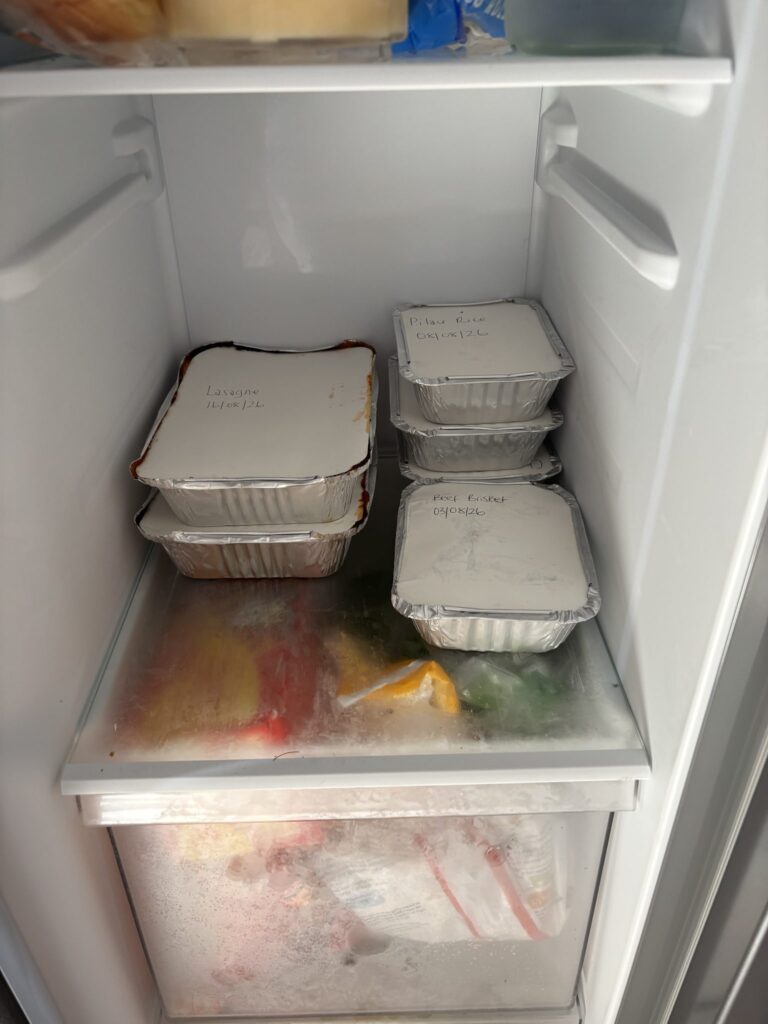
The Food Standards Agency’s rule is to eat or freeze cooked leftovers within two days, and cooked rice within one. Cool everything quickly and get it into the fridge within a couple of hours; rice should be cooled within an hour. Plan the fridge portions for Monday and Tuesday, and freeze the rest on the day you cook it: rice in single portions, reheated until it is steaming hot all the way through. For prep that won’t be eaten by Tuesday, freeze it on Sunday rather than refrigerating — most batch-cooked food freezes well and reheats from frozen in a saucepan or microwave. If you batch-cook for the freezer regularly, a vacuum sealer keeps portions for months without freezer burn.
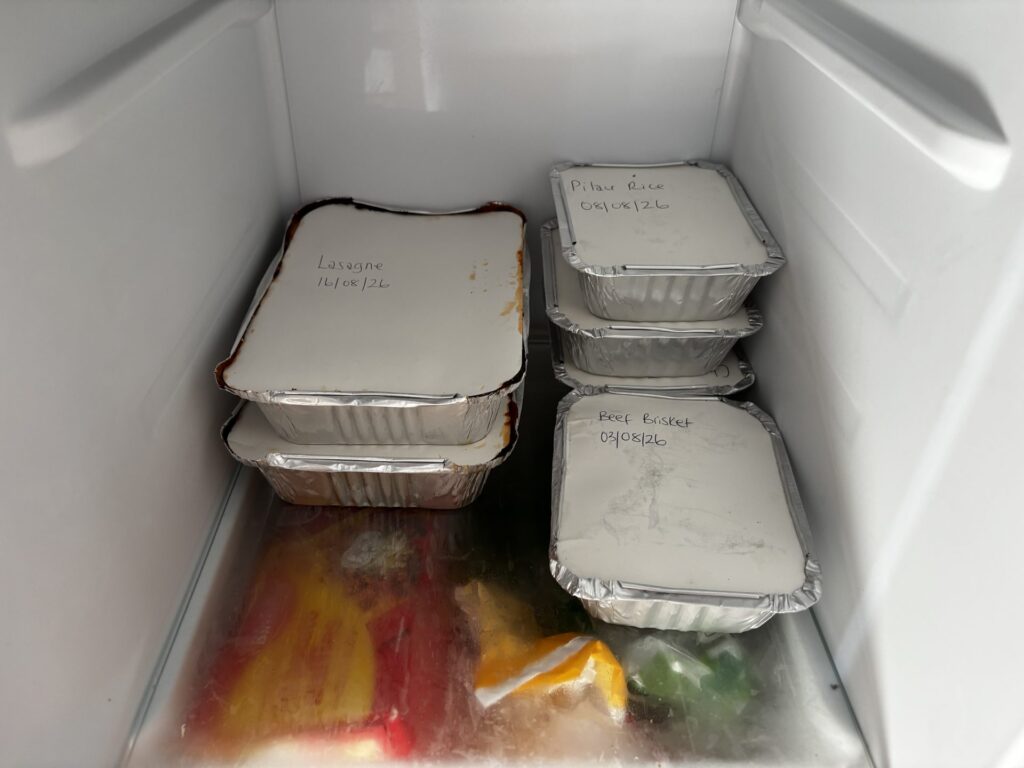
Use airtight containers. Glass containers with clip lids are excellent for this — they’re microwave safe, don’t stain, and last for years. Decent glass containers cost around £15–£20 for a set and pay for themselves quickly in reduced food waste.
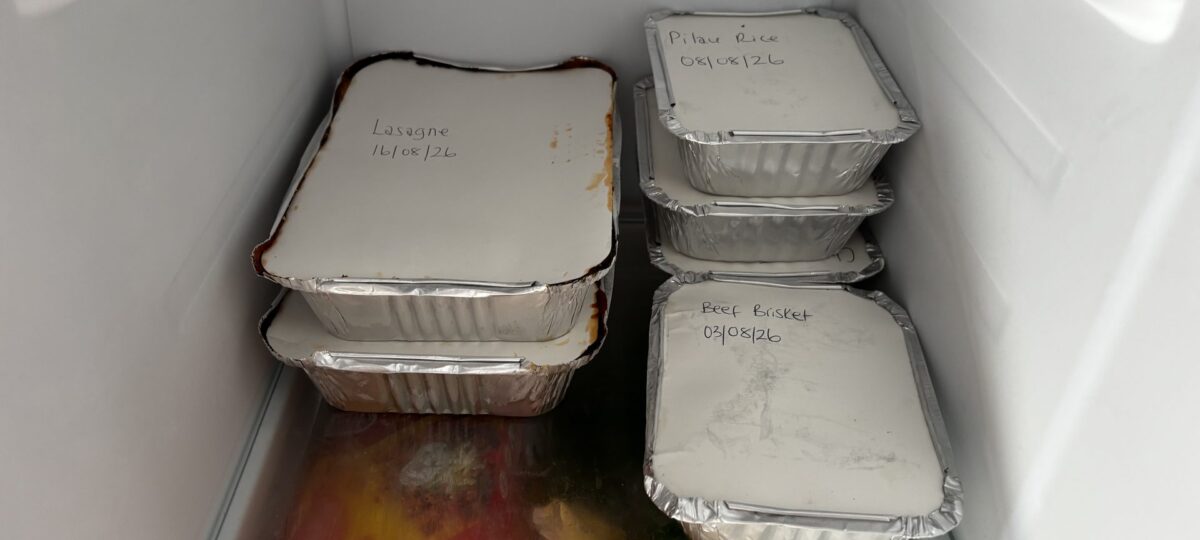
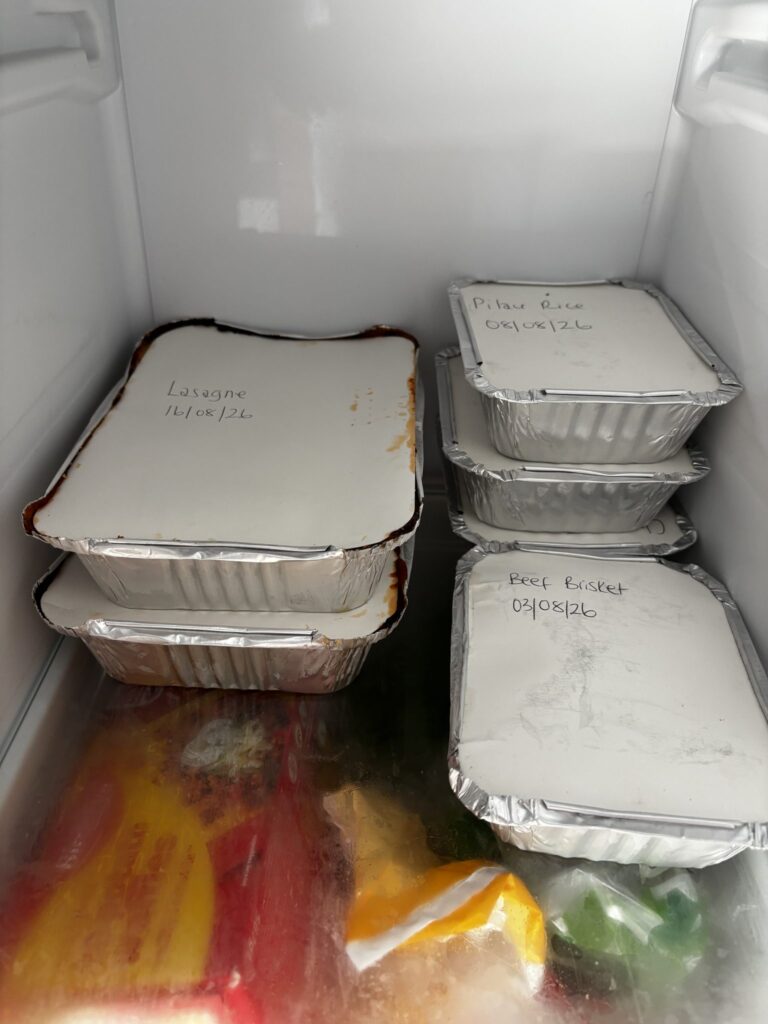
Label containers with the date if you’re using multiple similar-looking items — a simple bit of masking tape and a marker means you always know what you’re eating and when it needs to be used.
Quick weeknight dinners
Even a good prep session runs out by Thursday, and some weeks it doesn’t happen at all. A handful of dinners that come together in half an hour from the store cupboard is what stops those nights turning into a takeaway.
Speed comes from habits more than recipes. Read the method through before you start, and do things at the same time: make the sauce while the pasta water comes to the boil, dress the salad while the meat rests. Keep a few staples in so dinner only needs one fresh thing: pasta, tinned tomatoes, tinned pulses, soy sauce, fish sauce, dried chilli and a decent olive oil.
Five ideas that fit a weeknight:
- Prawn stir-fry with noodles: a very hot wok, prawns, sliced pepper, pak choi and spring onions, tossed with soy sauce, sesame oil, a little honey and chilli paste, then cooked noodles. A portion of cooked rice from the freezer, reheated until steaming hot, works in place of the noodles.
- Cherry tomato pasta: halved tomatoes left to sit in olive oil, garlic and salt while the pasta cooks, then tossed together with basil. At its best in late summer, when tomatoes are cheap.
- Chicken schnitzel with dressed greens: chicken beaten thin, breadcrumbed and fried for a few minutes each side, with leaves and radishes in lemon and olive oil.
- Turkish eggs: garlicky yoghurt on toast or flatbread, poached eggs on top, and butter heated with chilli flakes until it foams, poured over.
- Frittata: beaten eggs over whatever needs using up (leftover roast vegetables, a little cheese, herbs), set on the hob and finished under the grill.
For something hands-off, a leek, potato and bacon traybake is one tray and about an hour in the oven while you get on with something else, and it does the next day as lunch. An air fryer chicken breast is done in about half an hour.
How to Avoid Meal Prep Burnout
The main reason people stop meal prepping is boredom. Eating the same meal every day is genuinely monotonous, and the solution is variety within a system rather than trying to make seven entirely different meals each week.
Change the grains each week (rice one week, pearl barley the next, pasta the week after). Rotate the protein. Keep a few different sauces and condiments in the fridge — a jar of harissa, some soy sauce and sesame oil, a tub of hummus — that can transform the same basic components into completely different-tasting meals. Add something fresh each day: a fried egg, some crumbled feta, fresh coriander, a squeeze of lemon.
Meal prep works best as a system you refine over time, not a strict regime. The goal is to make good, affordable food more accessible — not to eat identically every day.
Related Guides
Last reviewed: April 2026
💰 From the D&L Shop: Ready to take control of your household budget? Our Household Budget Reset is a 5-page printable workbook covering income, outgoings, spending, and savings goals — £3.99. Also free: the Weekly Budget Meal Planner to cut your food bill. Our Batch Cooking Planner (£3.99) maps a week of prep-ahead meals in one place. Browse the full shop →
🛡 Our standards: How we research · Editorial policy · Affiliate disclosure · Corrections · Last reviewed: April 2026

About Gareth
Gareth Isherwood is the editor of Danbury & Lovejoy. He has baked bread at home for 25+ years and has 15 years of growing experience across gardens, containers and other growing spaces, including an East Sussex allotment for the past three years. Read his full story →
Was this useful?