✉ Join the Dispatch — a calm weekly note, every Thursday. Free.
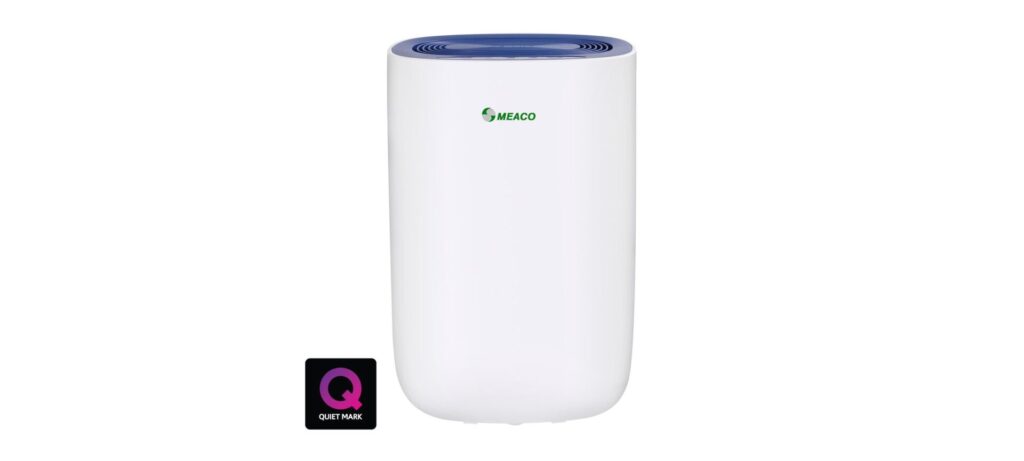
Lead image: MeacoDry ABC 10L, courtesy of Meaco via Quiet Mark.
Choosing the best bedroom dehumidifier means finding something quiet enough to run overnight and effective enough to tackle the condensation and damp that UK bedrooms are prone to in winter. This guide covers the options worth considering in 2026, with notes on capacity, noise, and running cost. If you’re also dealing with a damp home more broadly, our home and warmth guides cover insulation and heating efficiency too. For related damp control options, see our guide to drying laundry indoors. For independent noise and performance testing, Which? dehumidifier reviews are the most thorough available.
Prices and availability checked 26 November 2026 against live Amazon listings; tap through for the current price.
How we chose these dehumidifiers
We led on compressor against desiccant, which is the real choice for a cold British bedroom, then compared noise in decibels at night, extraction at low temperatures, tank size against how often it needs emptying, and running cost. These are researched picks, not first-hand reviews, and we don’t accept payment for placement. Read our full methodology →
Not sure which to pick? Try our 30-second dehumidifier quiz — start the quiz →
Why Do Bedrooms Get Damp?
A sleeping person produces around 1 litre of moisture overnight through breathing and perspiration. Add a partner, and that’s 2 litres of moisture being released into a closed room while the window (usually) stays shut. If your bedroom windows are cold — typical in UK winters — that moisture condenses on the glass and, in worse cases, on cold walls and window frames.
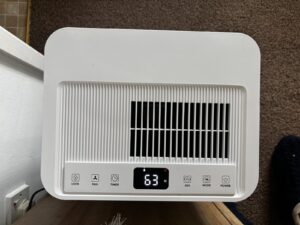
It took buying a hygrometer for me to realise my own bedroom was hitting 74% humidity overnight in winter. Since I started running a dehumidifier, the morning condensation on the windows has reduced a lot, though it has never disappeared entirely — which is roughly what to expect in a cold coastal flat.
Common signs that your bedroom needs a dehumidifier:
- Condensation on windows every morning
- A musty or damp smell in the room
- Black mould spots on window frames or silicone seals
- Damp patches on external walls, particularly in corners
- Peeling wallpaper or lifting paint near windows
What Makes a Good Bedroom Dehumidifier?
Quiet operation
This is the most important feature for a bedroom. Look for models rated at 35–42 dB in their quiet or sleep mode. Many dehumidifiers have a dedicated sleep or night mode that reduces the fan speed (and therefore noise) while maintaining basic moisture extraction. Desiccant dehumidifiers tend to be slightly quieter than compressor models as they have no compressor motor.
Sleep/night mode
Beyond just quieter operation, a good sleep mode should also dim or switch off any indicator lights, which can be surprisingly disruptive in a dark bedroom. Check reviews to see whether lights can be fully turned off.
Auto-off and humidity control
A built-in humidistat that allows you to set a target humidity level (typically 50–60% for a bedroom) is very useful. The dehumidifier runs until it reaches the target, then switches to maintenance mode rather than running continuously. This saves energy and avoids over-drying the air, which can make breathing uncomfortable.
Capacity for bedroom use
For a standard UK double bedroom (around 15–20m²), a dehumidifier with an extraction rate of 8–12 litres per day is typically sufficient. You don’t need industrial capacity for overnight bedroom use — the moisture load from two sleeping people is manageable with a modest-sized unit.
Tank size and drainage
Running a dehumidifier overnight means it may fill its tank before morning if humidity levels are high. A tank of at least 2.5–3 litres is advisable for overnight use, or look for a model with a continuous drainage option if you want to run it without thinking about emptying it.
Compressor vs Desiccant: Which Is Better for Bedrooms?
Both types work in bedrooms, but they have different characteristics:
| Compressor | Desiccant | |
|---|---|---|
| Best room temperature | Above 15°C | Works well below 15°C |
| Noise | Slightly louder (compressor motor) | Slightly quieter |
| Energy use | Lower in warm conditions | Higher (uses heating element) |
| Warm air output | Minimal | Releases warm dry air |
For a heated bedroom (typically 18–20°C overnight), a compressor dehumidifier is the more energy-efficient choice. For a cooler spare bedroom or box room, a desiccant model will perform more reliably.
For a heated bedroom, the MeacoDry ABC 10L is the one to start with: Meaco rate it at 35 dB, with a Quiet Mark award, it shows the room’s humidity on its display, and Meaco put its running cost at about 3p an hour. For a cold spare bedroom, the EcoAir DD1 Classic desiccant is the better fit: EcoAir rate it at up to 7.5 litres a day at temperatures as low as 1°C, with a quiet mode of 34 dB, a 2, 4 or 8-hour timer and a laundry mode.
Note that desiccant models release slightly warm air — in winter, this is actually a bonus, as it adds a small amount of gentle heat to the room while extracting moisture.
How to Use a Bedroom Dehumidifier Effectively
Where to position it
Place the dehumidifier away from the bed (at least 1 metre) with clear space around the air intake and exhaust vents. Don’t position it directly against a wall or in a corner, as this reduces airflow. Some people place theirs near the window, as this is where condensation forms — but anywhere in the room with good airflow will work.
What humidity level should I set?
The ideal indoor relative humidity for bedrooms is 40–60%. Below 40% and the air can become too dry, causing dry throat, skin irritation and static. Above 60% and conditions become favourable for mould and dust mites. Set your humidistat to around 50–55% for a comfortable balance.
Can I run a dehumidifier while sleeping?
Yes — with the right model, a dehumidifier running overnight in the bedroom is perfectly safe and many people find it helps them sleep better (cleaner, less humid air reduces the stuffy feeling common in sealed bedrooms). The key is choosing a quiet model and enabling sleep/night mode to minimise noise and light.
Should I close the bedroom door?
Yes. Closing the door keeps the dehumidifier working on a defined space rather than trying to manage the humidity of the entire house. This makes it much more effective and efficient.
Bedroom Dehumidifier and Condensation
For most bedroom condensation problems, running a dehumidifier overnight is the most effective single step you can take. The key is consistency — one night won’t fix a persistent problem, but running it regularly throughout the colder months will gradually reduce moisture levels in walls and fabric, reducing the risk of mould developing.
For a broader look at tackling window condensation throughout the home, see our full guide: Best Dehumidifier for Window Condensation UK 2026. And if you’re also drying laundry indoors, see our guide on the best heated clothes airers — keeping laundry drying out of the bedroom makes a significant difference to overnight moisture levels.
Frequently Asked Questions
Is it safe to run a dehumidifier in the bedroom all night?
Yes — modern dehumidifiers are designed for extended continuous use. Most will auto-shut off when the water tank is full, preventing any overflow.
Will a dehumidifier help me sleep better?
Many people report better sleep quality with a dehumidifier running. Lower humidity reduces stuffiness and the likelihood of waking with a dry mouth or blocked nose. Some models produce white noise that people find helps them sleep.
Can a dehumidifier make the room too dry?
If run on maximum settings continuously, yes — very low humidity (below 30%) can cause dry skin, irritated sinuses, and discomfort. Using a built-in humidistat to set a target of 50% prevents over-drying.
How much does it cost to run a bedroom dehumidifier overnight?
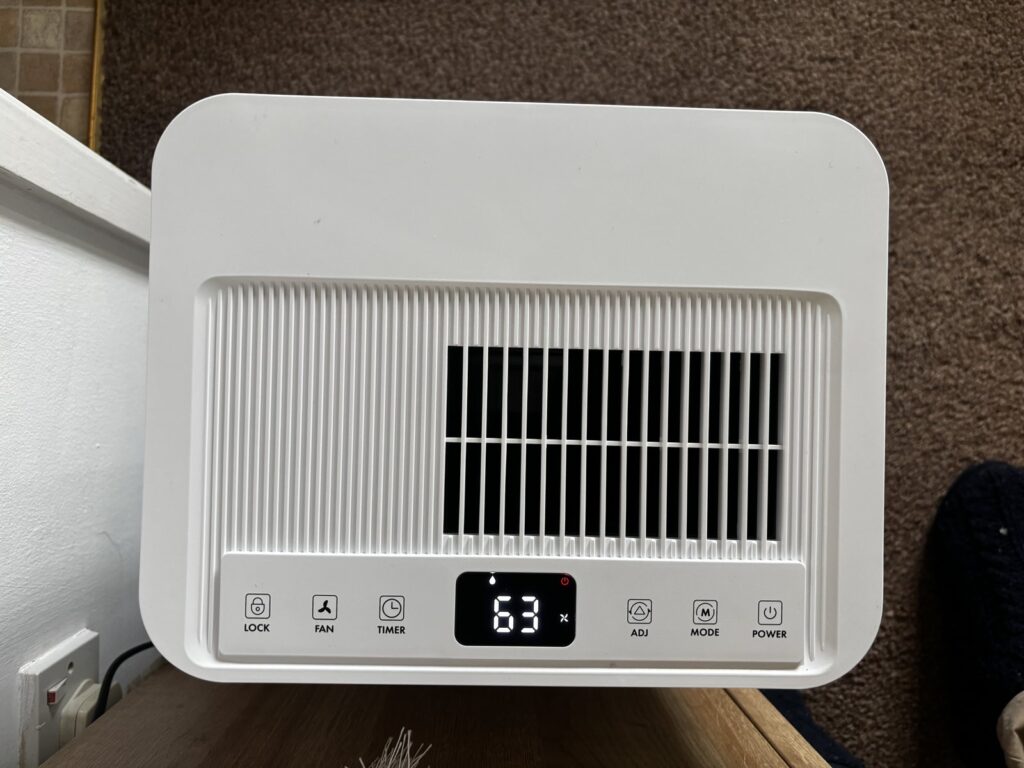
A typical 300W dehumidifier running for 8 hours costs around 63p at current UK rates (26.32p/kWh). In practice, with a humidistat set to 50%, it will cycle on and off rather than running continuously, bringing the real-world cost to 20–40p per night. For a measured figure: the VonHaus 20L we tested averaged about 237 W over 41 hours on Auto in a damp living room, cycling on and off, which works out at about 1.9 kWh, or roughly 50p, for an 8-hour night.
Last reviewed: September 2026
🏠 From the D&L Shop: Making your home warmer this winter? Our Winter Home Survival Guide covers heating, draught-proofing, condensation, energy bills, and keeping comfortable through the cold months — 11 pages, £8.99. Also free: the Sunday Reset Checklist (a calm weekly home reset, instant download). Browse the full shop →
Further reading: our guides to the best air purifiers and best dehumidifier and air purifier combos, and if you dry laundry indoors, the best dehumidifiers for drying laundry.
— Gareth
🛡 Our standards: How we research · Editorial policy · Affiliate disclosure · Corrections · Last reviewed: September 2026

About Gareth
Gareth Isherwood is the editor of Danbury & Lovejoy. He has baked bread at home for 25+ years and has 15 years of growing experience across gardens, containers and other growing spaces, including an East Sussex allotment for the past three years. Read his full story →
Was this useful?