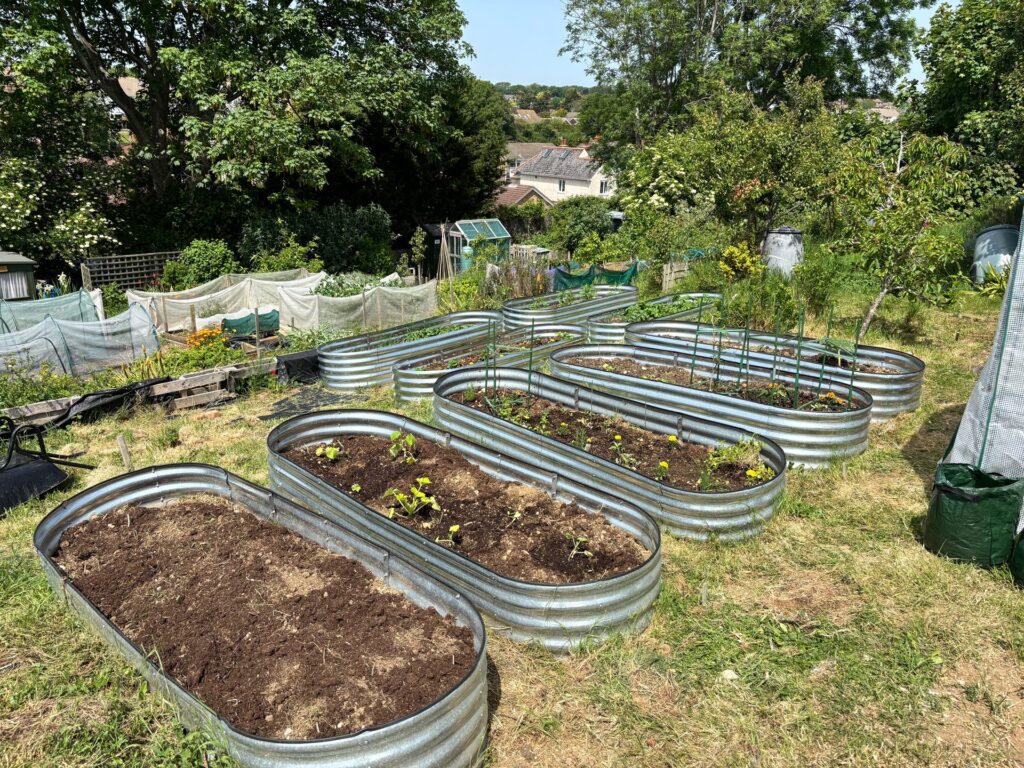


A raised bed is one of the single most transformative things you can add to a garden or allotment: they warm up faster than open ground, drain more freely in our typically sodden British winters, and let you build exactly the soil your crops need rather than battling whatever compacted clay or sandy nothing the plot handed you. They also bring the growing surface closer to you, which matters enormously if bending down for hours leaves your back protesting. After more than fifteen years of growing in East Sussex, the last three on an allotment, I have tried an embarrassing number of raised bed designs — fabric, galvanised steel, timber, tiered planters — and what follows are the five I would actually recommend to a friend.
✉ Join the Dispatch — a calm weekly note, every Thursday. Free.
How we chose these beds
We compared timber or metal quality and expected life outdoors untreated, depth for root crops, assembly and whether the frame stays square when filled, and the real cost of filling each one. These are researched picks, not first-hand reviews, and we don’t accept payment for placement. Read our full methodology →
Best Raised Garden Beds UK 2026
- Best Overall: Woodside Raised Wooden Garden Bed (150 cm)
- Best Budget (galvanised steel): Harbour Housewares Galvanised Steel Raised Bed (180 × 90 cm)
- Best Wooden: CERLAND Angelic 187L Wooden Raised Vegetable Garden Bed 100x100x36cm
- Best Tiered / Accessible: Outsunny 3-Tier Wooden Planter
- Best for Patios & Balconies: Selections Veg-Trough Wooden Raised Planter (75 cm)
What to Know Before You Buy
Material matters more than it looks. Untreated softwood is cheap and easy to work with but rarely survives more than three or four wet English winters before it softens and starts to rot at the base. Hardwood — oak, sweet chestnut, larch — lasts considerably longer and is worth the extra outlay if you are putting beds in a permanent spot. Galvanised steel beds have had a steep rise in popularity over the last few years and for good reason: a good quality corrugated steel bed will easily outlast a decade, it will not warp, and the zinc coating prevents rust even in a coastal county like East Sussex where the salt air eats through ordinary metal. Fabric beds, by contrast, are the surprising dark horse — they breathe, they prevent roots becoming pot-bound, they pack away entirely in winter, and they are remarkably tough for the price. Plastic raised beds tend to be lighter and cheaper but often feel flimsy in strong winds and can degrade under intense UV over several seasons.
Depth is not a detail. Salad leaves, radishes and herbs will manage in as little as 15 cm of soil, but they will always do better with more root run. Shallow-rooted crops such as lettuce, spinach and most cut-and-come-again greens want at least 20 cm. Carrots, parsnips and beetroot need a minimum of 30–40 cm, ideally more. Courgettes, tomatoes, climbing beans and anything with a big tap root want 45 cm or deeper. If you are placing a bed on concrete or paving, err on the generous side: you will not have the buffer of native soil below, so the bed itself must provide everything. A good rule of thumb: whatever depth feels like plenty, go one size up.
Lining, positioning, and the British weather. Most raised beds benefit from lining the interior walls (not the base) with a breathable landscape fabric or cardboard before filling — it slows timber rot, insulates the roots slightly, and stops fine compost washing out through gaps in the joints. Do not line the base: free drainage downward is the whole point. For positioning, a south- or south-west-facing spot is ideal in the UK, giving maximum sun hours even in our shorter spring and autumn days. Avoid low-lying frost pockets if you can. If you are filling from scratch, a mix of roughly 60% good topsoil and 40% well-rotted compost or garden compost is a solid starting point — far better than bagged multipurpose alone, which tends to compact and lose structure quickly.
The Reviews
Best Overall
Woodside Raised Wooden Garden Bed (150 cm)
Why we like it: The Woodside is a raised bed built for the way most people actually garden: standing up. It sits on legs at a height Woodside says saves you kneeling and bending, which is easier on your back and joints and makes it a good choice for older or less-mobile gardeners. The fir-wood trough is 150 cm long with a 43 cm planting depth — deep enough for most vegetables, including root crops — and it suits plants, vegetables and herbs alike. Set it against a wall or fence and you can train climbers up behind it. A plastic liner with drainage holes is included, there are two hanging hooks at each end for hand tools or hanging baskets, and it comes with full instructions and fixings.
- Material: Fir wood
- Dimensions: 150 cm long × 81 cm wide × 81 cm high
- Depth: 43 cm planting depth
- Assembly: Flat-pack; instructions and fixings included
- Liner included: Yes — plastic liner with drainage holes
Our honest take: It is the most expensive bed here, and a raised trough holds less soil than a big ground-level bed of the same length. Woodside doesn’t say on the listing whether the fir is pressure-treated, so lining the inside is sensible if you want it to last. But for comfortable, back-friendly growing with real root depth, on a patio or in the garden, it is the one we would point most people to.
This link is an affiliate link — if you buy through it, I may earn a small commission at no extra cost to you. Check price on Amazon →
Best Budget
Harbour Housewares Galvanised Steel Raised Bed (180 × 90 cm)
Why we like it: Galvanised steel raised beds have gone from a niche import to something you see in show gardens at Chelsea and RHS Wisley, and this Harbour Housewares bed is a well-priced way in. It is bottomless galvanised steel, which Harbour says resists rust, rot and insect damage — the long-life advantage steel has over timber — and it comes in a warm ivory finish rather than bare metal, which sits more quietly in a garden. At 180 cm × 90 cm it is a generous bed, and it raises the soil 30 cm, which saves a fair amount of bending.
- Material: Galvanised steel, ivory finish
- Dimensions: 180 cm × 90 cm (other shapes and sizes are sold separately)
- Depth: 30 cm
- Assembly: Not published on the listing
- Liner included: No — line the interior walls with landscape fabric before filling
Our honest take: This is the cheapest bed on this page and far cheaper than most steel beds, and 30 cm is enough for most vegetables. For long carrots or parsnips you would want more depth, so either stack your soil higher in the centre or grow root crops elsewhere. If you want a bed that won’t rot and you have settled on a spot, it is very good value.
This link is an affiliate link — if you buy through it, I may earn a small commission at no extra cost to you. Check price on Amazon →
Best Wooden
CERLAND Angelic 187L Wooden Raised Vegetable Garden Bed 100x100x36cm
Why we like it: The CERLAND Angelic is a straightforward square timber bed: 1 m by 1 m and 36 cm tall, holding 187 litres of soil — a proper patch for vegetables, herbs, salad leaves and flowers. CERLAND says it is made from FSC-certified natural wood that stands up to the weather, and the 36 cm height means less bending and enough depth for healthy roots. The pre-cut panels slot together and all the fixings are supplied, so it goes together in minutes. It works in a garden, on a patio or balcony, or in a greenhouse, and the natural timber look is still, in my view, the nicest-looking option in a well-kept garden.
- Material: FSC-certified natural wood
- Dimensions: 100 cm × 100 cm × 36 cm (187 litres)
- Depth: 36 cm
- Assembly: Pre-cut panels slot together; all fixings supplied
- Liner included: Not mentioned on the listing — worth lining the interior walls with landscape fabric
Our honest take: No timber bed lasts forever in the damp UK climate, and CERLAND doesn’t say on the listing how the wood is treated, so go in with realistic expectations and line the inside to help it last. At 36 cm it suits most vegetables; for long carrots or parsnips you would want more depth. It is a sensible, good-looking timber bed.
This link is an affiliate link — if you buy through it, I may earn a small commission at no extra cost to you. Check price on Amazon →
Best Tiered / Accessible
Outsunny 3-Tier Wooden Planter
Why we like it: The Outsunny 3-Tier Wooden Planter solves a problem that standard raised beds ignore entirely: not everyone can comfortably kneel or crouch at ground level, and for older gardeners, those with back problems, or anyone gardening from a wheelchair, the difference between a bed that can be reached sitting down and one that cannot is the difference between gardening and not gardening. The Outsunny’s stepped design puts the growing surface at a height that genuinely works — the upper tier sits at a comfortable, back-friendly height — and the painted wooden frame stands on A-shaped legs, with drainage holes in every box. It also looks genuinely attractive, with its tiered profile working well on a patio or in a sheltered corner of a garden where a more utilitarian bed might feel out of place.
- Material: Wood with a protective paint coating
- Dimensions: 65 cm long × 75 cm wide × 76 cm tall; each of the three boxes is 56 × 23 cm
- Depth: 17 cm in each box; up to 20 kg per tier
- Assembly: Required
- Liner included: No
Our honest take: Each box is only 17 cm deep, so this is for herbs, salad leaves and flowers rather than root crops or big plants. The overall planting volume is smaller than a standard flatbed raised bed, so this works best as a supplement to other growing space rather than the sole bed on a plot. For growing at a comfortable height in a small space, though, it is a sensible and inexpensive option.
This link is an affiliate link — if you buy through it, I may earn a small commission at no extra cost to you. Check price on Amazon →
Best for Patios & Balconies
Selections Veg-Trough Wooden Raised Planter (75 cm)
Why we like it: The Selections Veg-Trough solves a specific, real problem: growing on a hard surface — a patio, a balcony, a porch or a greenhouse — where you can’t put a bed directly on soil. It is a wooden trough on legs, so the growing surface sits at a comfortable height, and Selections points out that keeping the crop off the ground helps against slugs, snails and other ground-dwelling pests. You fill it with whatever compost or soil you like, which is useful if your own ground is poor. For anyone starting out, renting, or working with a small paved space, it is a sensible way into raised-bed growing without a large upfront cost.
- Material: Wood
- Dimensions: 75 cm × 49 cm × 59 cm
- Depth: 27 cm growing depth
- Assembly: Not published on the listing
- Liner included: Yes
Our honest take: The growing volume is modest, so manage expectations around yield, and 27 cm suits salads, herbs and short crops better than long roots. That said, for the price and the patio-growing use case, it is a sensible option in its category and a good way to start.
This link is an affiliate link — if you buy through it, I may earn a small commission at no extra cost to you. Check price on Amazon →
Frequently Asked Questions
How deep does a raised bed need to be for vegetables?
It depends on what you are growing. Salad leaves, radishes and most herbs will manage in 15–20 cm, but they will always do better with more. Brassicas, courgettes and most fruiting vegetables want at least 30 cm. Root crops — carrots, parsnips, beetroot — need a minimum of 30–40 cm to develop properly, and ideally closer to 45–60 cm for long varieties. If you are placing the bed on concrete or another hard surface with no soil below, add an extra 10–15 cm on whatever figure you arrive at to compensate for the lack of drainage buffer and additional root run beneath.
What do I put in the bottom of a raised bed?
If the bed sits on open soil, you can simply fill straight in — the roots will eventually work their way down into the native ground, which is actually an advantage. If you want to suppress weeds coming up from below, lay a single layer of cardboard or a sheet of breathable landscape fabric across the base before filling; both will break down over a season or two and let roots through. Avoid solid plastic sheeting on the base as it will prevent drainage and cause waterlogging. For beds placed on hard surfaces, there is no base layer needed — just fill and grow. Some gardeners use a hugelkultur-style layer of logs or woody material at the very bottom to improve moisture retention and provide slow-release nutrients as the wood decomposes, which works well if you have the material available.
Can I put a raised bed on a patio?
Yes, absolutely — it is one of the most common and practical setups in UK gardens, particularly in towns and terraced houses where the only outside space is a paved courtyard or rear patio. Aim for about 30 cm of depth for most vegetables (more for root crops; a 25–30 cm trough is fine for salads and herbs), and you should ensure the drainage from the bed will not damage the paving or cause a problem for neighbours. Placing the bed on pot feet or small wooden battens to allow water to escape freely underneath helps significantly. Weight can be a consideration on upper-floor balconies or older decking — if in any doubt, seek structural advice before filling. A good-quality peat-free compost mixed with topsoil is the right fill: bagged multipurpose alone compacts too quickly and does not hold moisture or structure through a full growing season.
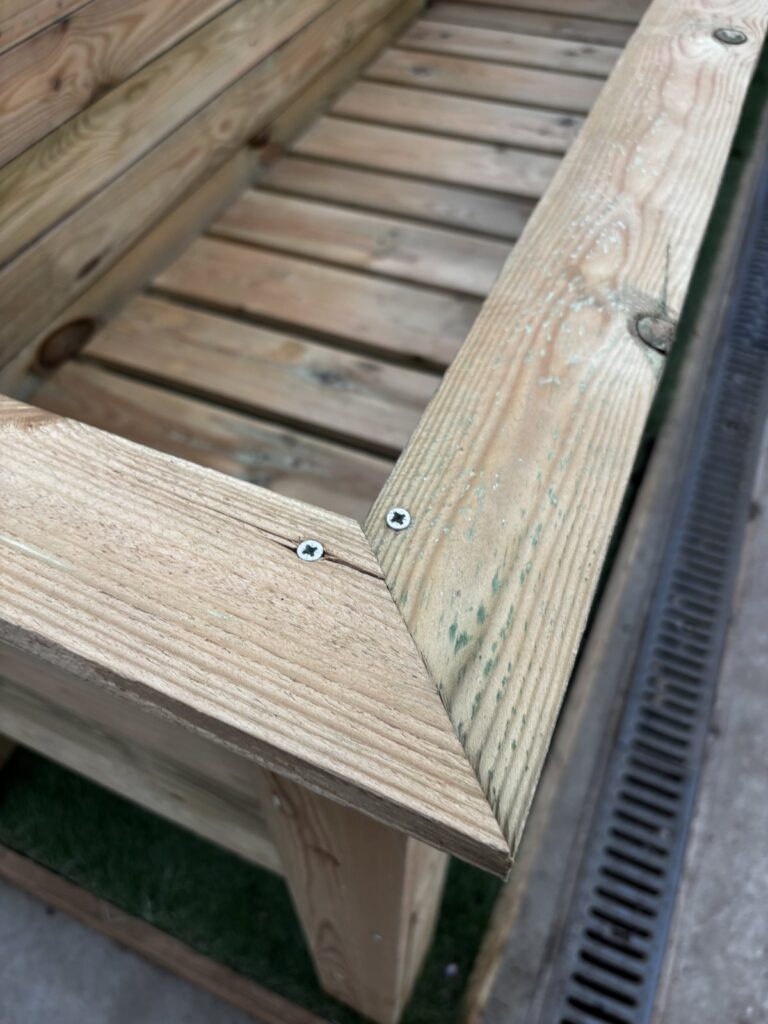
Look at the corner before you look at the price. On the timber beds at Tates in Newhaven on 29 August 2026, the capping rail was mitred and screwed down through the joint rather than butted together and nailed. That small difference decides how a bed ages: a mitre with a screw through it stays closed as the timber shrinks and swells, whereas a butt joint gradually opens into a gap that then sits full of water and rots from the inside. The green tinge in the grain is pressure treatment, which is what you want on anything in permanent ground contact. None of this shows up in a listing photograph, and it is the single most useful thing you can check with your own eyes in a shop.
A Final Word from the Allotment
I have been growing for over fifteen years, the last three digging an allotment on chalk, and one of the biggest shifts in how I grow came from building raised beds I could fill on my own terms. Good drainage, good soil structure, a warmer root zone in spring — the difference in germination rates and final yield is not marginal, it is transformative. Whether you start with a single trough on a balcony or put in a row of galvanised steel beds across a new plot, you are making one of the most worthwhile investments in your growing life. Buy the best depth you can afford, fill it well, and the soil will do the rest.
There’s more in our is growing your own food actually cheaper? the honest allotment maths roundup.
Related Guides
📋 From the D&L Shop: Planning your growing year? Our Your First Year on the Allotment guide covers every month from clearing the plot to your first proper harvest — written from 15+ years of UK growing experience. £9.99, instant PDF download. Also useful: the Allotment Plot Planner (£4.99) for mapping beds and planning crop rotation. Browse the full shop →
At a glance
| Model | Best for | Spec | Price tier | |
|---|---|---|---|---|
| Woodside Raised Wooden Garden Bed (150 cm) | Most households | 43 cm deep | £££ | Check price → |
| Harbour Housewares Galvanised Steel Raised Bed (180 × 90 cm) | Tight budget, galvanised steel | 30 cm deep | £ | Check price → |
| CERLAND Angelic 187L Wooden Raised Vegetable Garden Bed 100x100x36cm | Wooden | 187L | ££ | Check price → |
| Outsunny 3-Tier Wooden Planter | Tiered / accessible | 17 cm deep (3 boxes) | ££ | Check price → |
| Selections Veg-Trough Wooden Raised Planter (75 cm) | Patios & balconies | 27 cm deep | ££ | Check price → |

Selections Veg-Trough Wooden Raised Planter

Outsunny Raised Garden Bed, 3 Tier Planter Box Kit, 65 x 75 x 76cm, Tan | 66L Capacity, Wooden Elevated Design, for Flower Vegetable Herb, Outdoor Veg Planters

Harbour Housewares Raised Garden Bed - Ivory - 180 x 90cm - Rectangle - Bottomless Metal Raised Bed Galvanised Steel Planter Box for Growing Outdoor Plants, Vegetables, Flowers and Herbs
— Gareth
🛡 Our standards: How we research · Editorial policy · Affiliate disclosure · Corrections

About Gareth
Gareth Isherwood is the editor of Danbury & Lovejoy. He has baked bread at home for 25+ years and has 15 years of growing experience across gardens, containers and other growing spaces, including an East Sussex allotment for the past three years. Read his full story →
Was this useful?