✉ Join the Dispatch — a calm weekly note, every Thursday. Free.
Starting an allotment in the UK doesn’t require a shed full of tools — knowing what you actually need from day one saves money and gets you growing faster.
Getting an allotment is one of those decisions that feels enormous at the planning stage and entirely natural the moment you’re standing in a muddy plot in your wellies wondering where the afternoon went. The problem is that the internet is full of shopping lists that would furnish a small market garden. Most of it you don’t need. This is what you actually do.
Whatever your soil, aspect and weather, there is a version of this that doesn’t require spending a fortune before you’ve even planted a seed. Here’s what to buy, what to borrow, and what to leave on the shelf entirely.
When to Start: Autumn and Spring Both Work
If you’ve just been offered a plot in autumn, that is good timing rather than bad — councils offer plots from their waiting lists as they come free, and taking one on in autumn means you can clear the ground, mulch it and let winter do the hard work before spring. Spring is the other natural start: the soil is warming and direct sowings of salad, beans, courgettes and brassicas are all possible with the season ahead. Either way the kit below is the same. The temptation is to arrive with a van full of kit. Resist it. Start with the essentials, see what the plot actually needs, and build from there.
The Essentials: What to Buy First
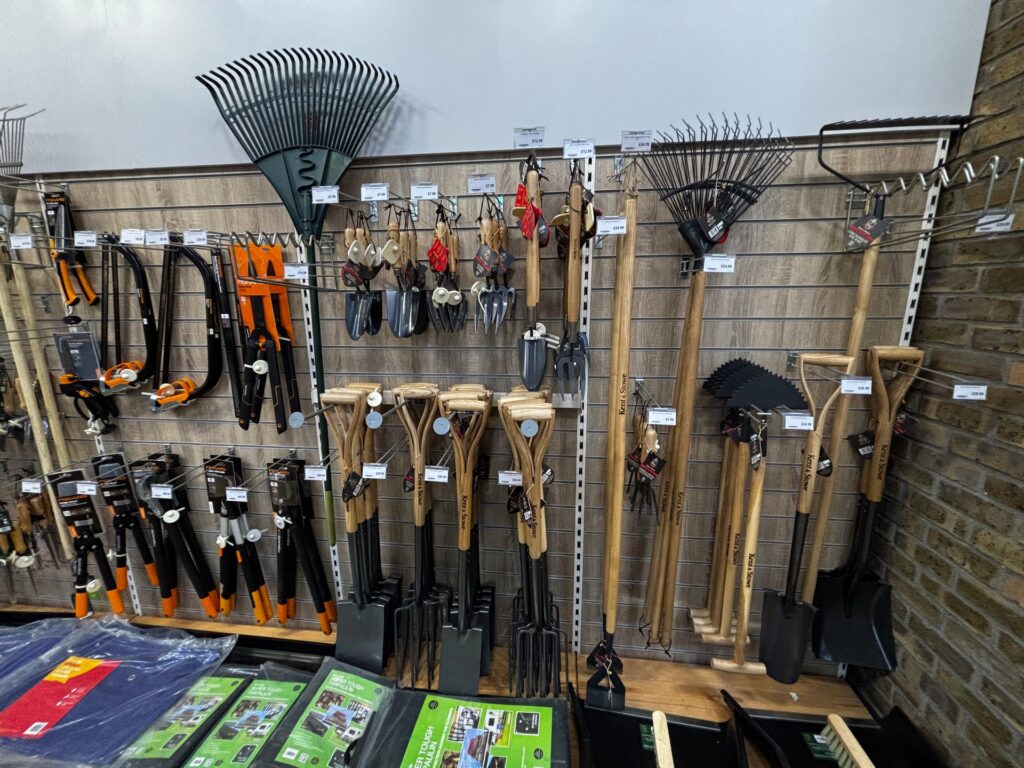
1. A Decent Stainless Steel Spade — around £30–£45
The single most important tool. Everything else is secondary. A stainless steel head won’t rust, slides into soil more easily than painted carbon steel, and is far easier to clean after a wet session. Avoid anything with a plastic shaft — it will disappoint you when you hit a root. Look for a D-handle if you’re not very tall; a T-bar if you prefer something you can lean into properly.
Stainless steel is worth paying for: it doesn’t rust, and soil slides off it. A good one to start with: this D-handle stainless digging spade →. Don’t buy cheap here — the handles split, the heads bend, and you end up buying twice.
2. A Trowel and Hand Fork Set — around £10–£15
For transplanting seedlings, working around existing plants, and the kind of close work a full spade can’t manage. Again, stainless steel over painted. The set format is useful because you’ll always want both nearby. A canvas tote bag hung on the shed door keeps them together — no more wandering around the plot looking for a trowel while the kettle boils.
Spear & Jackson stainless trowel & weed fork set →
3. Bypass Secateurs — around £15–£25
Bypass rather than anvil — bypass gives a cleaner cut that’s less likely to crush stems and introduce disease. You’ll use secateurs for deadheading, harvesting beans, cutting back old growth and about forty other things you hadn’t anticipated. A sharp pair makes the whole business feel rather professional. Keep the blade oiled and they’ll last years.
We recommend the Felco or Wilkinson Sword range — both widely available, well-reviewed and repairable if something goes wrong.
4. Peat-Free Compost (2–3 bags to start) — around £8–£12 per bag
Even if your plot soil is excellent, you’ll need compost for seed trays, raised beds and hungry feeders like courgettes. Peat-free is now the sensible default — the quality has improved enormously in the last few years and there’s no reason to be using peat-based compost for a home allotment. Coco & Coir do a well-regarded peat-free growing medium, or look for the RHS-endorsed mixes at your local garden centre.
5. Seeds from a Reliable UK Supplier — budget around £20–£30
This is where it gets enjoyable. A few reliable varieties for a first season: courgette (one or two plants will feed you all summer), runner beans or French beans (easy, productive, beautiful), salad leaves (cut-and-come-again from May), and something that excites you — a heritage tomato, an unusual squash, whatever made you want the allotment in the first place.
Thompson & Morgan is one I’ve ordered from — the variety notes are excellent and the website is genuinely useful for planning. Seed packets are good value: a single packet of courgette seeds (15–20 seeds, perhaps £3.50) will produce far more plants than one plot can use, so share with your allotment neighbours and you’ll make friends quickly.
6. A Watering Can — around £8–£15
Your plot may have a water supply; many have communal butts or standpipes. Either way, a decent watering can with a fine rose attachment is essential for watering seedlings without flattening them. Plastic is fine — it doesn’t need to be beautiful, it needs to hold 9 litres without the handle threatening to separate from the body.
7. A Garden Kneeler — around £12–£20
This sounds like a luxury. It isn’t. An hour of transplanting without something between your knees and the soil is an hour you’ll remember unkindly. A foam kneeling pad folds flat, weighs nothing and is an easy one to overlook. The reversible kneeler-bench type is excellent if you have any knee complaints at all.
8. A Compost Bin — around £25–£40
Plot waste — weeds (before they seed), spent plants, cardboard — all of it can go back into the soil via a compost bin. Many councils sell subsidised bins; check before you buy at full price. A 300-litre plastic bin is the standard allotment choice: unlovely but functional, and it’ll process material faster than a small garden heap. See our best compost bins UK guide for the Dalek, hot-bin and tumbler options.
What We’d Skip (at Least to Start)
A greenhouse or polytunnel. You almost certainly don’t need one in the first season. Windowsills and cold frames — often free from other allotment holders — will do the job while you learn what the plot actually needs.
A full set of long-handled tools. A spade, a fork (borrow one if you can), and a hoe will cover 90% of what you need. The rest can wait until you know whether you’ll be digging or no-dig.
Raised bed kits from garden centres. Timber kits are often expensive for what they are — lengths of treated timber that a local timber merchant will sell for a fraction of the price. If you do want a kit, galvanised steel is the kind I’d buy again; it’s what’s on my plot. This oval galvanised bed kit →
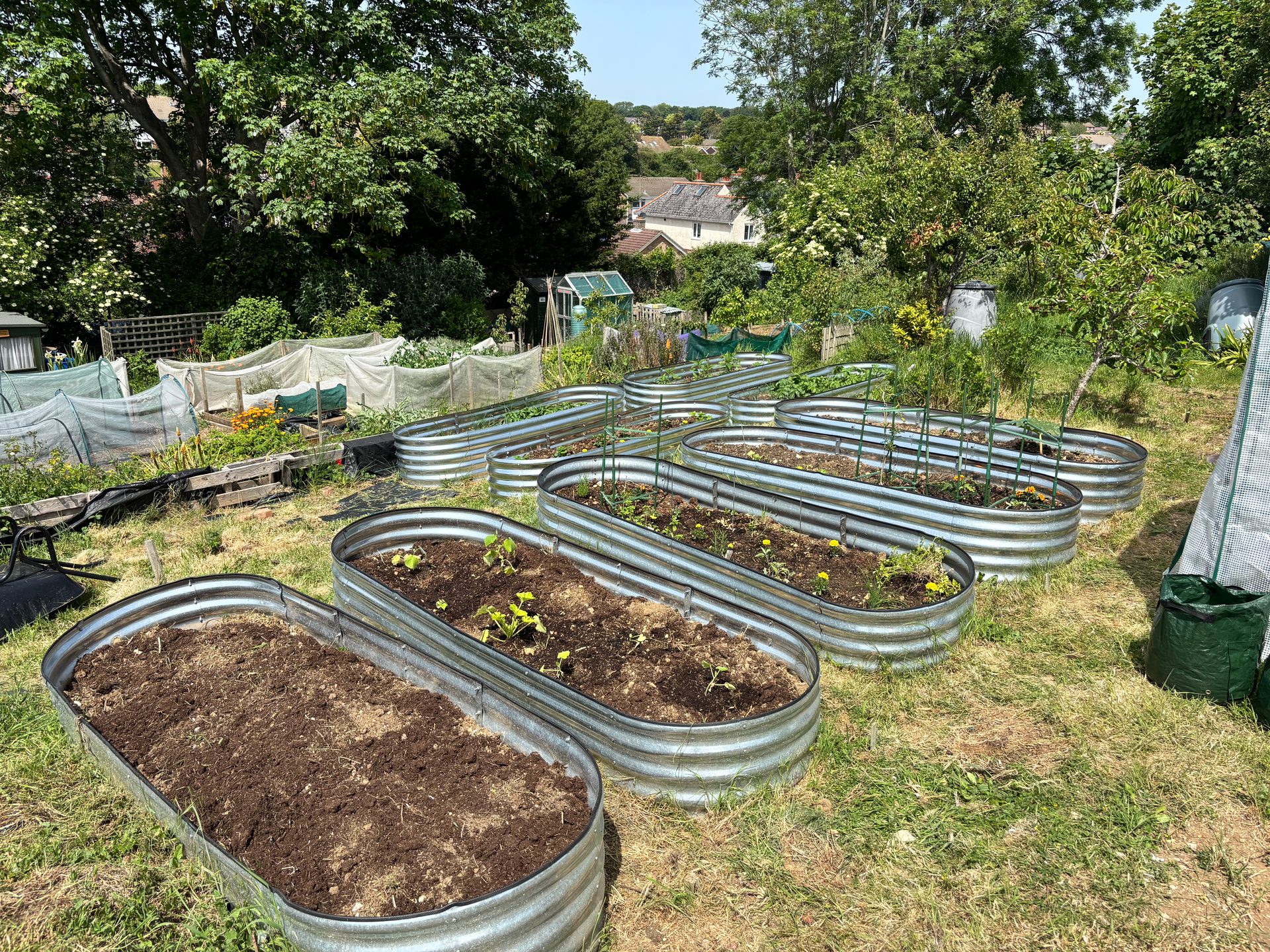
Expensive seed-starting kits. A tray of module cells (around £3–£5), a bag of seed compost, and a windowsill is all you need to start seeds indoors.
Rough Cost Summary
Starting from scratch with new tools and supplies, expect to spend somewhere in the range of £135–£215 for your first season’s essentials — add roughly £10 more if you buy three bags of compost rather than two. That is the honest total of the eight items above: a good spade, trowel set, secateurs, two bags of compost, seeds, a watering can, a kneeler, and a compost bin. Buy the spade and secateurs well and the rest cheaply, and you can land nearer the bottom of that range. Much of this kit will last years if you look after it — clean off the soil after use, oil metal blades, store tools under cover.
The allotment will cost you more in time than in money, and that’s rather the point of it.
Your First Month on the Plot
The kit is the easy part. What makes the first month go well is doing less, more carefully. Whether you take the plot on in autumn or spring, these are the things worth doing before you buy anything else.
- Look before you dig. Spend a visit or two just watching the plot: where water sits after rain, which parts get the most sun, which corners are sheltered. The weeds tell you about the soil too — nettles usually mean fertile ground, docks and thistles often point to compaction or poor drainage, and couch grass or bindweed mean deciding early whether to dig the roots out by hand or cover the ground.
- Cover what you won’t use. Lay two layers of plain cardboard (no glossy print) over any area you won’t plant this season, and spread a thick layer of compost or well-rotted manure on top. Most weeds weaken underneath, and the ground is far easier to work a season later. Tough perennials such as bindweed may still need digging out.
- Make one bed properly. Pick a patch, perhaps 3m by 4m, clear it thoroughly, fork it to one spade’s depth, take out every perennial weed root you find and work in compost. One well-made bed will do more for you in year one than a whole plot half dug. Double digging is rarely worth it unless drainage is a problem.
- Check the soil before sowing direct. If it’s cold, wet and sticky, seeds sit and rot. Wait until it crumbles in your hand and has started to warm, and sow under cover in the meantime.
- Sow something quick. A short row of radishes is ready in about a month and is a good morale boost while the rest of the plot is still a project. Sow salads in short rows every few weeks rather than one long row.
- Water sparingly in cold weather. Cold, wet compost is one of the quickest ways to lose seedlings to damping off. Water when the top couple of centimetres are dry, not on a schedule.
- Keep notes. What you sowed, when, what came up and what didn’t. A notebook is one of the most useful tools on the plot, and next spring it will save you repeating this year’s mistakes.
- Don’t compare. The immaculate plot at the end of the row has usually been worked for years. Start small, do it properly, and let the rest follow.
Also worth reading
Sources
Tool dimensions, materials and capacities are taken from manufacturer specifications and cross-checked against verified UK buyer reviews. Composting guidance follows RHS composting guidance, and advice on growing vegetables in containers follows RHS guidance on growing vegetables in containers.
Was this useful?