
Cheese scones take about half an hour from getting the flour out to eating one warm, and everything in them is probably already in the fridge and the cupboard. They’re the obvious partner for a bowl of soup.
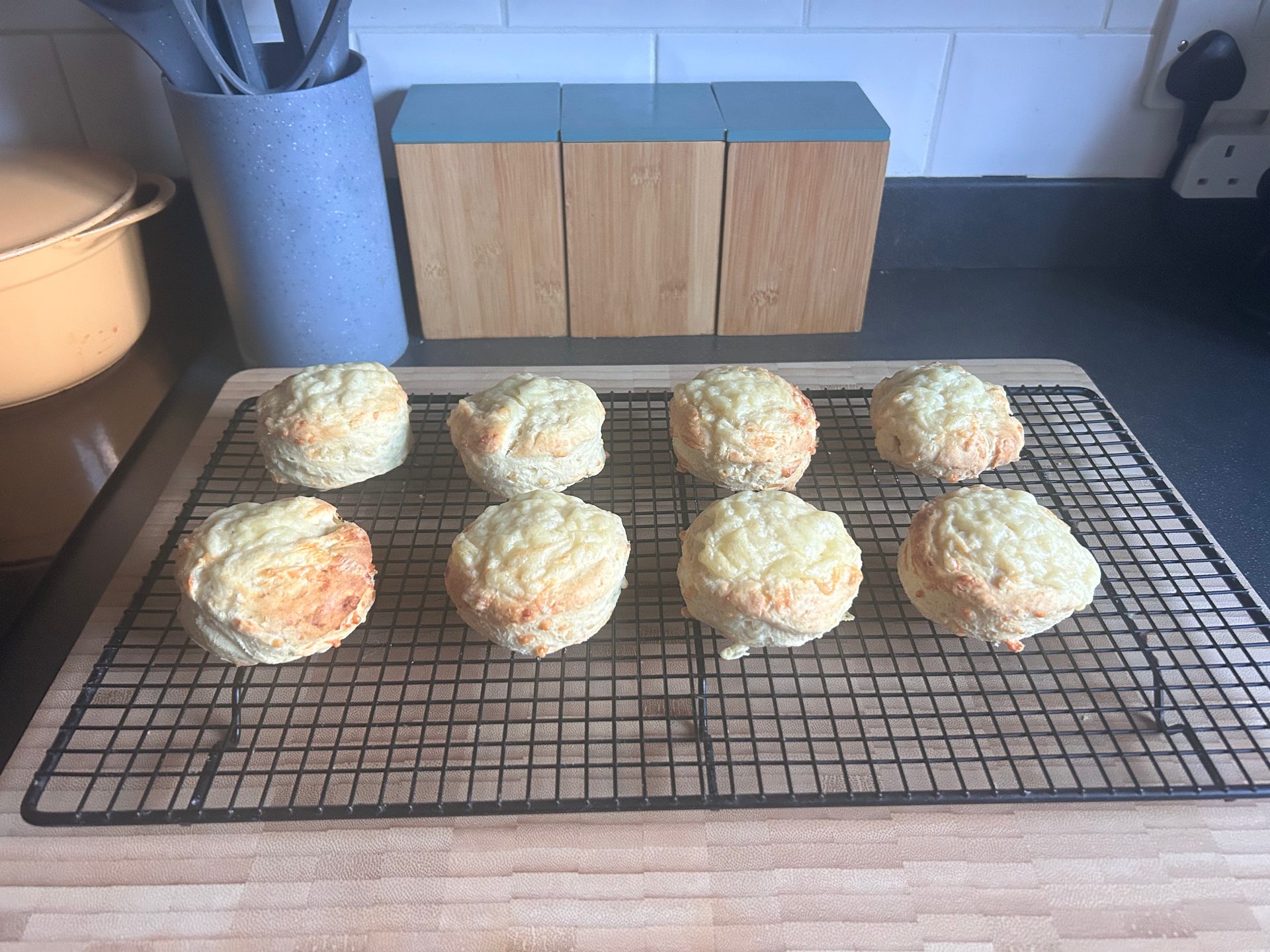
Clare made these on a Sunday at the end of October and took the photos on this page. She used our food processor to rub the butter into the flour, which takes seconds and keeps the butter cold, then tipped the crumbs into a bowl and stirred in the cheese and milk by hand with a knife. For the mustard she used a teaspoon of ready-made English mustard whisked into the milk, rather than mustard powder. They were done within the 12–15 minutes in the recipe, and all eight rose well and evenly. The recipe below is what she did, with the fingertip method if you don’t have a processor.
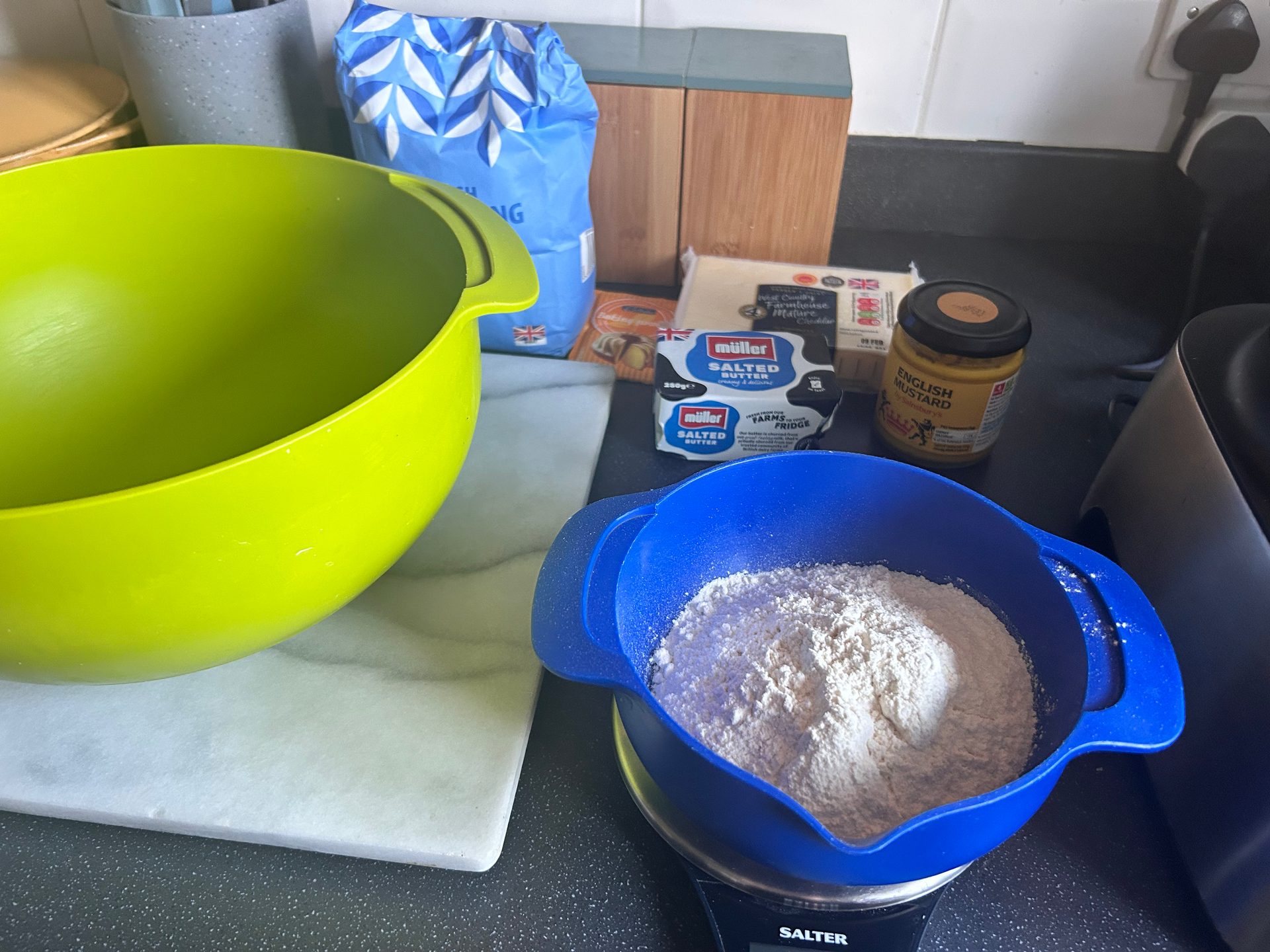
Cheese Scones
Mature cheddar and a little English mustard in a quick scone dough, with more cheese on top. The butter is rubbed in with a food processor or your fingertips.
Ingredients
- Self-raising flour, plus extra for dusting 225g
- Baking powder 1 tsp
- Fine salt a pinch
- Cold butter, cubed 55g
- Mature cheddar, grated (100g for the dough, 25g for the tops) 125g
- Ready-made English mustard 1 tsp
- Milk, plus a little for glazing 150ml
Method
- Heat the oven to 220°C (fan 200°C, gas 7) and line a baking tray.
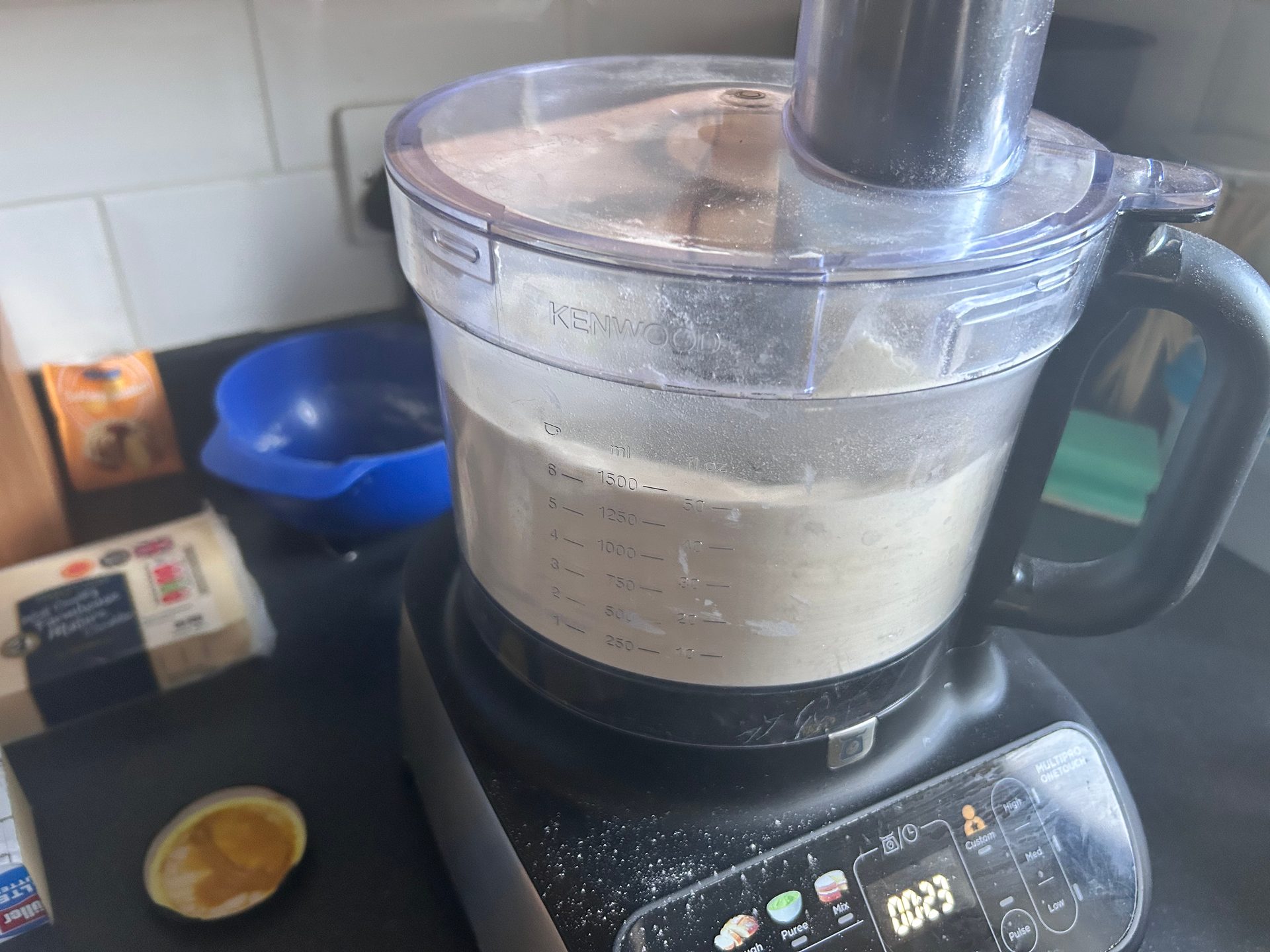
- Put the flour, baking powder, salt and cubed butter in a food processor and pulse until it looks like fine breadcrumbs. No processor? Rub the butter into the flour with your fingertips instead.
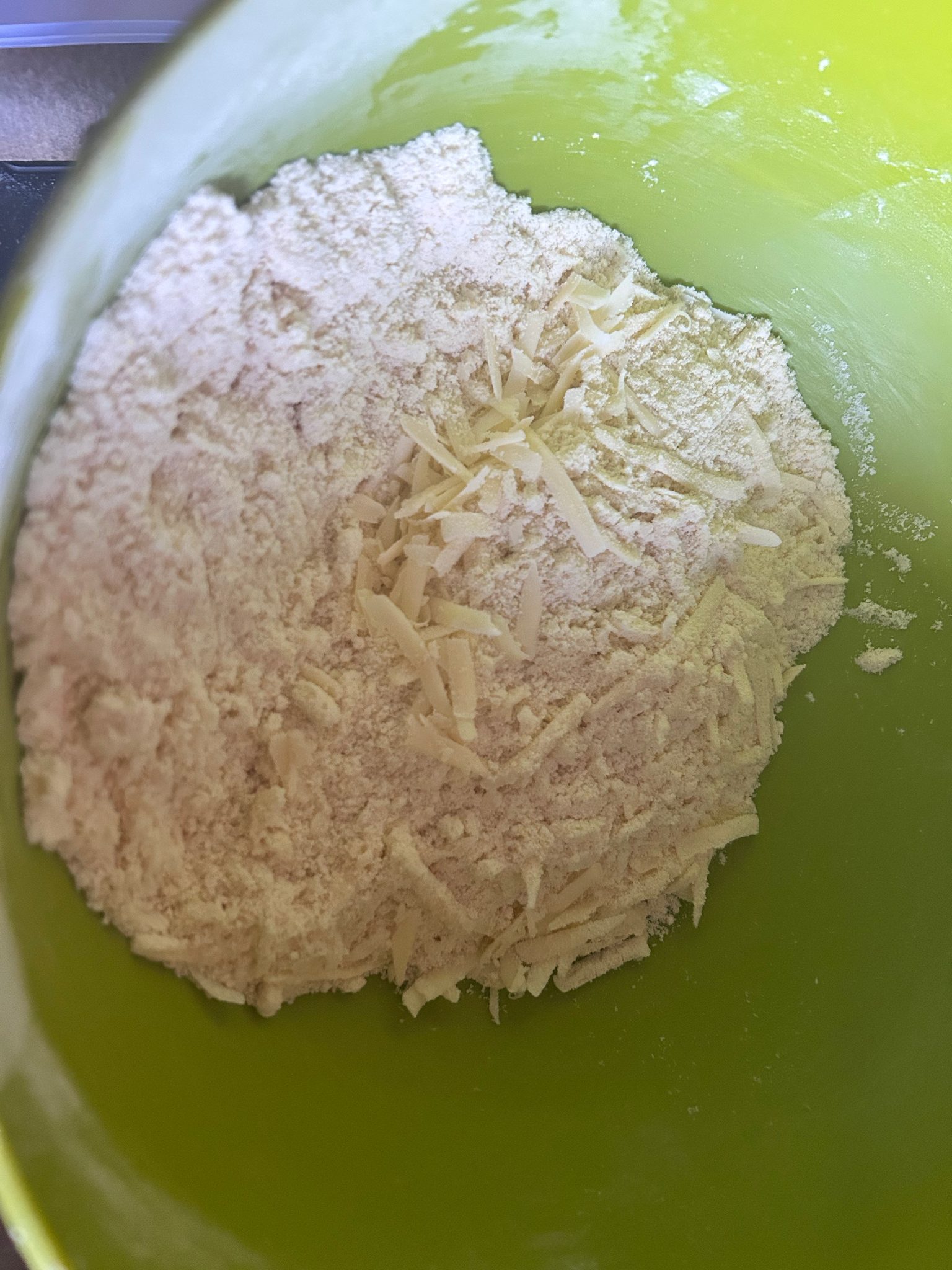
- Tip the crumbs into a mixing bowl and stir in 100g of the cheese.
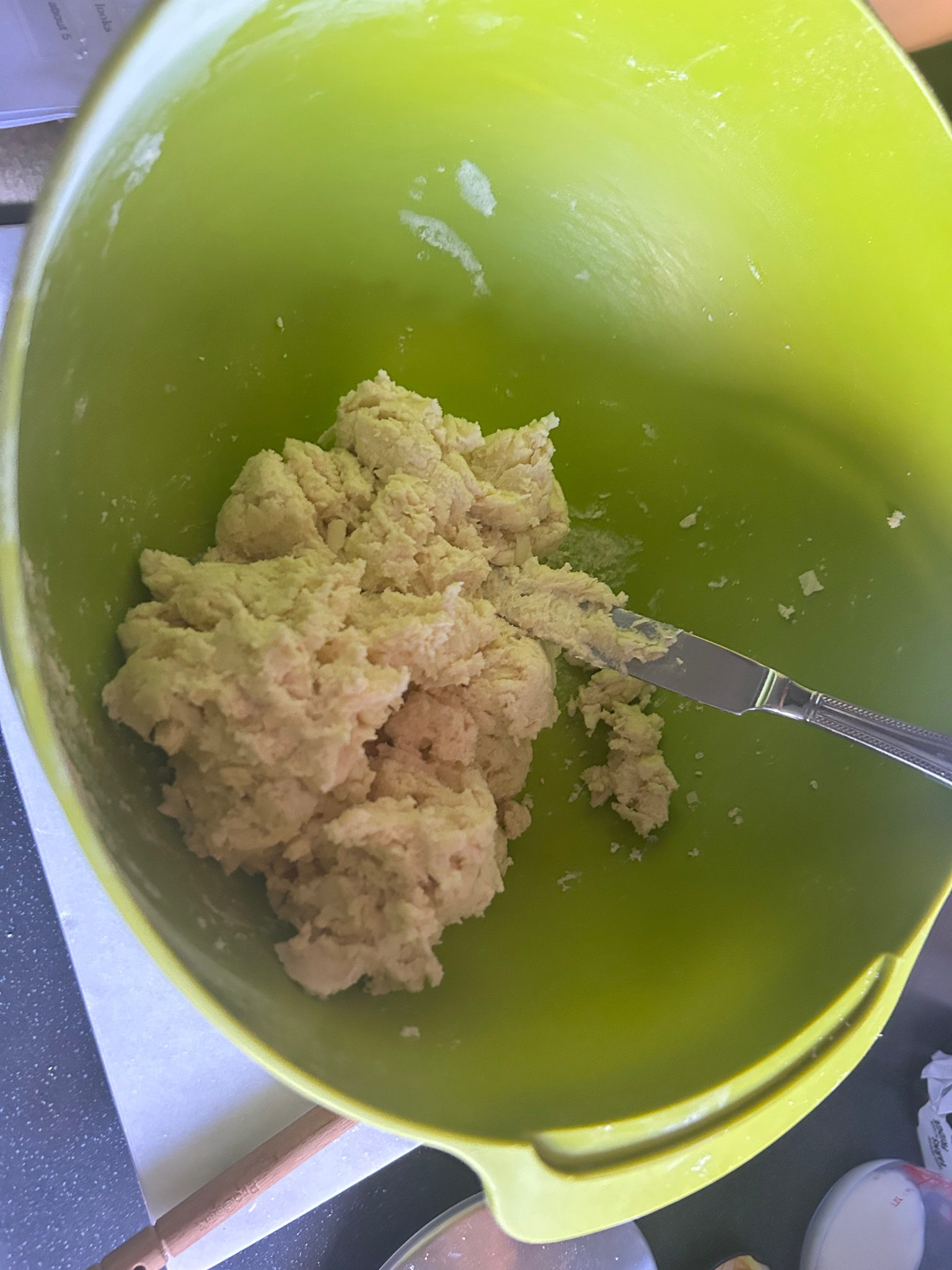
- Whisk the mustard into the milk, pour it in, and mix with a knife to a soft dough.
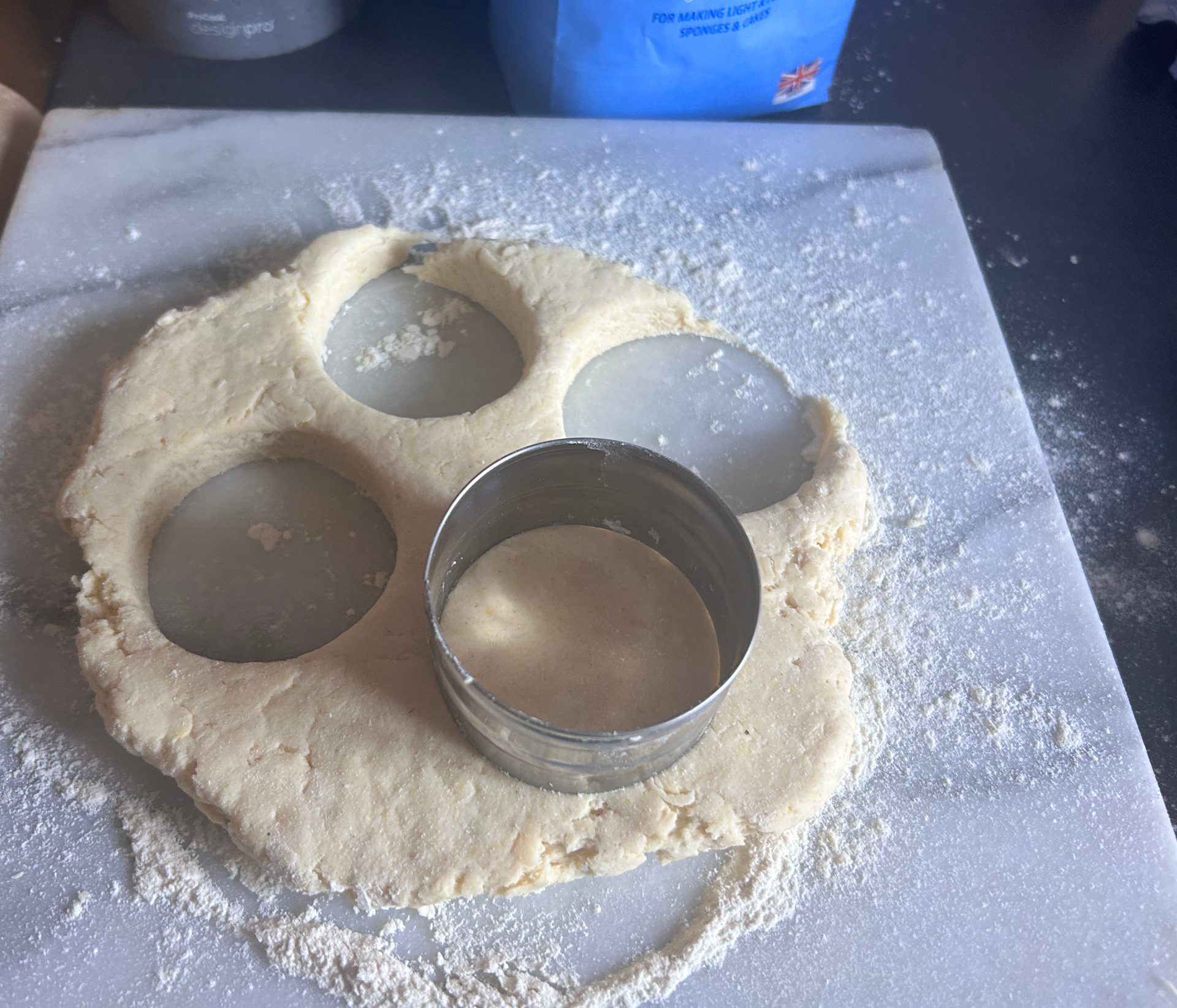
- Pat it out on a floured surface to 2.5cm thick. Cut straight down with a 6cm cutter (no twisting) and re-pat the trimmings to cut the rest.
- Put them on the tray, brush the tops with milk and sprinkle over the rest of the cheese.
- Bake for 12–15 minutes until risen and golden. Eat warm.
Step by step

Tips for getting it right
- Pulse, don’t run the processor. Short bursts until it looks like breadcrumbs, then stop. Running it on warms the butter and starts to make a paste.
- Add the cheese and milk by hand. Mixing with a knife in a bowl brings the dough together without overworking it, which keeps the scones light.
- Cut straight down. A twisted cutter seals the edges and the scones rise lopsided. Press down firmly and lift straight out.
- Get the oven hot first. Scones need a hot oven from the moment they go in, so heat it before you start mixing.
- Mustard powder works too. If that’s what you have, use 1 tsp and mix it in with the flour instead.
How to serve them
Warm, split and buttered. They’re best with a bowl of soup: try our leek and potato soup, or find more on our Soup Season page.
Keeping and freezing
- Keep: in an airtight tin for up to 2 days. Warm them for a few minutes in a low oven to freshen them up.
- Freeze: once cool, for up to 3 months. Defrost at room temperature, then warm them through.
FAQs
Can you make scones in a food processor?
Yes, for the rubbing-in. Pulse the flour, baking powder, salt and cold butter until it looks like fine breadcrumbs, then tip it into a bowl and mix in the cheese and milk by hand. Finishing by hand stops the dough being overworked.
What cheese is best for cheese scones?
A mature or extra-mature cheddar. A strong cheese keeps its flavour through baking, so you taste it without needing a huge amount.
Why do you put mustard in cheese scones?
A little English mustard brings out the flavour of the cheese without making the scones taste of mustard. Ready-made mustard whisked into the milk or a teaspoon of mustard powder both work.
Why didn’t my scones rise?
The usual causes are an overworked dough, a twisted cutter that seals the edges, or an oven that wasn’t hot enough when they went in. Mix lightly, cut straight down and heat the oven before you start.
Can you freeze cheese scones?
Yes. Freeze them once they’re completely cool, for up to 3 months. Defrost them at room temperature and warm them in the oven for a few minutes before serving.
Was this useful?