📅 Reading this off-season? For what to cook right now, see our current seasonal recipes guide.
There are months that feel abundant and months that feel like waiting. May is neither. It is precise — a narrow corridor of flavour that opens quickly and closes before you’ve quite made the most of it. The asparagus season, which runs from late April until midsummer’s day on the 21st of June, defines the month more than anything else. But there’s rhubarb reaching its outdoor peak, the last of the winter brassicas making themselves useful, radishes coming through fast, and — if you planted early enough — the first new potatoes beginning to swell underground.
I’ve grown my own for about fifteen years, the last three on an East Sussex allotment. What that teaches you about May is that the season does most of the thinking for you. You don’t need complex recipes. You need good ingredients and a light hand. The best thing you can do in May is cook simply and pay attention.
Asparagus
If you grow your own asparagus, you’ll understand why people become slightly reverential about it. It takes the better part of three years from planting crowns before you can harvest a meaningful amount — you’re nurturing the plant, building the root system, waiting. And then one May morning you go out and the spears are there, pushing through the soil with that particular urgency, and something shifts. The waiting makes you cook it carefully.
In the shops, asparagus is expensive, and that’s partly because the British growing season is genuinely brief. What you’re paying for is timing. Buy it loose if you can, look for tight, firm tips and stems that don’t look fibrous at the base, and cook it the day you buy it.
As for cooking it: almost nothing. A griddle pan very hot, the spears laid in with a brush of olive oil, turned once or twice until they’re blistered in places and tender through. Soft-boiled eggs alongside, with good bread and butter, is a meal that needs nothing more. If you want to dress it, a squeeze of lemon and some shaved Parmesan is as far as it needs to go.
What asparagus cannot survive is overcooking. It goes from vivid and yielding to drab and limp in the time it takes you to answer a phone. Watch it. Stay close.
If you don’t own a griddle pan, this is the May to put that right.
Rhubarb
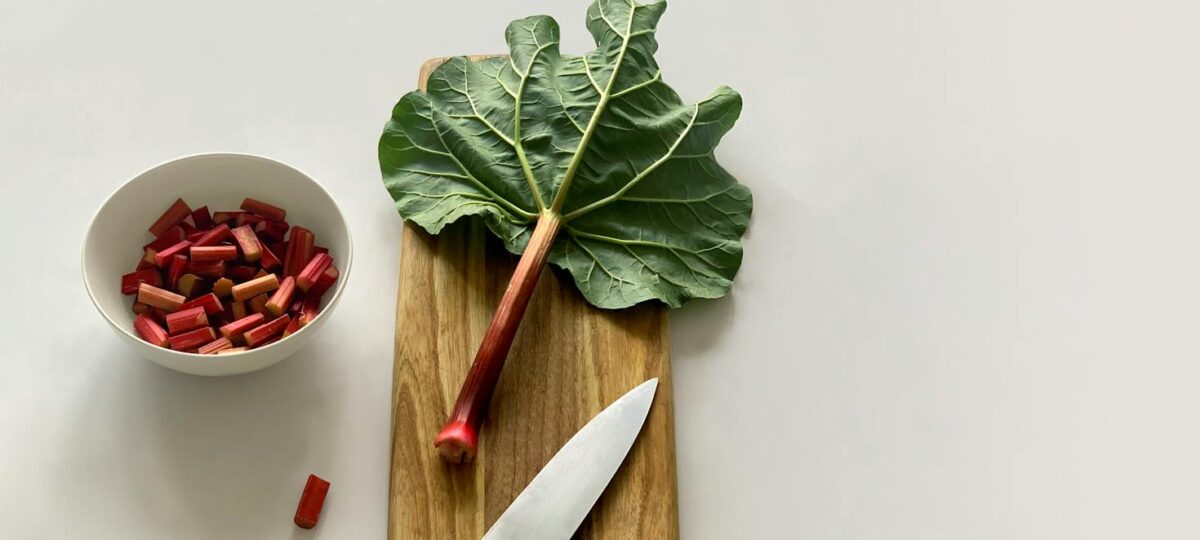
May is when outdoor rhubarb hits its stride. Deeper in colour, more tart, more itself. It doesn’t need much sugar if you let it be what it is.
A rhubarb fool is worth making first — the stalks chopped and stewed briefly with a little sugar, cooled, then folded loosely through whipped cream so it stays streaky and uneven. Served cold from the fridge on a May evening, it is a genuinely elegant pudding made from very little.
Rhubarb compote is worth making in a batch: stalks, a small amount of sugar, a strip of orange zest, a thumb of fresh ginger. Cook it gently until it just collapses, then cool and jar it. It keeps in the fridge for a week and goes beautifully on porridge, on yoghurt, alongside cold pork, or simply spooned over vanilla ice cream.
Spring Greens, Kale and Radishes
These are the practical produce of May — less glamorous than asparagus, cheaper, and endlessly useful. Spring greens and kale are at the end of their winter run now, and the flavour is still good. Wilted in a pan with a generous knob of butter and a crushed clove of garlic, they go alongside almost anything: a piece of fish, a fried egg, a bowl of pasta with just olive oil and cheese.
Radishes are the fastest thing I grow on the allotment — four to six weeks from seed to harvest, which means an early April sowing gives you radishes in May. Eaten raw with good unsalted butter and flaky salt, the French way, they are a proper pleasure. Quick-pickled in cider vinegar with a little sugar and salt, they keep in the fridge for a week and brighten sandwiches and grain bowls.
New Potatoes
If you planted first earlies in March — under fleece in East Sussex, or in bags if space is tight — you might be lifting the first new potatoes by the end of May. There is a smell when you pull new potatoes from the ground that is specific to them — earthy, faintly sweet, green at the edges. It doesn’t survive the supermarket. If you can grow any at all, even in containers, grow new potatoes.
The cooking is simple: into cold salted water, brought gently to the boil, simmered until a knife slides through without resistance. Drain, let steam dry, then toss in butter with fresh mint. That’s the recipe. Jersey Royals from the shops, available now through to late June, are the nearest equivalent if you’re not growing your own.
Cooking Principles for May
The temptation at this time of year is to do too much. But May produce doesn’t need technique — it needs restraint. The asparagus has its own flavour. The rhubarb has its own acidity. The new potatoes have their own sweetness. Your job is to not get in the way.
A good knob of butter. A drizzle of olive oil that you like the taste of. Fresh herbs — mint, parsley, chives — rather than dried. Salt at the end rather than throughout. Heat that respects what you’re cooking: high for the asparagus, gentle for the rhubarb, careful for the potatoes.
What’s in the Shops Right Now
What to seek out: British asparagus (the season is running now — buy it); outdoor rhubarb; Jersey Royal potatoes; spring onions; radishes; new season garlic. Strawberries are arriving towards the end of May — British ones, not the Spanish imports that have been in the shops since February. The difference in flavour is marked. Wait for them if you can.
What can wait: courgettes, French beans, sweetcorn. These are summer produce that will be genuinely good in July and August. In May they’re imported and expensive. Buy them in season and they’ll be cheaper and better.
The Pivot Month
May is the month where the year decides what it’s going to be. Eat the asparagus now, while it’s here. Make the rhubarb fool before June arrives and rhubarb turns coarse and bitter. Lift the first new potatoes and eat them the same evening. These small seasonal acts accumulate into a way of eating that is genuinely satisfying — not because it’s fashionable or virtuous, but because things in season taste like what they are. The summer glut comes soon enough. For now, enjoy the precision of May.
🛡 Our standards: How we research · Editorial policy · Affiliate disclosure · Corrections

About Gareth
Gareth Isherwood is the editor of Danbury & Lovejoy. He has baked bread at home for 25+ years and has 15 years of growing experience across gardens, containers and other growing spaces, including an East Sussex allotment for the past three years. Read his full story →
Was this useful?