Some of the links below are affiliate links: if you buy through them we may earn a small commission at no extra cost to you. As an Amazon Associate I earn from qualifying purchases. We only suggest things we would recommend to a friend — see our affiliate disclosure and how we research.
✉ Join the Dispatch — a calm weekly note, every Thursday. Free.
August is the month of the glut. Whatever you grew well, you grew a lot of, and now you have to deal with it. Everything you need for the growing year is in our Garden & Outdoor hub. The plot is generous to the point of overwhelming, the days are still long, and somewhere around the third week you’ll feel the first cool morning that says autumn is on its way.
August on my chalky East Sussex plot — three years in, on top of 15 years of growing elsewhere — is a balance of three things: keeping up with picking and processing, starting the autumn sowings, and quietly clearing the spent summer crops as they go over. Get those right and September is a calmer month than it would otherwise be.
Managing the Glut
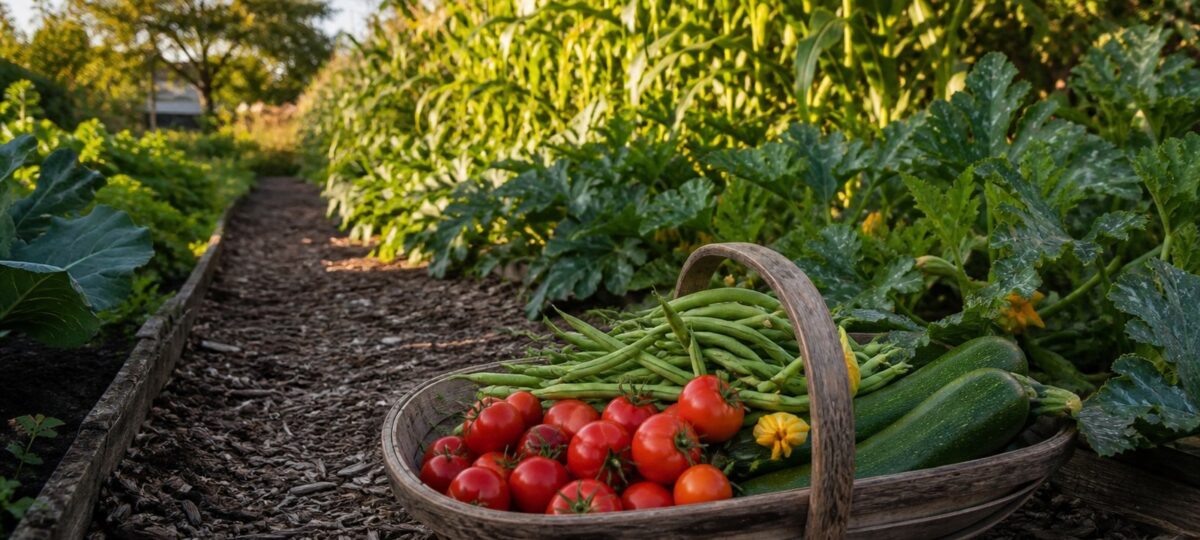
The most common gluts on a UK allotment in August are tomatoes, courgettes, runner beans, and cucumbers. The honest answer to “what do I do with all this?” is: pick it before it goes over, and process it the same day if you can. A courgette left on the plant for four days is a marrow; a tomato left a week is split or rotting; a runner bean left to fatten is too stringy to eat.
- Tomatoes — pick as they colour. Underripe tomatoes finish ripening on a windowsill. Don’t leave fully ripe fruit on the vine in heat — it splits.
- Courgettes — pick at 15cm, every day or two. A daily check beats a weekly one for total yield.
- Runner beans — pick when the pods are still flat and the beans inside aren’t bulging. Once they go knobbly, they’re too old.
- Cucumbers — pick at full size before they yellow. Plants stop producing if old fruit is left on.
For a glut, our courgette and tomato glut recipes cover most of what August throws at you.
August Sowings: The Autumn Setup
Sowing in August feels strange when so much is already cropping, but several windows are short and easy to miss.
- Spring cabbage — last call. Sow in modules early August for planting out late September.
- Spring onions — a late August sowing of an overwintering variety (e.g. White Lisbon Winter Hardy) gives spring onions through to next April.
- Winter salad leaves — lamb’s lettuce, winter purslane, claytonia, mizuna, mibuna. All happy to be sown direct in August for autumn and winter cropping.
- Pak choi and oriental greens — second window. They bolted in July; August sowings catch the cooler nights.
- Overwintering broad beans — Aquadulce Claudia and similar. Sow late August into September for an early June crop next year.
- Hardy peas — Meteor and other cold-tolerant varieties from late August for an early crop. Worth the gamble in milder areas.
- Green manures — empty beds (where broad beans, garlic, onions came out) benefit from a quick green manure crop. Phacelia, mustard or field beans add organic matter and protect bare soil through autumn.
Plantings and Pinching
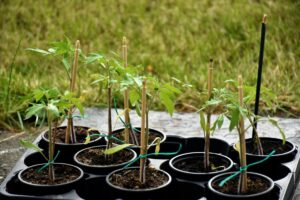
- Strawberry runners — if you took runners in July, plant them out into their final positions now. Water in well; they need to root before winter.
- Spring cabbage seedlings from a July sowing can be planted out late August into prepared ground.
- Tomatoes (cordon) — pinch out the growing tip if you haven’t already. After mid-August, no new flower will set fruit before the season ends; better to channel energy into the fruit already on the plant.
- Outdoor tomatoes — remove lower leaves up to the first ripening truss. Improves airflow and reduces blight risk.
- Squash and pumpkins — pinch the tip of each main shoot in mid-August so the plant focuses on ripening existing fruits, not making new ones.
- Sweet peas — keep picking. Once you let pods set, the plant stops flowering.
Summer Pruning: Trained Fruit Trees
Cordon and espalier apples and pears benefit from summer pruning in August (the modified Lorette system, traditionally). The aim is to slow extension growth and encourage fruit-bud formation for next year. Cut this year’s new shoots back to three or four leaves above the basal cluster, leaving the main framework alone. Free-standing trees are pruned in winter; only trained forms get a summer cut.
The August Harvest
- Tomatoes (outdoor) — first proper pickings from outdoor plants from mid-August.
- Sweetcorn — ready when the silks are brown and a thumbnail-pressed kernel runs milky (clear means immature; thick paste means over-ripe). Eat the same day if at all possible.
- Squash and courgettes — keep picking courgettes; let winter squash continue ripening.
- Onions and shallots — finish lifting once the tops have gone over, dry in the sun for a week, then store somewhere airy.
- Beans — climbing French and runner beans in full swing.
- Apples (early varieties) — Discovery, Beauty of Bath. They don’t keep — eat or process within a week of picking.
- Plums — ready as they soften. Pick before wasps find them.
- Blackberries — wild and cultivated, full swing.
- Late raspberries (autumn-fruiting) — first pickings.
- Salads — keep going if you’ve kept up the successions.
Pests and Problems in August
- Tomato and potato blight — peak risk in warm, humid weather. Outdoor tomatoes most vulnerable. Brown leaf patches that spread fast = blight; remove affected foliage immediately and bin (don’t compost). Once blight has set in, accelerate ripening (pinch out, remove most leaves) and bring fruit indoors to finish.
- Powdery mildew — courgettes, squash, cucumbers all show it now. Water deeply at the roots; remove badly affected leaves; in very bad cases, accept the season is winding down for that crop.
- Wasps — on apples, plums, soft fruit. Pick fruit promptly; don’t leave damaged fruit on the tree.
- Cabbage white caterpillars — second generation. Check brassicas every couple of days; pick off eggs and caterpillars.
- Slugs (after rain) — late summer rain brings slugs back to the salad rows.
Quick Picks

Selections Natural Willow Garden Trug Storage Harvesting Basket with Folding Handles

Kilner Set of 3 Round Clip Top Jars 0.5 Litre (3 x 500ml) Airtight Glass Storage Jars for Preserving Jams Dry Foods Reusable

VELCRO Brand ONE-WRAP Plant Ties Tape, 12mm x 5m, Green - Reusable, Plant-Friendly Secure Solution For Tree Ties Straps, Plant Clips, VEL-EC60202,package may vary
August Jobs at a Glance
- Pick tomatoes, courgettes, runner beans daily or every other day
- Sow spring cabbage, winter salads, overwintering broad beans
- Plant out strawberry runners and spring cabbage seedlings
- Pinch out tomato and squash growing tips mid-month
- Summer-prune trained apples and pears
- Lift onions and shallots; cure in the sun
- Watch for blight; remove affected foliage and bin
- Pick apples and plums before wasps and birds get them
- Sow green manures into empty beds
- Process and preserve the glut as it comes in
August is the harvest month, and the work is mostly relentless picking and tidying rather than planning. Looking back at July’s jobs if you’re catching up. September picks up here — the pivot month between summer and autumn. For the wider summer picture, see the Summer Outdoor hub.
You’ll find more growing guides and seasonal advice in our Garden & Outdoor hub. Good luck out there — and remember, if it’s still on the plant tomorrow, you’ve waited too long.

Heavy Duty Soft Flexible Butterfly Brassica Crop Protection Netting Insect Garden Mesh 5mm x 7m - Many (Soft Butterfly Protection Netting 3m x 6m)
Last reviewed: August 2026
🛡 Our standards: How we research · Editorial policy · Affiliate disclosure · Corrections · Last reviewed: August 2026

About Gareth
Gareth Isherwood is the editor of Danbury & Lovejoy. He has baked bread at home for 25+ years and has 15 years of growing experience across gardens, containers and other growing spaces, including an East Sussex allotment for the past three years. Read his full story →
Was this useful?