Some of the links below are affiliate links: if you buy through them we may earn a small commission at no extra cost to you. As an Amazon Associate I earn from qualifying purchases. We only suggest things we would recommend to a friend — see our affiliate disclosure and how we research.
✉ Join the Dispatch — a calm weekly note, every Thursday. Free.
June is when the growing year finally hits its stride. The hesitation of late spring is gone, the tender crops are in the ground, and the plot starts pulling its weight. Everything you need for the growing year is in our Garden & Outdoor hub. By the end of the month, you should be eating something from the plot most days — broad beans, salad leaves, the first new potatoes — and the pace of work shifts from planting to keeping up.
It’s also when the British weather first stops being a friend. The first proper heat catches a lot of people out. Most of June’s work is about staying ahead of growth rather than starting things from scratch.
The First Real Heat: When to Start Worrying About Watering
The first proper hot spell of the year usually arrives in June, and it tends to come faster than gardeners expect. A run of three or four sunny days with light winds will dry out the top inch of soil quickly — and seedlings, newly planted-out tender crops, and anything in pots are the first to suffer.
A few practical rules to work to:
- Water the soil, not the plant. Aim the can or hose at the base of the plant. Wet leaves in full sun don’t usually scorch (that’s a myth) but they do encourage fungal trouble overnight.
- Water deeply and less often. A proper soak twice a week beats a daily splash. Shallow watering trains roots to stay near the surface, which is exactly where they don’t want to be in a heatwave.
- Mulch as soon as the soil is warm and damp. Grass clippings, well-rotted compost, or straw — anything that breaks the link between sun and soil. June is the right month for this if you didn’t get to it in May.
- Pots and grow bags need watering daily from late June onwards. Tomato plants in grow bags can drink two litres a day in real heat.
If you’re heading away during a hot stretch, see our guide to keeping the allotment alive while you’re away — the hours before you leave matter more than anything anyone else does for you.
Sowings and Plantings in June
Most of what gets planted in June is either a successional sowing of something earlier, or one of the few crops that genuinely prefers a June start. The frost worry is over everywhere in the UK by the first week, so anything tender that didn’t make it out in May should go in now.
- Runner beans and French beans — direct sowings catch up faster than you’d think. Sow into warm soil and they’ll be away within a week.
- Sweetcorn — last call for sowing direct. Plant in a block, never a single row, for proper wind pollination.
- Squash, courgettes and cucumbers — direct sow if you didn’t start them indoors. Two seeds per station, thin to the strongest.
- Purple sprouting broccoli and winter cabbage — sow in modules now for planting out in July. These are next winter’s crops; the work goes in early.
- Leeks — plant out the seedlings you sowed in spring. Drop them into a deep dibber hole and water in (don’t backfill — let the rain do that).
- Salad successions — keep going. A short row every fortnight of lettuce, rocket, mizuna and spring onions stops the boom-and-bust cycle.
- French beans for autumn — a late June sowing of dwarf French beans gives a second crop into September.
Pinching, Tying In and Keeping Up
June is the month of small, repeated jobs that have a disproportionate effect on the harvest:
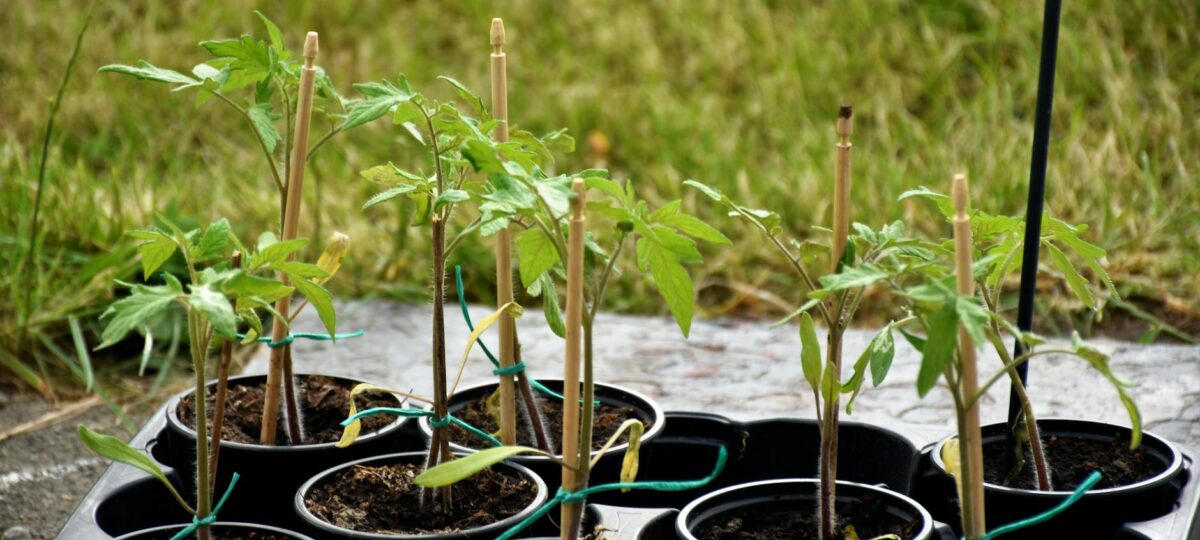
- Tomatoes (cordon types) — pinch out the side shoots that appear in the leaf joints. Tie in the main stem to its cane every couple of weeks. Once you’ve got four or five trusses set, pinch out the growing tip.
- Broad beans — pinch out the soft tips once the lowest pods are forming. It removes the sweetest growth that blackfly love and channels energy into the beans.
- Squash and courgettes — tuck wandering vines back into their patch. Lift fruits onto a tile or piece of slate to stop slugs and rot from the soil.
- Strawberries — net them properly before the fruit colours. Birds clear an unprotected row in a single afternoon. Tuck straw under the trusses to keep the fruit clean.
The First Real Harvests
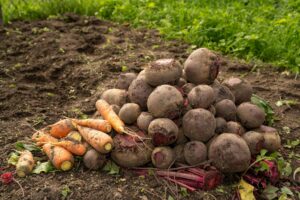
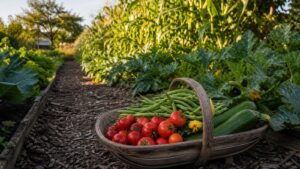
June is the month when the plot stops being a place you put things into and starts being a place you take things from. The earliest harvests vary a fortnight or so depending on where you are in the UK, but the broad order is the same:
- Broad beans — pick when the pods are well-filled but the bean scars inside are still pale green. Bigger doesn’t mean better; old broad beans are mealy.
- New potatoes — first earlies (planted around Good Friday) are usually ready from mid-June. The plant flowering is a decent rough signal. Dig a single plant first to check.
- Garlic — autumn-planted garlic comes out from late June if the leaves have started to yellow and bend. Lift and dry it in a single layer somewhere airy.
- Strawberries — peak fruiting from mid-June into July.
- Salads — lettuces, spring onions, radishes and the first cucumbers if you’ve grown them under glass.
- Peas — first proper picking from mid-June. Pick every two or three days; pods ripen fast.
- Asparagus — stop cutting around the third week of June and let the ferns grow. Feed the bed afterwards to set up next year.
- Rhubarb — last pickings before stopping at the end of the month. After that, leave it to recover.
Pests and Problems in June
June is when several pest pressures arrive at once, and the difference between staying on top of them and not is often measured in days rather than weeks.
- Blackfly on broad beans — pinching the tips (above) is the biggest single thing. If they’ve already arrived, a strong jet of water knocks them off; ladybirds and hoverflies do the rest.
- Cabbage white butterflies — laying in earnest from late May into June. Mesh-net brassicas before the eggs are laid, not after.
- Carrot fly — sow thinly to avoid having to thin (the smell of bruised foliage is what attracts them), and use a low fleece barrier or grow under fine mesh.
- Slugs — still a problem in damp June weather, particularly on courgettes and squash that have just gone out. Young beans planted out into a wet week can be stripped by slugs, so wait for a dry forecast and water the row in by hand.
- Powdery mildew — first signs on courgettes and cucumbers from late June, especially if they’re dry at the roots. Water deeply, mulch, and remove badly affected leaves.
Quick Picks

VELCRO Brand ONE-WRAP Plant Ties Tape, 12mm x 5m, Green - Reusable, Plant-Friendly Secure Solution For Tree Ties Straps, Plant Clips, VEL-EC60202,package may vary

Green Garden Butterfly Netting for Garden Fruit Crop Protection (4m x 5m) Brassica Netting

ANSIO Heavy Duty Weed Membrane 2m x 10m, Garden Weed Control Fabric | UV Stabilised Ground Cover, Breathable Landscape Fabric for Patios, Flower Beds, Driveways & Landscaping
For the slug battle specifically, see our guide to organic slug control that actually works.
June Jobs at a Glance
- Get tender crops in by the first week if you haven’t already
- Direct sow beans, sweetcorn, squash, courgettes, cucumbers
- Sow brassicas for autumn and winter (purple sprouting, winter cabbage, kale)
- Plant out leeks; keep salad successions going
- Pinch tomato side shoots; pinch broad bean tips
- Net strawberries and brassicas before damage starts
- Mulch, mulch, mulch — anything you can spare
- Stop cutting asparagus and rhubarb by month-end
- Watch for blackfly, cabbage whites, slugs and powdery mildew
- Set up watering routines before the first heatwave, not during
June sets up the rest of the summer. What you do this month — particularly the watering, mulching and netting — is what stands between you and a frustrating July. Looking back at what should have gone in last month? The May guide covers it. For the wider summer picture — eating, growing and being outside — see the Summer Outdoor hub.
You’ll find more growing guides and seasonal advice in our Garden & Outdoor hub. Good luck out there — drop me a note and let me know what’s coming in this week.

Levington Tomorite Liquid Tomato Food, Concentrate, 1L, Red
Last reviewed: May 2026
🛡 Our standards: How we research · Editorial policy · Affiliate disclosure · Corrections · Last reviewed: May 2026

About Gareth
Gareth Isherwood is the editor of Danbury & Lovejoy. He has baked bread at home for 25+ years and has 15 years of growing experience across gardens, containers and other growing spaces, including an East Sussex allotment for the past three years. Read his full story →
Was this useful?