
Every autumn the same question comes round: which type of electric heater is cheapest to run? The honest answer surprises people, because for the electricity they use almost all of them are the same — and the real savings come from something else entirely. For years I tried to fix the cold in my own home by heating more of it, for longer — which is exactly the habit this guide will talk you out of. Here is what actually decides your running cost, and how to spend less on staying warm.
✉ Join the Dispatch — a calm weekly note, every Thursday. Free.
Quick answer: For the electricity they use, nearly all electric heaters cost the same to run — panel, oil-filled, convector, fan and infrared are all close to 100% efficient, so a 2kW heater costs roughly 53p an hour at the UK average of about 26.32p/kWh (Ofgem’s price cap, October to December 2026), whatever the badge on the front. The cheapest electric heating to run is simply the one you can control best: heat only the room you’re actually using, on a thermostat and timer, rather than leaving a “low-energy” heater on all evening. Zoning and control save real money — the heater type barely moves the needle. (figures reviewed September 2026)
The honest answer: nearly all electric heaters cost the same to run
A resistive electric heater turns close to 100% of the electricity it draws into heat. That is true of a panel heater, an oil-filled radiator, a convector, a fan heater and an infrared panel alike. So a 2kW heater running flat out costs the same per hour — about 53p at the UK average of ~26.32p per kWh — whichever badge is on the front. The “energy-efficient electric heater” you see advertised is, for running cost, mostly marketing.
What genuinely varies is three things: how the heat is delivered (radiant warmth you feel directly, versus warmed air), how well the heater holds heat once the room is warm, and how precisely it can be controlled. Control is where the money is — a heater that switches itself off when the room is warm enough always beats one left running.
The types, and what each is actually good for
- Fan / convector heater — cheap to buy and quick to take the chill off; best for a short burst of warmth in a bathroom or a room you are only in briefly.
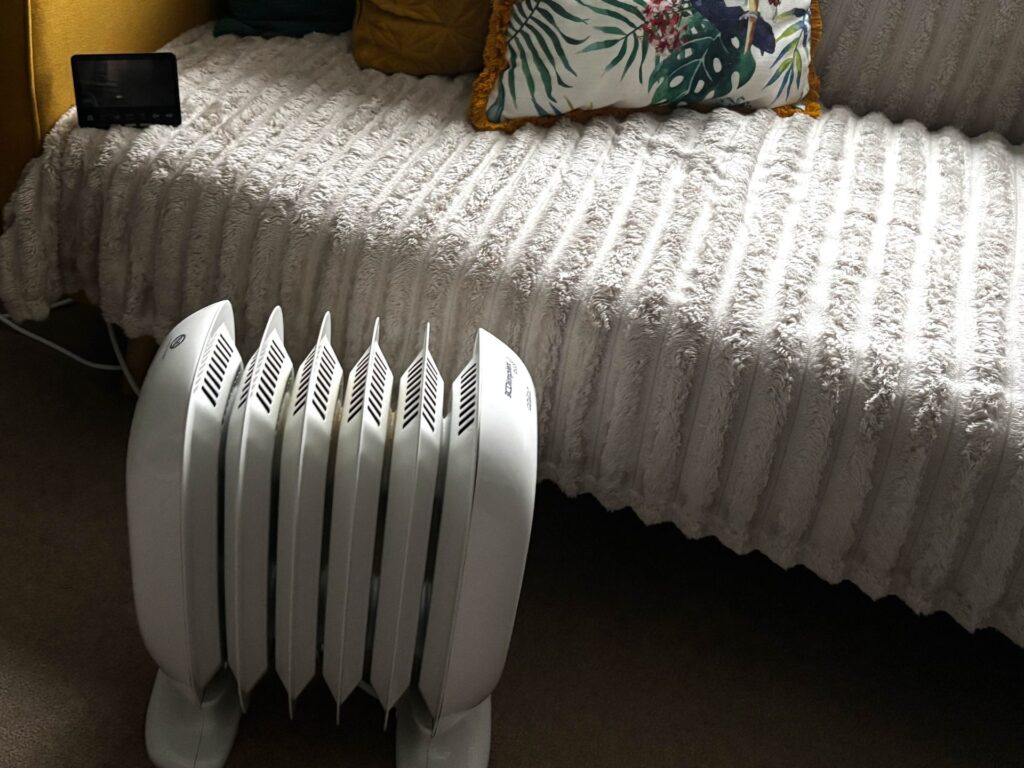
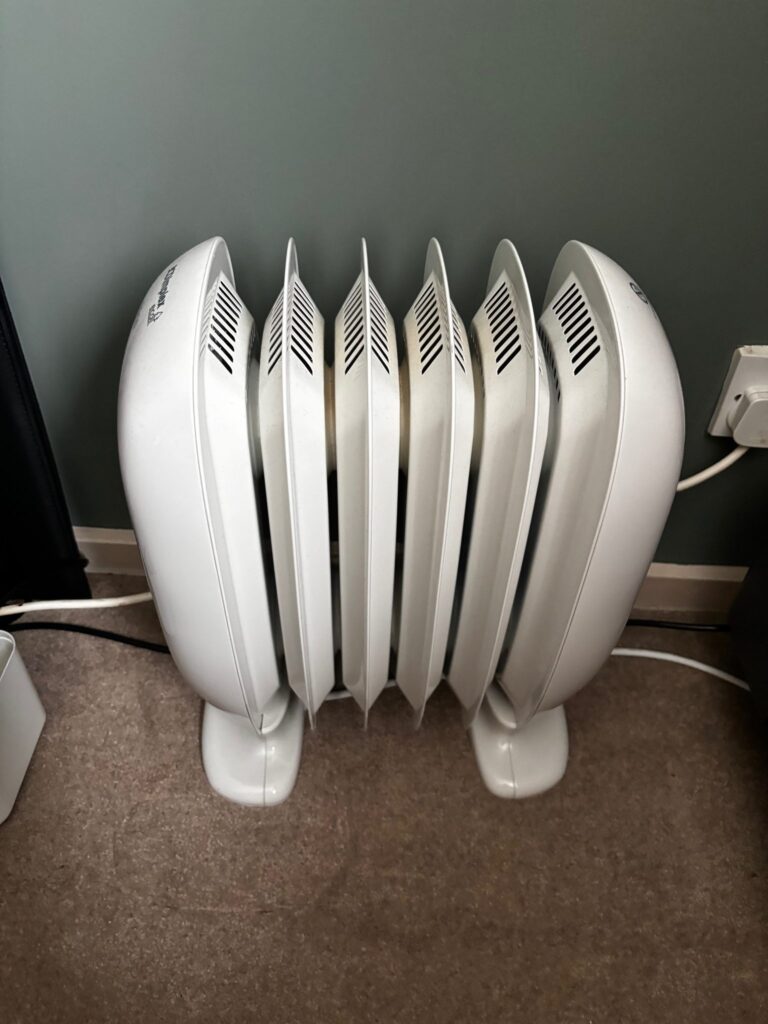
- Oil-filled radiator — slow to warm up but holds heat and coasts on lower power, so it suits a room you occupy for hours. See our guide to the best oil-filled radiators.
- Panel heater — slim, even background warmth; excellent paired with a thermostat in a home office or bedroom.
- Infrared — heats people and objects, not the air, so it earns its place in draughty or hard-to-heat spaces; poor for warming a whole room evenly.
- Halogen / radiant — instant spot warmth and very cheap, but only useful while you are sitting right in front of it.
Where the savings actually come from
If you take one thing from this guide, take this: the cheapest electric heating is the heating you aim carefully. Three habits do almost all the work.
- Heat the room you are in, not the whole house. One well-placed heater in an occupied room is far cheaper than warming empty ones — the logic behind heating the person, not the house.
- Use a thermostat and timer. Paying to keep an empty room warm is the most common electric-heating waste. A good thermostat pays for itself over a winter.
- Zone your warmth. Close the door, warm the space you use, and let the rest of the house be cooler — there is more in our guide to reducing heating bills without freezing.
Do you still need storage heaters or Economy 7?
If you are on an Economy 7 tariff, storage heaters that charge overnight on the cheap rate can undercut everything — but only if your tariff and daily routine genuinely suit off-peak charging. For most households on a single rate, a modern heater that is well controlled and in the right room is simpler, cheaper to buy, and easier to live with than replacing a storage-heater system.
Our picks, by room
For the specific models worth buying we keep a full, regularly reviewed roundup: our best electric heaters UK guide covers a pick for every room, and the best oil-filled radiators guide is the one for long-run living rooms. If control is your priority — and for running costs it should be — a smart heater with a built-in thermostat and timer is where we would start:
Some of the links below are affiliate links: if you buy through them we may earn a small commission at no extra cost to you. As an Amazon Associate I earn from qualifying purchases. We only suggest things we would recommend to a friend — see our affiliate disclosure and how we research.

Dreo Smart Electric Heater
Frequently Asked Questions
Which electric heater is cheapest to run?
For the electricity it uses, no single type is meaningfully cheaper: almost all electric heaters turn nearly 100% of the power they draw into heat, so a 2kW heater costs about the same per hour whatever the technology. The cheapest to run in practice is whichever one lets you heat only the space you are using, for only as long as you need it: a heater sized to the room, with a thermostat and a timer.
Are oil-filled radiators cheaper to run than fan heaters?
Not per unit of electricity: both cost the same for the same wattage. But an oil-filled radiator holds heat and coasts on lower power once warm, so in a room you sit in for several hours it can cycle off more and feel cheaper. A fan heater is better for a quick burst of warmth in a room you are only in briefly.
Is infrared heating cheaper than convection?
Infrared is not cheaper per kilowatt-hour, but it can cost less in the right situation because it warms objects and people directly rather than heating all the air in a room. In a draughty, hard-to-heat or only-occasionally-used space it can get you comfortable on less power; for warming a whole room evenly, a convector or oil-filled radiator is usually the better choice.
How much does it cost to run a 2kW electric heater?
A 2kW heater uses 2 units (kWh) of electricity an hour, which at the UK average of roughly 26.32p per kWh is about 53p an hour, or about £5.26 over a ten-hour day. Running it on a thermostat so it switches off once the room is warm, rather than flat out, is what brings that figure down.
None of this needs a big outlay. The cheapest way to heat a UK home with electricity is rarely a cleverer heater — it is aiming the warmth you already pay for at the person and the room that actually need it.
Last reviewed: September 2026
— Gareth
Was this useful?