Home Edit
Some of the links below are affiliate links: if you buy through them we may earn a small commission at no extra cost to you. As an Amazon Associate I earn from qualifying purchases. We only suggest things we would recommend to a friend — see our affiliate disclosure and how we research.
✉ Join the Dispatch — a calm weekly note, every Thursday. Free.
If you’re building up a proper layering kit — good socks, a decent throw, something warm to wear indoors — Daylesford Organic is worth a browse for quality home and clothing basics that last.
When you do need to heat a whole room, our electric heater guide shows which type suits which space.
If your home is draughty, damp, or simply expensive to heat, the quickest comfort win is often spot-warmth: warm the person and the small zone you’re using, rather than trying to raise the temperature of every room.
This idea took me longer to act on than it should have. For years I tried to fix the cold by heating more of the house more of the time. The better answer is that warmth is mostly about body temperature, not air temperature. In practice that means slippers on as soon as you’re in, a hot water bottle within reach on the sofa, the thermostat a degree lower and a throw within arm’s reach. It’s not complicated, but it runs counter to the instinct to just heat the room.
Quick picks: the “warmth for less” comfort kit
These are the best-for-most options for UK evenings and chilly mornings. Start with one thing that solves your main cold moment: sofa, desk, bed, or feet.
Why this works (especially in UK houses)
In older UK housing stock — terraces, semis, flats with single cold external walls — it can take a long time (and a lot of money) to warm the entire building fabric. Spot-warmth focuses on what you actually feel: skin temperature, feet, and the small zone you’re using.
- Warm feet + warm core = you feel comfortable at a lower room temperature
- Dry air feels warmer (so combine this with moisture control if your home is clammy)
- One warm chair/sofa beats trying to “heat the whole downstairs” all evening
Anyone who works outdoors in winter knows this already: in layers, with warm feet and a flask of something hot, a 3°C morning is perfectly bearable, and the air temperature matters far less than you’d think. At home, the principle is the same: a room at 17°C with warm feet, a hot water bottle, and a blanket is more comfortable than a room at 20°C where you’re sitting still in socks on a bare floor with no throw. The room temperature number is the least important variable.
Seven small ways to feel warmer
- Shrink the house at dusk. Close the doors to rooms you’re not using, so the warm air stays where you are. In a typical front-door-to-hallway layout, the hall acts as a cold corridor: closing the sitting-room door earlier often makes the evening feel cosier within ten or fifteen minutes.
- Warm your feet first. Slippers with a proper sole, not slipper-socks; a rug where you actually sit; and a footstool or folded blanket to get your feet off a cold floor altogether.
- Close the curtains at dusk, not after dark, so the glass stops pulling heat out of the room while it’s still light.
- Switch to lamps. Bright overhead light makes a winter room feel stark; a lamp near where you sit makes the same room feel warmer. In October, switch them on in the late afternoon, before the room needs them.
- Dry the air. Damp air feels colder than dry air at the same temperature, so a clammy room needs ventilation or a dehumidifier more than it needs heat.
- Stop draughts at ankle height. Door gaps, the letterbox and gaps along the skirting let cold air pool at floor level; see our draught excluder picks.
- Help the radiators. Bleed any that are cold at the top, and keep sofas and curtains from covering them.
A ten-minute warm-up at dusk
- Close the rooms you’re not using and draw the sitting-room curtains.
- Change into warm socks or slippers.
- Put the kettle on.
- Switch on a lamp and turn the overhead light off.
- Put a blanket over the arm of the sofa, and sit down with the first cup before you feel cold.
Room-by-room comfort zones
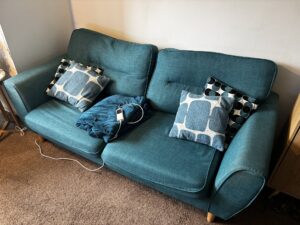
Sofa evenings
- Start with slippers + a lap layer (blanket or hot water bottle)
- If you still feel chilly, an electric throw is often the quickest fix
- Keep the warm item on you, not draped over furniture
Desk / work-from-home
- Cold hands and feet make you feel colder overall: start there
- A heated seat pad or warm layer on the chair can reduce the urge to overheat the room
- Take a 2-minute warm-up break rather than turning the thermostat up
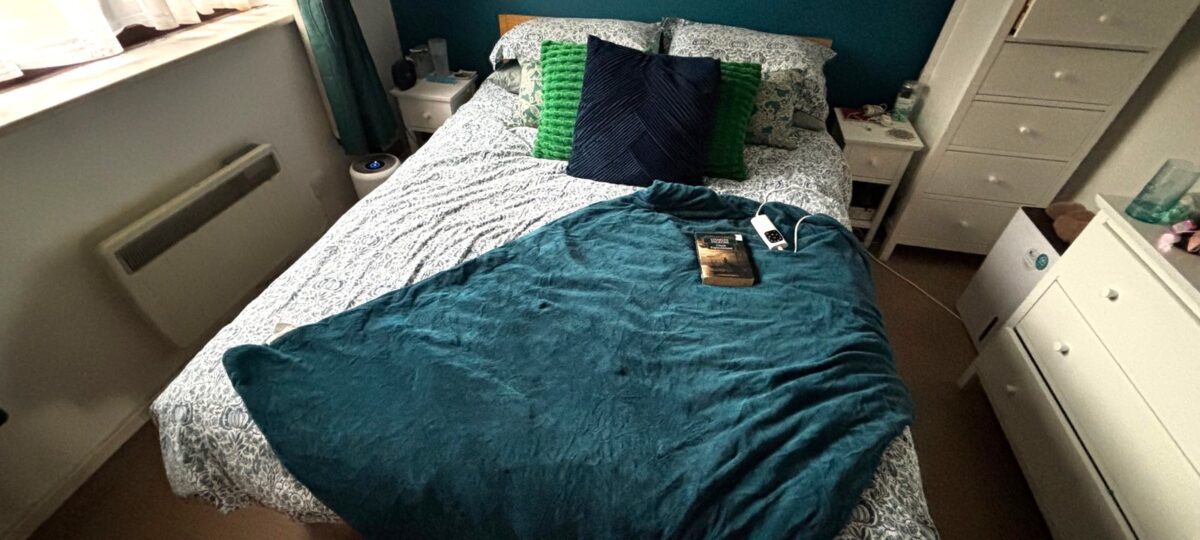
Bedtime
- Warm the bed before you get in
- If the room is damp, it may feel colder — pair with dehumidifying earlier in the evening
- Layer: warm feet + warm neck/shoulders is often the sweet spot
Heating the rooms you use
Person-first warmth works best alongside heating that’s set up sensibly. None of this needs new kit: it’s about the controls most homes already have.
- Heat the rooms you use. Turn the radiator valves (TRVs) down in spare rooms and anywhere you rarely sit, and keep those doors shut. Don’t leave a damp-prone room completely cold for long, though: a low setting stops the walls getting cold enough for condensation.
- Read a TRV as a scale, not degrees. Each valve closes its radiator once that room reaches its setting. Put the rooms you use on a middle setting and the rest lower, then adjust one notch at a time over a few days.
- Set the room thermostat low and leave it. It switches the boiler for the whole home, so set it to the lowest temperature you’re comfortable at, and turn it down a degree rather than up when you’re tempted. If the room it sits in has a TRV, leave that valve fully open so the two don’t fight.
- Time it to your day. Set the programmer to come on about half an hour before you get up or get home, and to go off about half an hour before bed or before you leave: a warmed room holds its heat for a while. Our heating schedule guide walks through setting one up.
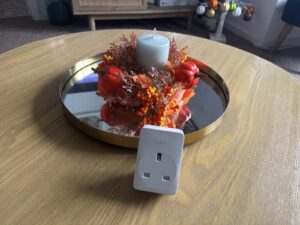
- Use plug-in heat for one room only. If you warm a single room with an electric heater, choose one with a thermostat and timer, keep it clear of curtains and bedding, and plug it into a wall socket rather than an extension lead.
Don’t go too low in the rooms you live in: UK health guidance suggests keeping them at 18°C or more, and steady warmth matters most for older people and anyone with a health condition.
Is radiator foil worth it?
Radiator foil is a reflective panel fitted behind a radiator, bouncing some of its heat back into the room instead of letting it soak into the wall. It’s a small gain, and only in the right spot.
- Worth trying where the radiator sits on an outside wall that feels cold to the touch in winter (a solid wall especially), in a room that struggles to warm up.
- Rarely worth it on an internal wall between two heated rooms, or where the wall is already well insulated and the room heats easily.
- Do the cheaper things first: stop draughts at doors and windows (our draught excluder picks), then deal with cold glass using curtains or window insulation film.
If you fit it, use foil made for radiators, not kitchen foil. Cut a paper template of the space behind the radiator first, keep the foil clear of pipes and valves, and use the kit’s removable pads or clips if you rent. Start with one radiator in the room you use most and see whether the room feels steadier before doing more.
Not sure? On a cold day, put your hand flat on the wall beside the radiator. If it feels distinctly cold, the foil has work to do; if it doesn’t, spend the effort elsewhere.
Choose the right option (quick rules)
- If your feet are always cold: slippers first, then hot water bottle for the sofa
- If you’re cold at your desk: heated seat pad + warm feet beats heating the whole room
- If you wake up cold: pre-warm the bed, then reduce room heat
- If the house feels clammy as well as cold: fix moisture first — see How to Stop Condensation on Windows UK: 7 Proven Fixes
- If you feel a cold moving-air sensation: draught-proof first — see Draught-proofing for UK homes
- If a radiator sits on a cold outside wall: see whether radiator foil is worth it
Safety notes: Electric throws/blankets — follow manufacturer instructions and don’t use damaged cords. Hot water bottles — use hot, not boiling, water; don’t overfill; check for wear. Older or health-sensitive households: consistent gentle warmth is usually better than big temperature swings.
FAQs
Does heating the person really reduce heating costs?
It can, because you rely less on raising the temperature of unused rooms. The most direct saving comes from being able to keep the thermostat 1–2 degrees lower than you would otherwise while still feeling comfortable. Over a winter that adds up to a meaningful reduction in running costs.
What’s the best first buy for warmth?
For most people: decent slippers and a hot water bottle. Both are inexpensive, immediately effective, and have no running costs. Start there before anything electric.
What’s the quickest way to warm up cold feet?
A hot water bottle under a blanket is the fastest passive way: fifteen minutes or so and most feet have recovered. If you need to keep moving, a few minutes walking around the house does it through circulation. Slippers alone are slow once you’re already cold.
Why do my feet get cold even when the room is warm?
Usually a cold floor drawing heat away through contact, or a draught pooling at floor level. The floor surface and the air just above it can be well below the temperature on the thermostat, so check what your feet are touching and where the cold air is coming from.
Do wool socks make a difference?
Yes. Wool is warmer for its weight than cotton and stays warm when slightly damp, which matters in a humid or coastal home.
Are electric foot warmers worth buying?
For long spells at a desk over a cold floor, a heated foot mat can help. For most homes, slippers, a rug and the odd hot water bottle cover the same ground for less, so start there.
Is it better to heat one room instead of the whole house?
If you spend most of your time in one or two rooms, heating those well and closing the doors on the rest is usually more efficient than warming the whole house. Turn the radiator valves down in rooms you rarely use, but keep damp-prone rooms from going completely cold.
The honest case for person-first warmth
It won’t replace a well-insulated, well-heated home — but for the hours between “reasonable” and “the heating comes on”, personal warmth is more immediate, cheaper, and often more comfortable than ambient room heat. Slippers, a hot water bottle, a throw within reach, and a lamp in the dark corner of the room covers most of what makes a winter evening feel genuinely warm rather than merely tolerable.
🏠 From the D&L Shop: Making your home warmer this winter? Our Winter Home Survival Guide covers heating, draught-proofing, condensation, energy bills, and keeping comfortable through the cold months — 11 pages, £8.99. Also free: the Sunday Reset Checklist (a calm weekly home reset, instant download). Browse the full shop →
🛡 Our standards: How we research · Editorial policy · Affiliate disclosure · Corrections · Last reviewed: July 2026

About Gareth
Gareth Isherwood is the editor of Danbury & Lovejoy. He has baked bread at home for 25+ years and has 15 years of growing experience across gardens, containers and other growing spaces, including an East Sussex allotment for the past three years. Read his full story →
Was this useful?