Home Edit
Humidity is one of those quiet “background” things that shapes how your home feels. In winter, getting it into the right range can make rooms feel warmer, reduce condensation, help laundry dry more easily, and lower the risk of mould. For window condensation specifically, we have a dedicated piece on dealing with condensation on windows. Our complete guide to drying laundry indoors goes into more detail on managing moisture from clothes.
Some of the links below are affiliate links: if you buy through them we may earn a small commission at no extra cost to you. As an Amazon Associate I earn from qualifying purchases. We only suggest things we would recommend to a friend — see our affiliate disclosure and how we research.
✉ Join the Dispatch — a calm weekly note, every Thursday. Free.
My flat on the East Sussex coast is damp without a dehumidifier, and it took buying a hygrometer for me to realise my bedroom was hitting 74% humidity overnight in winter. My two app-based humidity sensors show why: when the air stays too humid, the windows run wet on winter mornings and mould starts to appear. The coastal location compounds the problem: the air outdoors can sit at 70–80% on winter days, and what comes indoors brings that moisture with it. Running a dehumidifier (mine is a Duux) and keeping on top of ventilation is what keeps it in check: the morning condensation has reduced a lot, though it has never disappeared entirely. Humidity isn’t abstract — it’s the thing between “this house feels cold and clammy” and “this house feels comfortable at the same temperature”. If laundry drying is adding to the moisture, our guide to dehumidifiers for laundry covers what works. To keep an eye on things, a hygrometer helps — see our guide to the best hygrometers for UK homes.
For most UK homes in winter, an indoor humidity reading of 40–55% is a sensible target. As a simple rule of thumb: below 40% can feel dry and uncomfortable (scratchy throat, dry skin, restless sleep). Above 60% increases the chances of condensation and mould — especially on cold windows and external walls.
Quick Picks
Why winter humidity matters more in the UK
Winter is when humidity becomes harder to manage — and more noticeable — in British homes. We close windows, spend more time cooking and showering, and often dry laundry indoors. All of that adds moisture to the air. Meanwhile, cold weather changes how moisture behaves indoors.
Cold air holds less moisture
Cold outdoor air holds much less water vapour than warm air. When that cold air comes inside and is heated, it can become surprisingly dry — even if the weather outside feels damp. This is why homes can swing between “dry and irritated” and “damp and clammy” depending on ventilation, heating, and day-to-day habits.
Condensation
Condensation happens when warm indoor air hits a cold surface — most often windows, tiles, and external walls. The moisture in the air drops out as water droplets. It’s especially common first thing in the morning and in bedrooms where the door is shut overnight.
Laundry dried indoors
Wet clothes release a surprising amount of water into the air as they dry. If you’re drying laundry on radiators or an airer in a closed room, humidity can climb quickly — and stay high for hours — which makes the whole house feel colder and encourages condensation. See: How to dry laundry indoors in winter (UK).
Mould risk
Mould is much more likely when indoor humidity stays high (particularly over 60%) and there are cold surfaces where moisture can settle. Watch for the usual trouble spots: window reveals, corners of external walls, behind wardrobes, and bathrooms with weak extraction.
Ideal humidity by room (simple guide)
| Room | Ideal % | Notes |
|---|---|---|
| Living room | 40–55% | Comfort zone for warmth and air quality |
| Bedroom | 40–50% | Helps breathing and reduces overnight condensation |
| Kitchen | 40–60% | Cooking adds moisture — ventilate after use |
| Bathroom | 40–60% | Spikes are normal; aim to bring it back down within an hour |
| Utility / laundry space | 45–55% | Higher levels slow drying and encourage mould |
What to do if your humidity is too high
If you’re regularly seeing 60%+, focus on the rooms that are driving it (often bedrooms, bathrooms, and wherever laundry dries):
- Ventilate little and often — even a short daily window opening can help
- Keep airflow moving — don’t push furniture tight against cold external walls
- Be deliberate with laundry — one room, door shut, window cracked if possible
- Extract after moisture-heavy moments — showers and cooking
If you’re dealing with persistent laundry damp or a cold-and-clammy feeling, a dehumidifier can be very effective. Start here: Best dehumidifier for drying laundry (UK).
What to do if your humidity is too low
If you’re regularly below 40%, the air can feel harsh — especially in bedrooms overnight. It’s often linked to heating combined with low ventilation. Gentle fixes include adding a little more ventilation, drying a small load of laundry with the door open (only if you don’t have condensation problems), or simply keeping a houseplant cluster in the living room.
A calm way to measure it
A basic digital hygrometer is enough. Check it in the morning (bedrooms often peak overnight), after cooking/showering (see how quickly levels return to normal), and during laundry drying (to catch slow-building damp). You’re looking for patterns, not perfection.
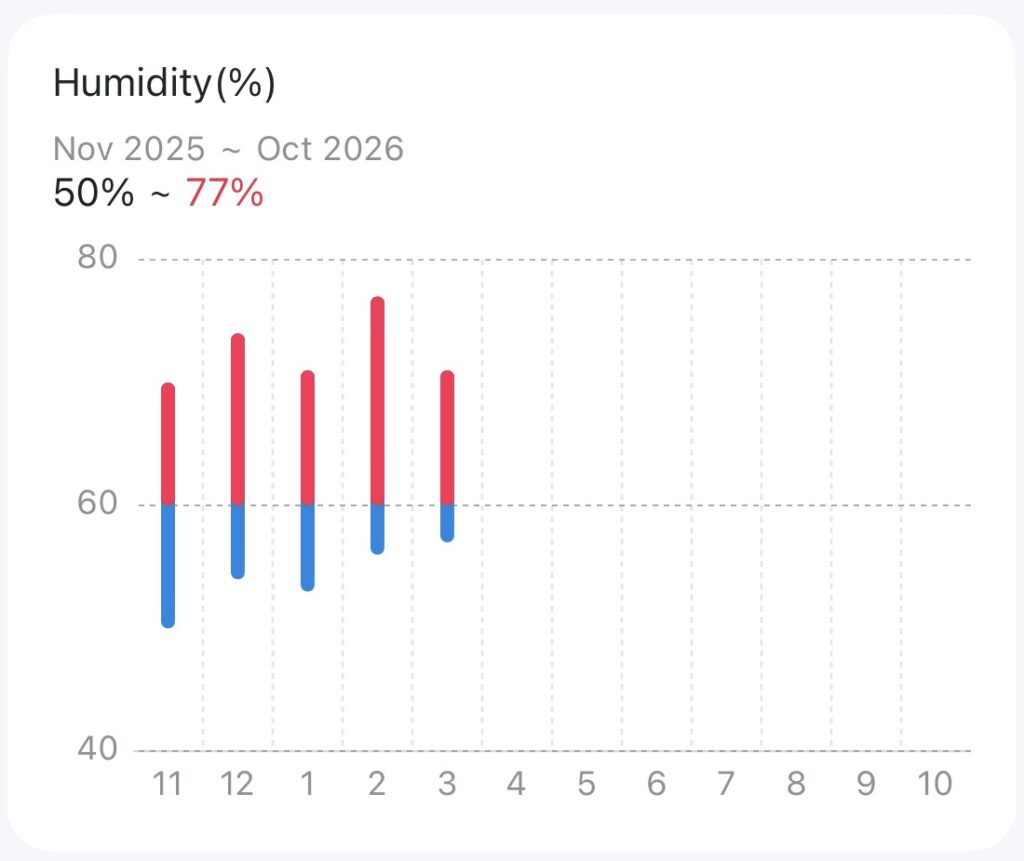
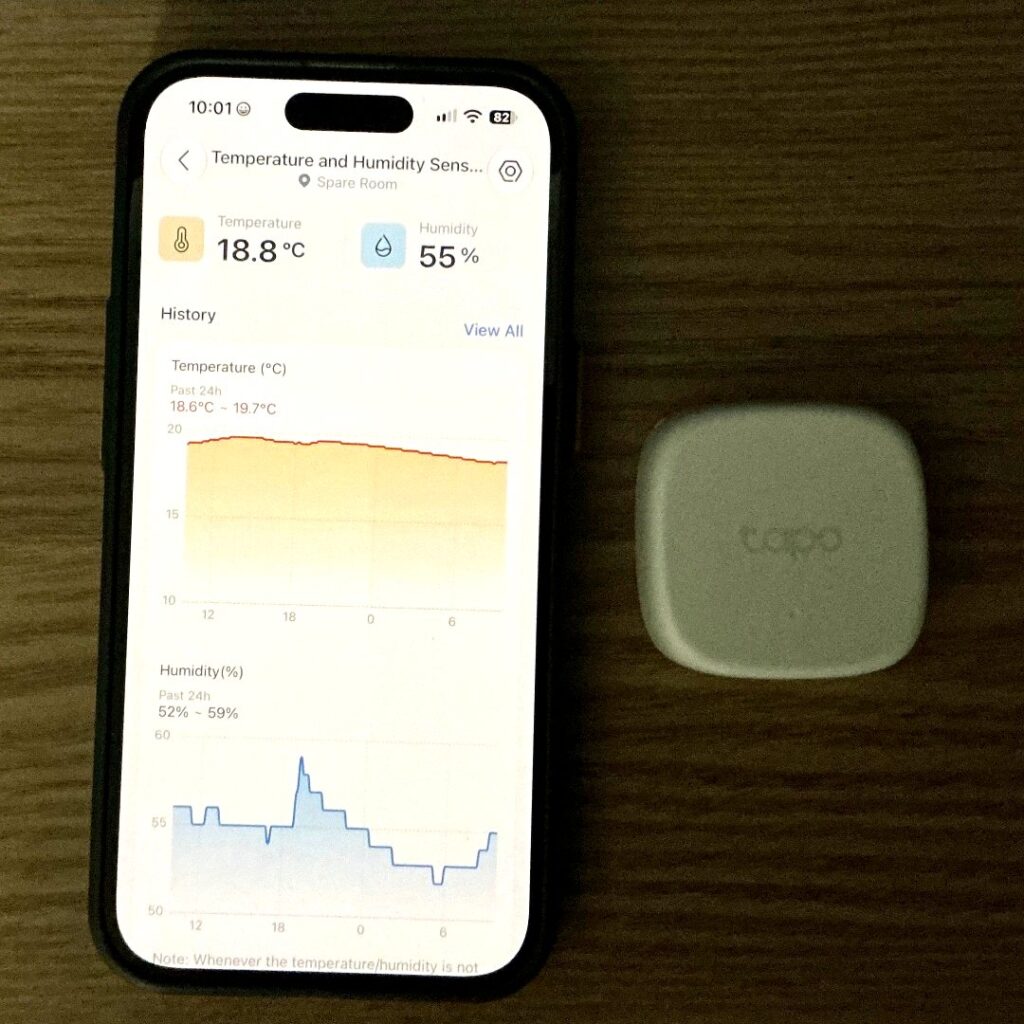
A week of readings shows you the pattern in your own home. Typical ones: bedrooms climb overnight with the door shut, a room with laundry drying on an unheated airer can stay humid for hours, and a kitchen spikes while pans boil uncovered, then drops back once the window is open. That pattern tells you where to act: a dehumidifier where the humidity sits highest, a closed-door drying system for laundry, and an extraction habit in the kitchen. Without the readings, you’re guessing.
The simple approach
Measure first. A £10 hygrometer tells you whether your home’s primary problem is too much moisture (common in coastal, older, or laundry-drying homes) or too little (common in very well-heated, under-ventilated homes). The right fix depends entirely on which direction you’re out of range. Don’t buy a dehumidifier on a guess — buy a hygrometer first, then decide.
Some links in this guide are affiliate links. If you buy through them we may earn a small commission, at no extra cost to you.
Common Questions About Home Humidity
What is a good humidity level for a UK home?
Between 40% and 60% relative humidity is generally considered comfortable for most UK homes. Below 40% can feel dry and irritate airways; above 60% encourages condensation, mould growth, and dust mites. In winter, aiming for around 50% strikes a good balance between comfort and keeping windows clear.
Why does my house feel damp in winter?
Cold air holds less moisture, so when warm, moist indoor air meets cold walls and windows, it condenses. Everyday activities like cooking, showering, and drying laundry add surprising amounts of moisture. Without adequate ventilation, this moisture builds up and makes the home feel damp, even if the heating is on.
How can I reduce humidity in my home without a dehumidifier?
Open windows briefly each morning to let moist air escape (even five minutes helps). Use extractor fans when cooking and showering. Dry laundry outdoors when possible, or in a closed room with a window cracked open. Keep furniture slightly away from external walls to allow air circulation.
Does heating reduce humidity?
Yes, up to a point. Warming the air lowers its relative humidity, which is why heated rooms feel less damp. However, heating alone does not remove moisture — it just makes the air able to hold more of it. Ventilation is still needed to actually move the moist air out of the house.
What causes condensation on bedroom windows overnight?
When heating switches off at night and the room cools, the air can no longer hold as much moisture. The excess condenses on the coldest surface — usually the windows. Keeping the bedroom lightly ventilated (a trickle vent or slightly open window) and avoiding drying clothes in the bedroom helps reduce this.
Related reading
Last reviewed: September 2026
🏠 From the D&L Shop: Making your home warmer this winter? Our Winter Home Survival Guide covers heating, draught-proofing, condensation, energy bills, and keeping comfortable through the cold months — 11 pages, £8.99. Also free: the Sunday Reset Checklist (a calm weekly home reset, instant download). Browse the full shop →
Further reading: our guides to the best dehumidifier and air purifier combos and the best air purifiers UK.
🛡 Our standards: How we research · Editorial policy · Affiliate disclosure · Corrections · Last reviewed: September 2026

About Gareth
Gareth Isherwood is the editor of Danbury & Lovejoy. He has baked bread at home for 25+ years and has 15 years of growing experience across gardens, containers and other growing spaces, including an East Sussex allotment for the past three years. Read his full story →
Was this useful?