Home Edit
If your home feels cold even when the heating is on, draughts are often the reason. This guide shows the most effective draught-proofing fixes for real UK houses — from Victorian terraces to rentals — without spending money where it won’t help.
Looking for products? See our Best Draught Excluders UK guide for honest picks ranked by type and budget. This page is about the fixes — where draughts come from and how to stop them.
Some of the links below are affiliate links: if you buy through them we may earn a small commission at no extra cost to you. As an Amazon Associate I earn from qualifying purchases. We only suggest things we would recommend to a friend — see our affiliate disclosure and how we research.
✉ Join the Dispatch — a calm weekly note, every Thursday. Free.
Most homes have one or two significant gaps that account for the majority of the cold air coming in — and a lot of minor gaps that are barely worth addressing until the main ones are fixed. A front door with visible daylight underneath it is common, and a letterbox without a brush is essentially an open slot to the outside. Fix those two first and the hallway warms up noticeably. The rest — floorboards, window seals, a chimney — can be worked through gradually. The cumulative effect is significant; any one fix alone is modest. The order matters.
Quick Picks
At a Glance
| Product | Best For |
|---|---|
| Best Door Draught Excluder: Stormguard Foam Seal | Door Draught Excluder: Stormguard Foam Seal |
| Best Letterbox Draught Excluder | Letterbox Draught Excluder |
| Best Keyhole Draught Excluder | Keyhole Draught Excluder |
| Best Window Draught Excluder | Window Draught Excluder |
| Best Internal Door Draught Excluder | Internal Door Draught Excluder |
| What is the best draught excluder for an external front door? | draught excluder for an external front door? |
The draught-proofing order that works
Most heat loss comes from a few obvious gaps. Fixing these first gives the biggest comfort gain for the least effort:
- External doors (bottom gap, sides, letterbox)
- Windows (loose seals, rattling sashes)
- Unused chimneys (safe, removable blockers)
- Floorboard gaps (especially in older homes)
- Lofts and hatches (often forgotten)
If you can feel air moving with your hand or see curtains shift, that’s where to start — not by turning the thermostat up.
The incense-stick test is worth doing before buying anything. Light a stick, wait for steady smoke, and pass it slowly around each door and window frame at close range. Where the smoke deflects, moves sideways, or gets pulled inward, that’s where cold air is entering. It reliably identifies gaps you can’t feel with your hand. Front doors and doors to unheated rooms such as a utility are the usual culprits, and a £4 excluder or a £6 seal strip fixes most of them.
Quick picks: draught-proofing that actually helps
Door draught excluders
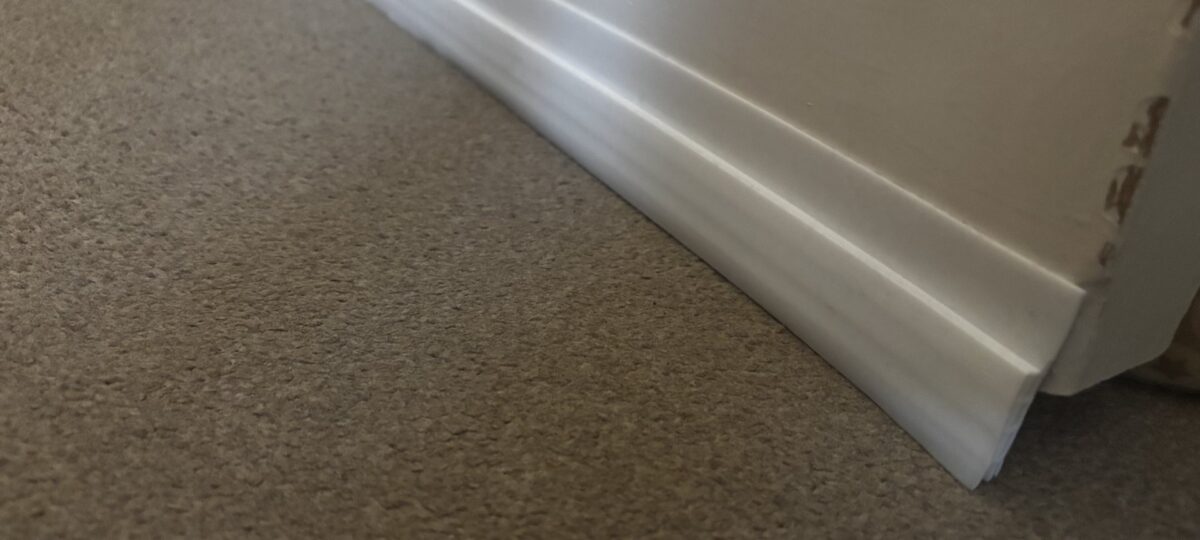
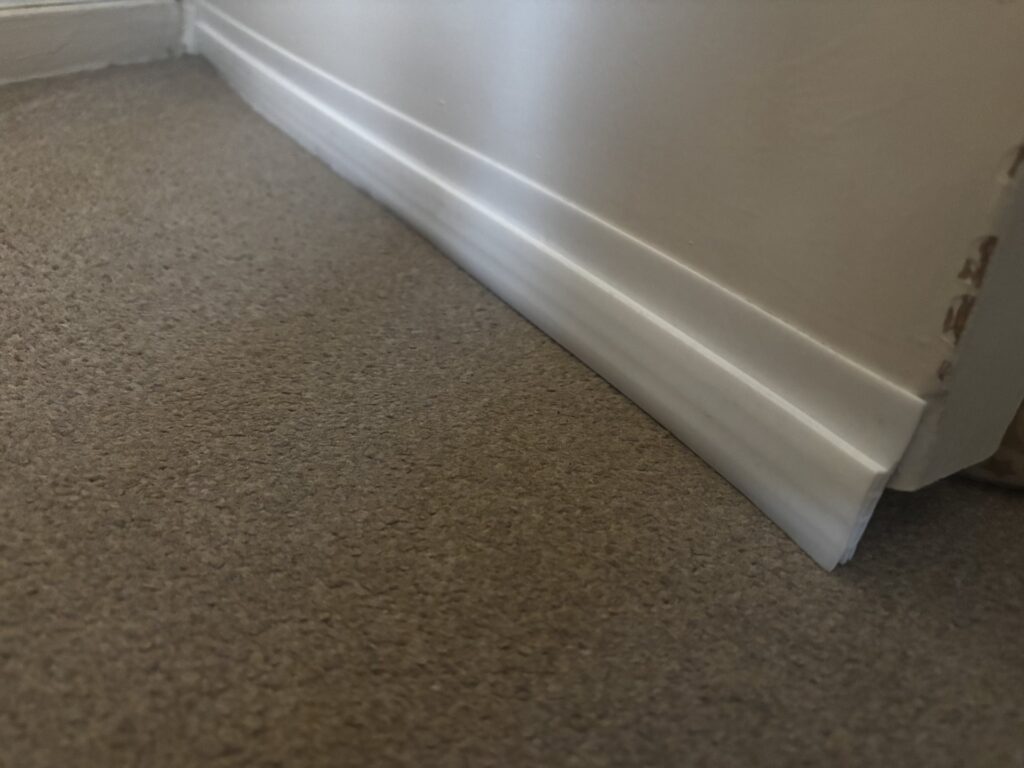
The bottom of external doors is usually the biggest single gap. A weighted or brush-style excluder fitted to the door (rather than placed against it) gives the best seal.
See best door draught excluders →
Self-adhesive door & window seals
Cheap, effective, and renter-friendly. Ideal for gaps around frames and sash windows. The foam type compresses when the door closes, sealing the gap without restricting movement.
Browse door & window seals on Amazon
Match the window fix to the glazing. Modern double glazing in good condition rarely needs more than a check of the seals. Older double glazing with failed seals (misting between the panes) needs the unit replaced in time; until then, foam strip on the frame and thermal curtains help. Single glazing benefits most from window insulation film or secondary glazing for the winter months.
Letterbox brushes & covers
One of the biggest culprits in UK front doors. A brush or hinged cover makes an immediate difference — and it’s one of the cheapest fixes available.
Browse letterbox covers on Amazon
Chimney draught blockers
For unused fireplaces. Removable blockers stop warm air disappearing straight up the chimney — a surprisingly large source of heat loss in many UK sitting rooms. Fully removable if you ever want to use the fireplace again.
Browse chimney blockers on Amazon
The forgotten gaps
Once the front door and the worst windows are done, a slow walk round with the back of your hand (or the smoke test above) usually turns up a few more. None is worth a weekend on its own, but together they add up:
- Chimneys: a chimney balloon (an inflatable bladder) or a wool chimney sheep blocks the flue of an unused fireplace and lifts out again. Both are meant to let a little air through so the flue stays dry; never light a fire with one in place.
- Extractor fans: a fan whose backdraught flap sticks open lets cold air in all day. Check it closes when the fan stops.
- Cat flaps: a flap with a brush or magnetic seal closes far more tightly than a loose one.
- Pipe holes: gaps where pipes come through walls and floors, under sinks and behind the boiler, take a little filler or sealant.
- Loft hatch: a strip of foam round the frame stops warm air escaping upwards.
- Keyholes: a drop-down cover on any external lock.
Leave trickle vents open and air bricks clear: they are deliberate ventilation, not draughts (see the warning below).
Draught-proofing for under £20
The fixes that matter most are also the cheapest. Rough costs, so you know what you’re spending before you start:
| Fix | Rough cost | Fitting |
|---|---|---|
| Letterbox brush seal | £4–£8 | About ten minutes with a screwdriver |
| Keyhole cover | £1–£3 | Seconds |
| Self-adhesive foam strip for window frames | A few pounds a roll | A few minutes a window |
| Brush strip for the bottom of an external door | £8–£12 | Self-adhesive or a few screws |
| Weighted excluder for an internal door | £8–£15 | None: lay it against the door |
| Chimney balloon for an unused fireplace | About £19 | Minutes, and fully removable |
On a tight budget, work in the order above: the front door first (a letterbox brush, plus a strip or excluder along the bottom), then the worst windows, then internal doors to unheated rooms. A roll of foam strip and a weighted excluder, about £15 together, cover the commonest gaps in most homes. Cheap foam compresses over time, so check the strips each autumn and replace any that have flattened.
Radiator reflectors: when they help
A reflective panel behind a radiator works in some homes and barely at all in others. On an outside wall with no cavity or external insulation, it cuts the heat lost into the brickwork behind the radiator: a modest but real gain. On an internal wall, or an outside wall that is already insulated, the effect is much smaller. Fitting matters too: the panel should sit on the wall with a gap to the radiator, not be pressed against it. Seal the draughts first; a reflector is a finishing touch, not a substitute.
Common UK mistakes to avoid
- Buying thicker curtains before sealing gaps — curtains help after draughts are stopped, not instead of it.
- Using tape that damages paintwork in rentals — use removable seals instead; they leave no residue and landlords can’t object.
- Blocking ventilation bricks completely — can worsen damp and condensation, especially in older properties.
- Ignoring the letterbox while sealing everything else — it’s one of the highest-impact and lowest-cost fixes available.
Ventilation bricks and air bricks: Don’t block these. They’re there for a reason — particularly in older homes with suspended timber floors. Blocking them can lead to damp, rot, and condensation problems that cost far more to fix than any draught was costing you. We wrote more about this in our guide to ideal humidity levels for UK homes.
Cold but still clammy?
If your home still feels chilly after draught-proofing, damp air may be the issue. Drying the air can make the same temperature feel noticeably warmer. See: How to Stop Condensation on Windows UK: 7 Proven Fixes and How to Feel Warmer at Home Without Turning Up the Heating (UK).
Draughts don’t cause condensation; if anything they reduce it slightly, because leaky homes ventilate themselves. That is the trade-off: a well-sealed home is warmer but holds on to more moisture, so pair the draught-proofing with deliberate ventilation (trickle vents open, a window opened briefly after cooking and showers, extractor fans used) and, in rooms where laundry dries, a dehumidifier. If condensation appears or gets worse after you’ve sealed up, a hygrometer shows what the room is really doing; our damp, condensation and air quality hub covers the fixes.
Once the gaps are sealed, the next step is rarely turning the thermostat up. Bleed any radiator that is cold at the top before the first cold week, and check what your controls are doing (our round-up of smart thermostats helps there). Then the soft fixes: curtains closed at dusk, a throw on the sofa, warm lamps rather than the overhead light, and a hot water bottle or one of the best throws in the evening.
Where to start
External door bottom, letterbox, and the room you spend most evenings in. Fix those three things and you’ll feel the difference the same day. The rest — window seals, chimney, floorboards — are worth doing but the return is smaller per fix. Work through the list in order and don’t buy anything until you’ve identified your specific gaps with a hand test or smoke stick.
Some links in this guide are affiliate links. If you buy through them we may earn a small commission, at no extra cost to you.
Last reviewed: March 2026
For more ideas on making your home comfortable and warm, visit our Cosy Home Hub.
Related reading
Best Draught Excluders UK (2026): Our Recommended Products
If you want to buy rather than DIY, these are the best draught excluders available in the UK right now. We’ve focused on products that are easy to fit, durable, and make a genuine difference to how warm your home feels.
Best Door Draught Excluder: Stormguard Foam Seal
For the bottom of external doors, a brush-strip draught excluder outperforms foam every time. The Stormguard 5FS0140915WA is a reliable, widely available option — it attaches to the door itself and brushes against the threshold as it closes. Cost: around £10–15. Fits most standard UK front and back doors.
Best Letterbox Draught Excluder
Letterboxes are one of the biggest sources of cold air in older UK homes. The Stormguard Letterbox Draught Excluder fits most standard letterboxes and has a brush seal that significantly reduces cold draughts without obstructing post. An internal letter cage combined with a draught excluder is the most effective combination.
Best Keyhole Draught Excluder
Keyholes are a small but surprisingly effective source of cold air. A simple keyhole cover (also called a keyhole draught excluder) drops into place over the hole — available for around £3–5. Worth it if you feel a definite cold draught near your lock.
Best Window Draught Excluder
For sash windows and casements, self-adhesive foam tape (like the Wickes EPDM foam seal) is the simplest solution. Apply it around the window frame — it compresses as the window closes to seal the gap. For a longer-lasting fix on older sashes, wiper seals (also called brush pile strips) are more durable. Budget: £5–15 depending on window size.
Best Internal Door Draught Excluder
For internal doors (especially those leading to unheated hallways or rooms), a simple fabric or foam draught excluder sausage placed at the base of the door makes a noticeable difference. The Designcraft Draught Excluder is a popular, well-rated option on Amazon UK. Cost: around £8–15.
Draught Excluders: Frequently Asked Questions
Do draught excluders actually make a difference?
Yes — measurably so. Research from the Energy Saving Trust suggests that draught-proofing throughout a home can save £60–£125 per year on heating bills. Individual draught excluders at doors and windows are the most cost-effective single improvement most UK homes can make. The payback period on a £10 draught excluder is typically weeks, not years.
What is the best draught excluder for an external front door?
For external front doors, a brush-strip draught excluder fitted to the base of the door is the most effective option — better than foam, which degrades faster. Look for options from Stormguard or Wickes. Pair it with a letterbox draught excluder and a keyhole cover for a comprehensive seal. The combined cost is typically £20–35 and the difference in warmth is immediate.
Can I use a draught excluder on a wooden floor?
Yes. Brush-strip excluders work well on wooden and tile floors because the brush flexes across the surface as the door opens and closes. Avoid rigid foam seals on wooden floors as they can scrape the surface or wear unevenly. Self-adhesive brush pile is gentler and longer-lasting.
What’s the difference between a draught excluder and draught proofing?
Draught excluders are specific products — physical items placed at the base of a door or applied to window frames. Draught proofing is the broader term for all the measures taken to reduce cold air entering a home, including sealing gaps around pipes, floorboards, loft hatches, and skirting boards. This guide covers both.
How We Choose
Every draught excluder on this list has been selected based on real-world criteria — fit, seal quality, draught reduction, and durability in a typical UK home. Selections draw on in-depth knowledge of draught-proofing, verified customer reviews, and expert energy-efficiency sources. We check how well each product blocks cold air, how easy it is to install, whether it interferes with opening and closing doors or windows, and how it holds up after a full winter of daily use. We also consider how they look, because an ugly foam strip is not going to stay in place if it bothers you every time you see it.
Common Questions
What is the best way to draught-proof a front door?
A combination of a brush strip along the bottom, foam or rubber seals around the frame, and a letterbox draught excluder covers the main gaps. For older doors with uneven frames, compression seals work better than simple foam strips.
Do draught excluders really save money?
Yes. The Energy Saving Trust estimates that draught-proofing doors and windows can save around 20 pounds a year on energy bills. The products typically cost a few pounds each, so they pay for themselves within weeks.
How do I find draughts in my home?
On a windy day, hold a lit candle or incense stick near window frames, door edges, letterboxes, and any gaps around pipes or vents. If the flame flickers or the smoke moves sideways, you have found a draught. Focus on external doors and windows first — these usually have the biggest gaps.
Can I draught-proof a rented property?
Yes — most draught-proofing solutions are temporary and removable. Self-adhesive foam strips peel off, brush strips can be unscrewed, and freestanding draught excluders need no installation at all. Check your tenancy agreement, but most landlords appreciate tenants reducing energy waste.
Does draught-proofing cause condensation?
No, but it can make existing moisture more noticeable, because less air leaks out. Keep the ventilation you need: use the kitchen and bathroom extractor fans, open a window when cooking or showering, and never block air bricks or trickle vents.
How long do draught-proofing strips last?
It depends on the material. Cheap foam compresses within a year or two; good rubber or brush strips last several years. Check them each autumn, especially on doors that get heavy use: replacing a strip costs a few pounds and takes minutes.
Is draught-proofing worth doing before replacing windows?
Yes. It costs little and pays back in comfort straight away, and the doors, floors and loft hatch still need sealing whatever windows you fit later.
What if my home is already damp?
Deal with the damp first. Draught-proofing won’t fix rising damp, leaks or persistent condensation, and sealing gaps in a damp home can make condensation more noticeable. Find the cause, then seal.
Further Reading
🏠 From the D&L Shop: Making your home warmer this winter? Our Winter Home Survival Guide covers heating, draught-proofing, condensation, energy bills, and keeping comfortable through the cold months — 11 pages, £8.99. Also free: the Sunday Reset Checklist (a calm weekly home reset, instant download). Browse the full shop →
You might also find our guide to Best Draught Excluders UK 2026 useful.
Quick Picks

Vellure® Premium Door Draft Excluder Strip - Door Seal for Energy Saving - Quick and Easy Installation - Draught Excluder for Bottom of Door - Ideal for Keeping Out Cold

Door Draught Excluder in various sizes (Pack of 2) very easy to fit, self adjusting to different floor types, very effective way to cut your heating bills. For doors up to 915mm wide and 45mm thick (760mm x 35mm)

Chimney Balloon Medium 14 x 24 Inch Inflatable Draught Excluder | Inflatable Flue Seal, No Tools or Fixings, Mouth Tube Included, Deflates and Lifts Out in Seconds, Made in the UK
Sources
Draught-proofing method and savings guidance follows the Energy Saving Trust’s draught-proofing guidance. On the balance between sealing a home and keeping it ventilated, see the UK Government’s guidance on the health risks of damp and mould.
🛡 Our standards: How we research · Editorial policy · Affiliate disclosure · Corrections · Last reviewed: March 2026

About Gareth
Gareth Isherwood is the editor of Danbury & Lovejoy. He has baked bread at home for 25+ years and has 15 years of growing experience across gardens, containers and other growing spaces, including an East Sussex allotment for the past three years. Read his full story →
Was this useful?