
Some of the links below are affiliate links: if you buy through them we may earn a small commission at no extra cost to you. As an Amazon Associate I earn from qualifying purchases. We only suggest things we would recommend to a friend — see our affiliate disclosure and how we research.
✉ Join the Dispatch — a calm weekly note, every Thursday. Free.
The rushed morning has become a kind of default. Alarm, phone, toast, keys. Out the door with your coat half on, half your brain still in bed. It’s not comfortable — but for a lot of people, it’s just how mornings are.
It doesn’t have to be. The unhurried morning isn’t about getting up at five o’clock or following a rigid self-improvement routine. It’s about creating enough space in the first hour of the day that you’re not playing catch-up from the moment you wake up. This guide covers how to do that in the context of a real British household — with work, commitments, and the reliable variable of the weather. For a more structured start to the week, our Sunday night reset keeps things feeling manageable.
Why Mornings Feel Rushed (and Why It Matters)
Most rushed mornings aren’t caused by bad luck. They’re caused by a mismatch between what needs to happen and how much time is available for it. Decisions that could have been made the night before get made at 7:45am instead — what to wear, what to pack, whether there’s enough milk. The cumulative effect is a kind of low-level daily stress that’s hard to shake off even once you’re at your desk or on the train.
The case for a calmer morning isn’t aesthetic. A morning without rushing means fewer forgotten things, better decisions, less friction with whoever you share your home with, and a genuinely different quality to the first hour of the day. That carries forward.
The Evening Ahead: Where the Slow Morning Actually Starts
The most reliable way to have an unhurried morning is to do most of the morning’s work the night before. Clothes laid out, bags by the door, lunch made or at least planned, anything that needs signing or remembering dealt with. This sounds obvious — and it is — but it’s remarkable how much friction it removes.
A ten-minute reset before bed can handle all of this. It doesn’t require military planning. Just a quiet sweep of what tomorrow needs, dealt with while you’re still mentally present rather than at 7am when you’re half asleep and the kettle hasn’t boiled yet.
The First Twenty Minutes: Keep Them Slow
The first twenty minutes after waking are formative for the rest of the morning. If they’re chaotic, the whole morning tends to follow. If they’re calm, there’s a steadiness to everything after.
The single most useful thing most people can do here is to leave the phone alone until they’ve been up for at least fifteen or twenty minutes. This isn’t a wellness cliché — it’s practical. The moment you pick up your phone, you’ve imported the outside world into your morning. Emails, news, notifications — all of it creates small demands on your attention before you’ve had any time to settle into the day.
Instead: put the kettle on. Open a window. Sit down with your tea or coffee before doing anything else. This sounds small, but it’s a meaningful act of starting the day on your own terms rather than on someone else’s. If mornings are your favourite part of the day, our Sunday morning coffee ritual is worth a look.
Morning Light: Why the First Hour Sets the Tone
Daylight in the first hour after waking is the body’s main cue that the day has started. It helps set the internal clock that decides when you feel alert and, later on, when you start to feel sleepy. A morning spent entirely in dim indoor light gives that clock a weak signal, and over a winter it tends to show up as patchy energy and less settled sleep.
The practical version is simple: get some real daylight early. Open the curtains as soon as you’re up, take your first drink by the brightest window, or step outside for a few minutes. Even an overcast sky is far brighter than a lit room, and a ten or fifteen minute walk once it’s light gives you daylight, fresh air and gentle movement in one go. Our guide to getting outside in winter has more on keeping that up when the weather isn’t helping.
Dark winter mornings. Around the shortest days the sun doesn’t rise until after 8am across much of the UK, so many people are up and about long before there’s any daylight to catch. Make the most of what there is: get outside on the way to work or at lunchtime, and keep the lights bright rather than dim while you get ready. Some people use a light box (often sold as a SAD lamp) at breakfast; the NHS says the evidence for light therapy is limited, though some people find it helps. If dark mornings leave you persistently low, talk to your GP.
A steady wake time. Getting up at roughly the same time every day, weekends included, is one of the most useful things you can do for morning energy, because the morning light then arrives at the same point in your day. It’s boring advice, but it works; our guide to sleeping better explains why consistency matters.
The Morning Drink as Anchor
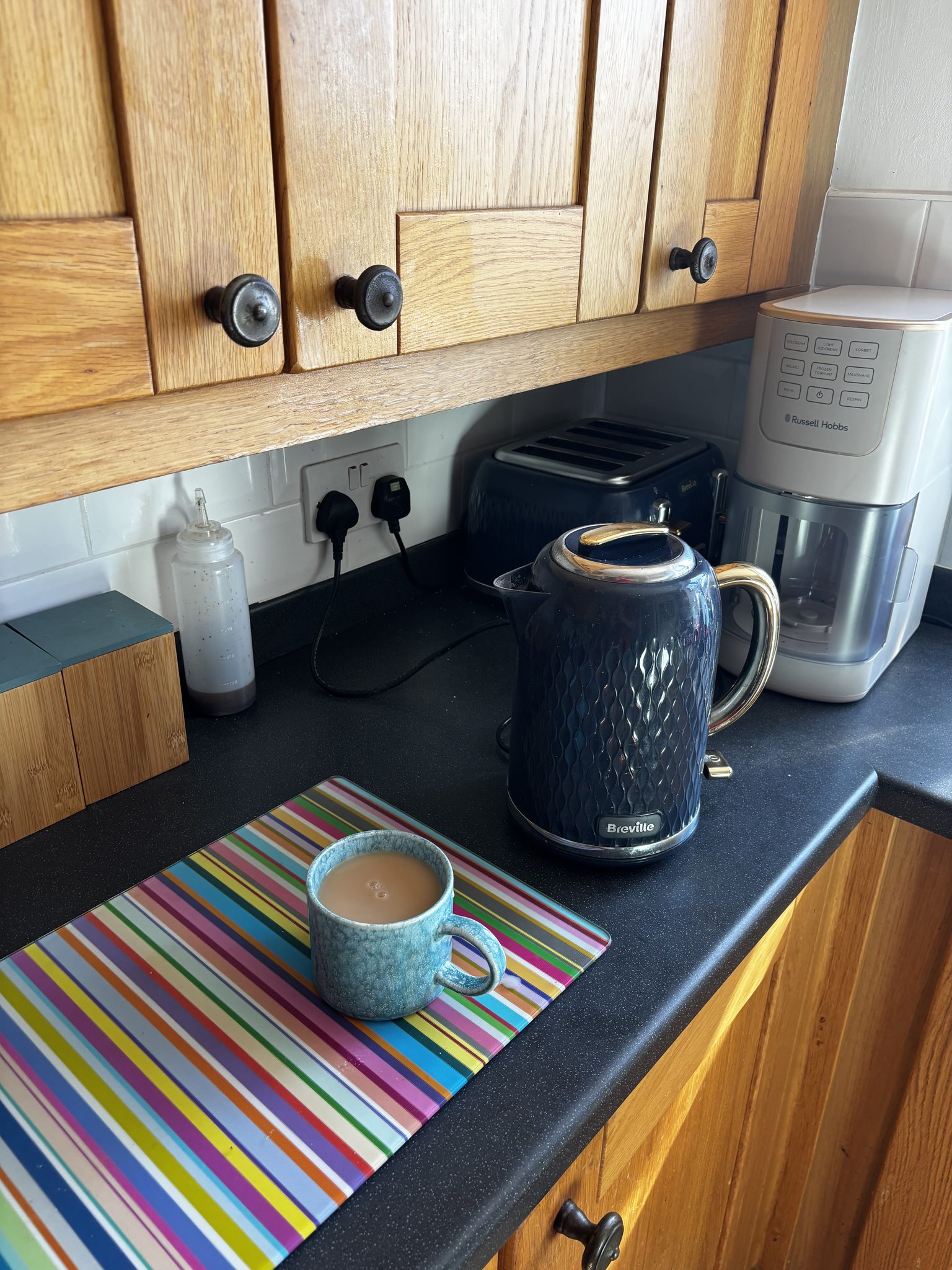
In a slow morning, the first hot drink matters. Not because tea or coffee has magical properties, but because making it and drinking it creates a natural pause. A ritual, if you want to call it that — a small repeated action that signals the start of something.
Good coffee or a decent cup of tea costs almost nothing more than a bad one, but the experience of drinking it is quite different. If the slow morning matters to you, it’s worth paying a little attention to what’s in the mug. A proper cafetière, a quality loose-leaf tea, the good biscuits — these are small, inexpensive investments in the quality of a daily routine.
A quiet kettle changes the whole start to the day more than you’d think — the temperature-control models worth the upgrade.
Breakfast: Simple, Not Skipped
A slow morning has a proper breakfast in it — or at least a proper something. Skipping breakfast is often a symptom of the rushed morning: no time, not hungry yet, I’ll sort it out later. It rarely ends well.
The unhurried breakfast doesn’t need to be elaborate. Porridge, toast, eggs — any of these take five to ten minutes if you’re not also trying to find your car keys while you make them. The key is that you sit down to eat it, even briefly. Eating standing up at the counter while checking your phone is technically eating, but it’s not the same thing.
If slowing down a bit and doing things more thoughtfully appeals to you, you’d fit right in with The Danbury Dispatch. It’s a short, free Thursday email — seasonal ideas, gentle routines, and the sort of weekend reading that doesn’t demand anything of you. Come and join us.
Batch-preparing things the night before helps here too. Overnight oats ready in the fridge. Boiled eggs from yesterday. A pot of granola that’s been made on the weekend. Removing the friction from morning food preparation is one of the most practical steps toward a calmer start. Our slow Saturday routine is another way to protect that unhurried feeling.
What to Do With Quiet Morning Time
If you do manage to carve out some genuine quiet time in the morning — fifteen or twenty minutes before the household stirs, or after everyone has left — it’s worth thinking about what to do with it. The instinct is often to be productive: emails, planning, tasks. But that’s just importing the working day earlier.
Morning quiet is well suited to things that don’t produce anything: reading (not news), sitting outside with a drink if the weather allows, a short walk, writing in a notebook, tending to plants. Activities that are absorbing without being demanding. The morning has a particular quality of light and stillness that’s worth protecting rather than filling.
Related Guides
If you’re thinking about the texture and rhythm of daily life at home, these guides sit alongside this one:
- How to Layer a Bedroom for Deep, Cosy Sleep
- The Sunday Morning Coffee Ritual That Sets Up the Week
- The Spring Home Reset: A Calm, Room-by-Room Refresh for British Houses
- Routines & Living: Guides for a Calmer Everyday Life
- Slow Living UK: A Guide to a Calmer, Quieter Life
Aromatherapy can make a genuine difference to how a slow morning feels. Tisserand Aromatherapy has a good range of morning-focused blends — their bergamot and frankincense essential oils work well diffused during that first quiet hour, and they’re made with properly sourced ingredients rather than synthetic copies.

Tisserand Sleep Better Body & Pillow Mist - 100ml | Lavender, Sandalwood, Jasmine Essential Oil Blend, 100% Natural Pure Essential Oils, Uncompromising Quality, Certified Vegan
📖 From the D&L Shop: Looking for a calmer way to organise your week? Our Calm Week Planner is designed for people who want structure without pressure — printable, fillable, and tablet-optimised versions included. £3.99. Browse the full shop →
🛡 Our standards: How we research · Editorial policy · Affiliate disclosure · Corrections · Last reviewed: April 2026

About Gareth
Gareth Isherwood is the editor of Danbury & Lovejoy. He has baked bread at home for 25+ years and has 15 years of growing experience across gardens, containers and other growing spaces, including an East Sussex allotment for the past three years. Read his full story →
Was this useful?