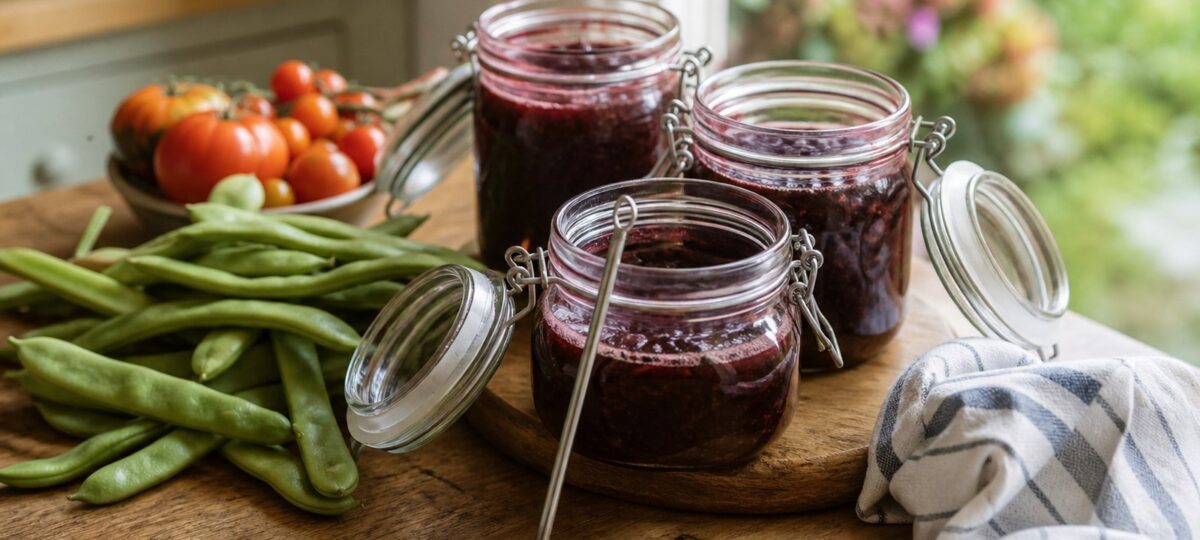
August is the month the growing turns into work of a different kind. Nothing needs sowing and very little needs planting; instead it all arrives at once, faster than anyone can eat it, and the job becomes what to do with the surplus before it goes over. Beans every other day, tomatoes ripening six at a time, blackberries in the hedge by the middle of the month and the first plums going soft on the branch. And somewhere around the third week you notice you’re switching the kitchen light on at half past eight rather than nine.
Some of the links below are affiliate links: if you buy through them we may earn a small commission at no extra cost to you. As an Amazon Associate I earn from qualifying purchases. We only suggest things we would recommend to a friend — see our affiliate disclosure and how we research.
✉ Join the Dispatch — a calm weekly note, every Thursday. Free.
So this month’s five are almost all about catching up with the glut — slicing it, setting it, potting it, and reaching the part of it that’s ten feet off the ground. The last one is for the evenings, which are quietly getting shorter whether or not anyone’s ready. Five things, about sixty-four pounds the lot, none of them over eighteen.
The answer to the runner bean mountain
Best for: A glut of runner beans and no patience left for a knife.

Runner beans are the most generous thing on the plot and the most tedious. Pick them every other day or they turn to string, and then stand at the sink topping, tailing and slicing the lot by hand while the pile refuses to go down. This is a small, unglamorous gadget that does the whole job in one pass — beans go in the top, sliced beans come out the bottom, strings taken off on the way. KitchenCraft have been making this sort of thing for decades and the design has barely changed, which tells you it works.
Why this one: stainless blades in a plastic body for a little over seven pounds, it clamps or sits steady on the worktop, and it turns twenty minutes of grumbling into about four. If you’re freezing a surplus for the winter — which is the sensible thing to do with a bean glut — it pays for itself in the first session. Our courgette and tomato glut recipes cover the other half of the August problem.
The end of the setting-point guesswork
Best for: Knowing your jam has set without the cold-saucer palaver.

August is when preserving stops being a nice idea and becomes necessary. And the single thing that separates good jam from a runny disappointment is knowing when it’s reached setting point — 105°C, and not a guess. The cold-saucer test works, in the sense that it eventually tells you something, but it means pulling a pan off the heat, waiting, and often finding you’ve gone too far the other way. A dedicated jam thermometer removes the argument entirely. Tala have been making British kitchen equipment since 1899 and this is about as simple as the tool gets: stainless steel, clearly marked, with a clip for the side of the pan.
Why this one: seven and a half pounds to stop guessing at the only step in jam-making that actually goes wrong. If you’re starting from scratch, the preserving equipment guide covers the pans and funnels.
Jars that will outlast the jam
Best for: Potting up small batches, and giving some of it away.

The temptation every August is to save up supermarket jars all year and reuse them, and there’s nothing wrong with that for jam you’ll eat by Christmas. But clip-top jars earn their place for two reasons: the rubber seal and the glass lid mean no rusting metal disc and no faint taste of the last thing that lived in there, and they look like something you’d actually hand over as a present. Half a litre is the useful size — enough for a proper batch of chutney, small enough that an opened jar gets finished.
Why this one: Kilner have been making preserving jars in the same recognisable shape since 1842, the seals are replaceable rather than the jar being disposable, and three of them come in under fifteen pounds. Buy them once and they come back out every August for years.
For the plums you can’t reach
Best for: Picking fruit off the top of the tree without a ladder.

Victoria plums come in late August, and the ripest ones are always at the top where the sun’s been getting at them. The usual approaches are a ladder on soft ground, shaking the branch and losing half the crop to bruising, or leaving them for the wasps. A telescopic picker is the unromantic third option: a basket head on a pole, with fingers that grip the stalk and a small bag that catches the fruit before it drops. The same tool does early apples in September and quinces later.
Why this one: lightweight and telescopic, so it stores against the shed wall rather than needing its own corner, and under seventeen pounds — considerably less than the plums you’d otherwise leave. Worth having in the shed before the fruit is ready rather than after. More kit that earns its keep in our garden tools guide.
For the evenings that are drawing in
Best for: Late-August evenings outside once it’s stopped being properly light.

This is the one that isn’t about the glut. By the end of August the UK loses somewhere close to two hours of evening daylight compared with the solstice, and it happens quickly enough that you notice it — one week you’re eating outside in the light, the next you’re finishing in the dusk. A pair of solar lanterns is the least-effort answer: no wiring, no batteries to remember, no switch. They charge in the day and come on by themselves, and a metal-and-glass one looks like a lantern rather than a garden gadget.
Why this one: metal rather than the brittle plastic sort, IP65 so it can stay out through the autumn rain, and two for eighteen pounds. Hang one and stand one on the table.
What the five add up to
Five small things, £64.28 the lot, and not one of them over eighteen pounds. Four of them are answers to abundance, which is a good problem to have and a real one all the same — a glut you don’t deal with in August is just compost in September. The lantern is the odd one out, and the one you’ll be gladdest of by the bank holiday.
If you want the rest of the month’s jobs, August in the garden has the full list.
What’s earning its keep at yours this August? Hit reply and tell me — I read every one.
— Gareth
🛡 Our standards: How we research · Editorial policy · Affiliate disclosure · Corrections

About Gareth
Gareth Isherwood is the editor of Danbury & Lovejoy. He has baked bread at home for 25+ years and has 15 years of growing experience across gardens, containers and other growing spaces, including an East Sussex allotment for the past three years. Read his full story →
Was this useful?