Every figure on this page is what it costs to run a household appliance once, in pence, at the electricity unit rate in force today: 26.32p per kWh (Ofgem price cap, October-December 2026). We rebuild the whole index every time the cap changes, and we publish the underlying dataset so you can check the arithmetic yourself.
The short version. Drying one load of washing costs 36p on a heated airer against £1.18 in a condenser tumble dryer. The same casserole costs 42p in a slow cooker against 87p in the oven. A fan costs 11p a night; a portable air conditioner costs £1.32. Boiling a kettle costs 4p. The appliance you reach for matters far more than the tariff you are on.
Rate: 26.32p/kWh · updated 1 October 2026 · standing charge excluded
What this is
There is no shortage of advice about saving energy at home. There is very little arithmetic. Most articles quote a rate that expired two cap changes ago, or give a cost per use without saying what wattage or duration it assumes — which makes the number impossible to check and impossible to apply to your own appliance.
So this is the index we wanted and could not find: one table per room, every figure derived from a stated power rating and a stated duration, all at the same unit rate, all recalculated on the day the cap moves. Where a figure also appears in one of our buying guides, it is generated from this same dataset, so the two cannot drift apart.
Running costs at 26.32p per kWh
Laundry & drying
| Appliance | Typical spec | Energy per use | Cost per use | Cost per year |
|---|---|---|---|---|
| Line or unheated airer | no power | 0 kWh | free | — |
| Dehumidifier (laundry mode) | 200W, 5 h | 1 kWh | 26p per load | £54.75 4 loads a week |
| Heated clothes airer (compact) | 250W, 3 h | 0.75 kWh | 20p per load | £41.06 4 loads a week |
| Heated clothes airer (3-tier) | 300W, 4.5 h | 1.35 kWh | 36p per load | £73.91 4 loads a week |
| Heat-pump tumble dryer | 1.8 kWh cycle | 1.8 kWh | 47p per cycle | £98.54 4 loads a week |
| Condenser or vented tumble dryer | 4.5 kWh cycle | 4.5 kWh | £1.18 per cycle | £246.36 4 loads a week |
Line or unheated airer: The only free option. Slow in winter, and it puts the moisture into your room rather than outside. Dehumidifier (laundry mode): The cheapest powered way to dry indoors, and it takes the damp out of the room at the same time. Heated clothes airer (compact): Cheaper per session than the larger three-tier models simply because it holds less. Heated clothes airer (3-tier): Roughly 70% cheaper per load than a vented dryer. Add a cover and it drops further.
Kitchen
| Appliance | Typical spec | Energy per use | Cost per use | Cost per year |
|---|---|---|---|---|
| Kettle (full boil) | 3000W, 3 min | 0.15 kWh | 4p per boil | £72.05 5 boils a day |
| Toaster | 1000W, 3 min | 0.05 kWh | 1p per use | £4.80 once a day |
| Microwave | 800W, 5 min | 0.067 kWh | 2p per use | £6.40 once a day |
| Air fryer (compact) | 1400W, 20 min | 0.467 kWh | 12p per use | £44.83 once a day |
| Air fryer (single basket) | 1500W, 20 min | 0.5 kWh | 13p per use | £48.03 once a day |
| Air fryer (dual basket) | 2400W, 20 min | 0.8 kWh | 21p per use | £76.85 once a day |
| Electric pressure cooker | 1000W, 30 min | 0.5 kWh | 13p per meal | £20.53 3 times a week |
| Slow cooker (small, 1.5-2.5L) | 100W, 8 h | 0.8 kWh | 21p per meal | £21.90 twice a week |
| Slow cooker (family, 3.5L) | 200W, 8 h | 1.6 kWh | 42p per meal | £43.80 twice a week |
| Slow cooker (large digital, 6.5L) | 300W, 8 h | 2.4 kWh | 63p per meal | £65.69 twice a week |
| Bread maker (standard loaf) | 0.5 kWh cycle | 0.5 kWh | 13p per loaf | £13.69 twice a week |
| Food dehydrator | 500W, 8 h | 4 kWh | £1.05 per batch | £25.27 twice a month |
| Fan oven (meal, incl. preheat) | 2200W, 40 min | 1.467 kWh | 39p per meal | £140.90 once a day |
| Fan oven (casserole, 1.5 h) | 2200W, 1.5 h | 3.3 kWh | 87p per meal | £90.33 twice a week |
| Vacuum sealer | 0.0005 kWh per bag | 0.0005 kWh | 0.013p per bag | 3p 200 bags a year |
Kettle (full boil): Cheap per boil, but five boils a day makes it one of the most-used appliances in the house. Boiling only what you need is the whole saving. Toaster: Negligible. Worth knowing so you can stop worrying about it. Microwave: For reheating a single portion nothing else comes close. Air fryer (compact): The cheapest way to cook a proper meal for one or two.
Heating
| Appliance | Typical spec | Energy per use | Cost per use | Cost per year |
|---|---|---|---|---|
| Electric heater (2kW, flat out) | 2000W, 1 h | 2 kWh | 53p per hour | — |
| Oil-filled radiator (2kW, thermostat cycling) | 2000W at ~50% duty, 1 h | 1 kWh | 26p per hour | £189.50 4 h a day, Oct-Mar |
| Heating one room electrically | 1500W, 2 h | 3 kWh | 79p per evening | £142.13 180 evenings |
| Electric blanket or underblanket | 100W, 8 h | 0.8 kWh | 21p per night | £37.90 180 nights |
| Heated throw | ~65W (50-80W typical), 4 h | 0.26 kWh | 7p per evening | £10.26 150 evenings |
Electric heater (2kW, flat out): Every 2kW electric heater costs the same to run, whatever the marketing says. Only the thermostat changes the bill. Oil-filled radiator (2kW, thermostat cycling): Once the room is up to temperature the thermostat cuts in. Assume roughly half the rated draw across a long evening. Heating one room electrically: The shoulder-season alternative to firing the whole central-heating system for one room. Electric blanket or underblanket: Most have a timer and thermostat, so a full eight hours at full power is the worst case rather than the norm.
Cooling
| Appliance | Typical spec | Energy per use | Cost per use | Cost per year |
|---|---|---|---|---|
| Tower or pedestal fan | 50W, 8 h | 0.4 kWh | 11p per night | £6.32 60 nights |
| Evaporative air cooler | 70W, 8 h | 0.56 kWh | 15p per night | £8.84 60 nights |
| Portable air conditioner | ~1000W cycling, 5 kWh/night | 5 kWh | £1.32 per night | £39.48 30 nights |
Tower or pedestal fan: About a penny an hour. Efficient DC-motor fans run on considerably less. Evaporative air cooler: Sips electricity, but does little in humid British air. Portable air conditioner: The compressor cycles rather than running flat out, so a night costs around a pound rather than the small fortune people fear.
Home & cleaning
| Appliance | Typical spec | Energy per use | Cost per use | Cost per year |
|---|---|---|---|---|
| Dehumidifier (bedroom, 300W) | 300W, 8 h | 2.4 kWh | 63p per night | £113.70 180 nights |
| Desiccant dehumidifier (400W) | 400W, 4 h | 1.6 kWh | 42p per session | £75.80 180 sessions |
| Air purifier (continuous, low) | 40W, 24 h | 0.96 kWh | 25p per day | £92.23 every day |
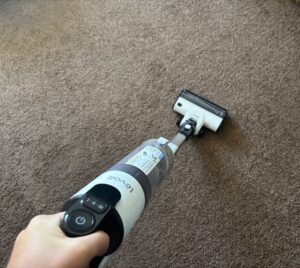
| Upright or cylinder vacuum | 800W, 30 min | 0.4 kWh | 11p per clean | £10.95 twice a week |
| Robot vacuum (per clean) | 60W, 1.5 h | 0.09 kWh | 2p per clean | £8.65 every day |
Dehumidifier (bedroom, 300W): Runs far less than eight hours in practice — most cycle on a humidistat once the room is dry. Desiccant dehumidifier (400W): Draws more than a compressor model but keeps working in a cold, unheated room where compressors stall. Air purifier (continuous, low): Designed to be left on. The filters cost more per year than the electricity does. Upright or cylinder vacuum: EU rules capped motor power years ago, so a modern vacuum costs less to run than the one it replaced.
How we worked it out
Costs use the Ofgem price cap electricity unit rate for October-December 2026 of 26.32p per kWh (direct debit; electricity currently carries no VAT). The 54.83p per day standing charge is excluded from every figure, because you pay it whichever appliance you choose — including if you choose none. The typical annual dual-fuel bill on this cap is £1,723.
Energy per use is rated power multiplied by duration. A 300W heated airer run for 4.5 hours is 0.3 kW × 4.5 h = 1.35 kWh, and 1.35 × £0.2632 = 36p. Where a manufacturer rates a whole cycle rather than a constant draw — tumble dryers, bread makers, a cycling air-conditioning compressor — we use the rated cycle energy instead, and say so in the spec column.
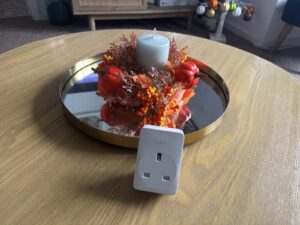
Thermostatically controlled appliances cycle their elements on and off, so a rated-power figure is a conservative upper estimate, not a measurement. These are comparative estimates from published specifications rather than laboratory readings, and we would rather state that plainly than imply a precision we do not have. To measure your own appliance instead, a plug-in energy monitor will show you; our Tapo P110 guide explains how. Annual columns apply the usage pattern shown in the dataset; where an annual figure would be misleading we leave it blank rather than invent a usage pattern.
Use the data
The full dataset is available as a CSV: download the UK Home Running Costs Index (CSV). It carries the rate, the window it applies to, and the wattage and duration behind every row, so you can recalculate any figure at your own unit price.
Journalists and editors: you are welcome to cite these figures with a link to this page. For the underlying calculations, a breakdown for a specific appliance class, or a comment, contact [email protected].
When this changes
The price cap is reset quarterly. This index was last rebuilt on 1 October 2026 against the October-December 2026 cap, which runs to 2026-12-31. Ofgem announces each new rate about five weeks ahead, and this page is rebuilt on the day it takes effect — every figure above, and every figure derived from it across the site, moves together.
Common questions
What is the current UK electricity price cap unit rate?
The Ofgem price cap electricity unit rate is 26.32p per kWh for October-December 2026 (direct debit; electricity currently carries no VAT). There is also a standing charge of 54.83p per day, which you pay regardless of how much electricity you use.
How much does it cost to run a tumble dryer?
A condenser or vented tumble dryer uses about 4.5 kWh per cycle, which is £1.18 per load at 26.32p per kWh. A heat-pump dryer uses around 1.8 kWh, or 47p. Drying the same load on a heated clothes airer costs about 36p.
Is an air fryer cheaper than an oven?
Yes. A 1500W air fryer for 20 minutes costs 13p, against 39p for a 2200W fan oven over 40 minutes including preheat. Even a large dual-basket model at 21p is roughly half the oven.
How much does a slow cooker cost to run?
A 200W family slow cooker running for eight hours uses 1.6 kWh, which is 42p at 26.32p per kWh. The same casserole in a fan oven for an hour and a half costs 87p.
How much does it cost to run a fan overnight?
A 50W tower or pedestal fan run for eight hours costs about 11p — roughly a penny an hour. A portable air conditioner over the same night costs about £1.32, because its compressor draws around 1000W while it is running.
Does this include the standing charge?
No, deliberately. The standing charge of 54.83p per day is paid whichever appliance you choose, and including it would make every comparison on this page misleading. These figures are the electricity used by the appliance itself.
Was this useful?