Energy efficient cooking is one of the simplest ways to lower your electricity bill without changing what you eat. Here is a practical look at which appliances cost the least to run, with UK energy prices and a formula you can use yourself. We looked at the actual numbers in our piece on how much a slow cooker costs to run. For the heating side of energy costs, our guide to reducing heating bills covers the rest of the house.
And the logic cuts both ways. In a July heatwave, the appliance that cooks your food without heating your kitchen earns its keep twice over: a microwave, air fryer or slow cooker adds barely any warmth to the room, while an hour of the oven can make a small kitchen unbearable. We look at the cooling side of the same arithmetic in our fan vs portable air conditioner running costs guide.
Home Kitchen
✉ Join the Dispatch — a calm weekly note, every Thursday. Free.
Cooking efficiently works best when you’re working with ingredients worth eating. Daylesford Organic stock a thoughtful pantry range — dried goods, grains, oils — that suit this kind of considered, low-waste approach to cooking at home.
Energy costs have made me think more carefully about how I cook over the past few years. The allotment near the East Sussex coast provides a lot of the seasonal produce, but cooking it efficiently matters too — particularly in the colder months when the slow cooker is on most days and the oven would otherwise be doing the same job at three times the cost. I’ve tracked cooking costs with a smart meter for long enough to have a genuine sense of what’s worth using when. We compared the best slow cookers for UK kitchens if you want specific recommendations.
Energy-efficient cooking is one of the simplest ways to reduce household costs without giving up warm, comforting meals. This guide covers which cooking methods are cheapest in the UK, when the oven still makes sense, and the small habits that make the biggest difference — without turning dinner into a maths lesson.
Appliances worth having for energy-efficient cooking
- Dual basket air fryer (7L+) → — fast, no preheat needed, excellent for 1–4 portions.
- Slow cooker (3.5L) → — runs all day for 15–21p; ideal for batch cooking and freezer meals.
- Microwave (800W, 20L) → — the cheapest option for reheating; use it more than you probably do.
The Simple Rules for Energy-Efficient Cooking
- Match appliance size to portion size. A large oven for one jacket potato costs far more than a microwave or small air fryer for the same result.
- Minimise time on heat. For long, slow-cooked dishes, a slow cooker running at 70–100W costs far less than a low oven at 1500W+ for the same duration.
- Keep heat where it belongs. Lids on pans, don’t open the air fryer mid-cook, don’t pre-heat the oven for things that don’t need it.
- Cook once, eat twice (or more). Batch cooking is the most powerful energy-saving habit — the energy cost is amortised across multiple meals.
Which Cooking Method Is Cheapest?
At the current UK unit rate of 26.32p/kWh (the October–December 2026 price cap), approximate costs per use: Our air fryer guide compares the best options if you are considering one.
| Method | Typical wattage | Cost per typical use | Best for |
|---|---|---|---|
| Microwave | 700–1000W | under 2p | Reheating, porridge, veg |
| Slow cooker (low) | 70–100W | 15–21p for 8 hours | Soups, stews, batch cooking |
| Air fryer | 1200–1800W | 11–24p for 20–30 mins | Roast veg, fish, small portions |
| Hob (electric) | 1000–2000W per ring | 26–53p per hour | Frying, pasta, quick cooking |
| Full oven | 2000–3000W | 53–79p per hour | Large roasts, batch baking |
Your actual costs depend on your specific appliances, unit rate, and usage pattern. Check your tariff and use a smart meter or plug-in energy monitor for the clearest picture of your own kitchen’s costs.
The Cost Calculation Formula
To work out what any appliance costs to run:
Cost = (Watts ÷ 1000) × (Minutes ÷ 60) × Unit rate (£/kWh)
Example: a 1500W air fryer used for 25 minutes at £0.2632/kWh (the October–December 2026 price cap) costs roughly (1.5 × 0.42 × 0.2632) = £0.17.
Example: a 90W slow cooker running for 8 hours at £0.2632/kWh costs roughly (0.09 × 8 × 0.2632) = £0.19 for an entire batch-cooked dinner.
Gareth’s note: The slow cooker comparison is the one that surprises people most. Running all day at low wattage, it costs less than 20p to produce a full batch of stew, soup or chilli — enough for 4–6 portions. That’s genuinely one of the most cost-effective meals you can produce in a UK kitchen in winter, and the energy cost is a fraction of what most people assume.
When the Oven Is Still Worth Using
The oven isn’t always the expensive choice. It becomes cost-effective when you’re cooking for four or more people, doing multiple dishes simultaneously, or making something that genuinely needs oven heat (pastry, bread, roasting large cuts of meat). The inefficiency is using a large oven for small portions that an air fryer or hob could handle better. If the oven is already on for a roast, add a tray of vegetables for the week — the heat is already paid for.
The Habits That Make the Biggest Difference
- Batch cook with the slow cooker. Make enough for 4–6 portions; the energy cost per portion drops dramatically.
- Reheat in the microwave, not the oven. Reheating a single portion in the microwave costs under 2p; the oven costs 18–26p or more for the same result.
- Use lids on pots. A lid on a simmering pan means you can turn the heat down significantly and still maintain temperature.
- Defrost in the fridge, not the microwave. Move tomorrow’s dinner from freezer to fridge the night before — saves the defrost cycle and keeps food in better condition.
- Fill the oven when you use it. If it’s already on for a roast, add a batch of roasted vegetables for the week or something else that uses the heat already paid for.
The verdict
The single most effective change for energy-efficient cooking in a UK kitchen is shifting as much winter batch cooking as possible to the slow cooker. It runs at a fraction of the cost of an oven, produces genuinely better results for soups, stews and braises, and the 8-hour cook means you can start it in the morning and come home to dinner. For everything else — reheating, small portions, quick meals — the microwave and air fryer are far cheaper than turning the oven on for 20 minutes.
FAQs
Is a slow cooker cheaper to run than an oven?
Yes, significantly. A typical slow cooker runs at 70–100W on low. An oven runs at 2000–3000W. Over 8 hours, the slow cooker costs roughly 15–21p; the oven would cost £4–6 for the same duration. Even on high (150–300W), the slow cooker is far cheaper than any oven for long cooks.
Is an air fryer cheaper to run than an oven?
For small portions, yes. An air fryer heats up in 2–3 minutes (no long preheat) and cooks at 1200–1800W for 15–25 minutes. For 1–2 portions of roasted veg, fish or chicken, it’s typically 8–20p, against 53–79p for every hour the oven is on. For large meals, the oven becomes competitive.
What’s the cheapest way to reheat food?
The microwave, by a significant margin. A 2–4 minute microwave reheat costs under 2p. The oven takes 20+ minutes to reheat a single portion and costs 18–26p or more. If you’re reheating leftovers, use the microwave every time.
Does batch cooking actually save money on energy?
Yes. If you make 6 portions of stew in the slow cooker for 15p total, the energy cost per portion is about 2.5p. Making the same stew for one person six times separately would cost far more. Batch cooking is where the real energy savings happen — both in reduced cost per portion and in fewer times you heat up the kitchen.
The Danbury Dispatch — Free Weekly
One calm note every Thursday — seasonal guides, practical ideas, and quietly useful recommendations.
Quick Picks

Ninja Foodi MAX Dual Zone 9.5L Air Fryer, 2 Drawers, Black AF400UK | 6 functions: Air Fry, Max Crisp, Roast, Bake, Reheat and more. Cook up to 8 Portions, Non-Stick Dishwasher Safe Drawers.
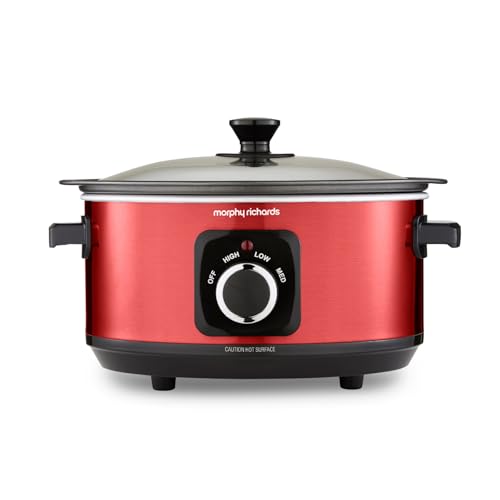
Morphy Richards Accents 3.5L Sear & Stew Slow Cooker, Shatter Resistant Non Stick Aluminium Pot, Single Pot Cooking, Compact, 3 Heat Settings, Hob Proof, Glass Lid, Easy Clean, 163W, Red, 460026

Russell Hobbs 20 Litre 800W Black Solo Manual Microwave with Mirrored Door, 5 Power Levels, Integrated Timer and Defrost Function, Easy Clean RHM2027B
💰 From the D&L Shop: Ready to take control of your household budget? Our Household Budget Reset is a 5-page printable workbook covering income, outgoings, spending, and savings goals — £3.99. Also free: the Weekly Budget Meal Planner to cut your food bill. Browse the full shop →
🛡 Our standards: How we research · Editorial policy · Affiliate disclosure · Corrections · Last reviewed: April 2026

About Gareth
Gareth Isherwood is the editor of Danbury & Lovejoy. He has baked bread at home for 25+ years and has 15 years of growing experience across gardens, containers and other growing spaces, including an East Sussex allotment for the past three years. Read his full story →
Was this useful?