

I’ve baked bread by hand for the better part of 25 years, which is exactly why I’m relaxed about recommending a machine to do it for you — there are plenty of mornings when you want a good loaf without the three hours of proving and shaping a proper one takes. This guide reviews the best bread makers you can buy in the UK in 2026, judged the way a regular baker judges them: on the loaf they actually produce, not the length of the spec sheet. We’ve weighed reliability, crumb and crust, loaf size, and whether the extra programmes are ones you’ll genuinely use — from the Panasonic models serious bakers swear by to budget machines that punch well above their price. For an independent second opinion on any model, the BBC Good Food bread maker reviews and Which? are both worth a look.
✉ Join the Dispatch — a calm weekly note, every Thursday. Free.
Prices and availability checked 4 November 2026 against live Amazon listings; tap through for the current price.
Part of our Countertop Cookers Hub — the complete guide to pressure cookers, slow cookers, air fryers, soup makers, rice cookers and bread makers for UK kitchens.
How we chose these bread makers
We matched loaf size to household (at least 1kg for a family, 750g for smaller homes), then compared programme range including gluten-free and dough-only, paddle design and how much of a hole it leaves, crust control, and noise during the night cycle. These are researched picks, not first-hand reviews, and we don’t accept payment for placement. Read our full methodology →
At a glance
| Model | Best for | Spec | Price tier | Our verdict | |
|---|---|---|---|---|---|
| Panasonic SD-R2530 | Most households | 30 prog | £££ | Panasonic has been making bread machines longer than almost anyone — reliable, precise, and built to last | Check price → |
| Panasonic SD-YR2540 | With automatic yeast dispenser | 32 prog | £££ | The SD-YR2540 is the SD-R2530’s more capable sibling, with an automatic yeast dispenser | Check price → |
| Morphy Richards Fastbake 48281 | Tight budget | 12 prog | £ | The Morphy Richards Fastbake is the bread maker that launched many people’s home baking habit | Check price → |
| Lakeland Compact 1lb Daily Loaf Bread Maker | For small kitchens | 12 prog | £ | The Lakeland Compact bakes a fresh 1lb loaf each day — a smaller footprint that suits small kitchens | Check price → |
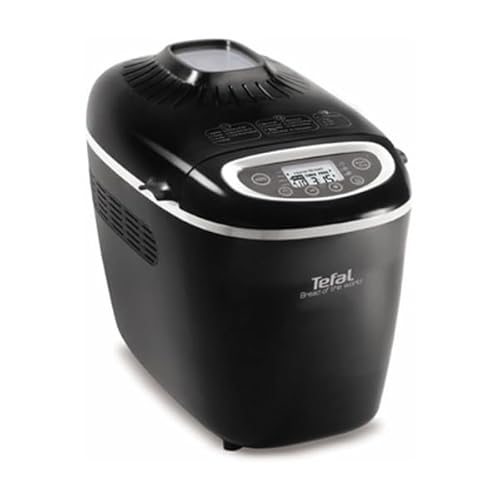
| Tefal PF611838 Pain & Délices Bread Maker | A neat loaf base | 20 prog | £££ | The most expensive machine here, but its paddle lifts out before baking and barely marks the loaf | Check price → |
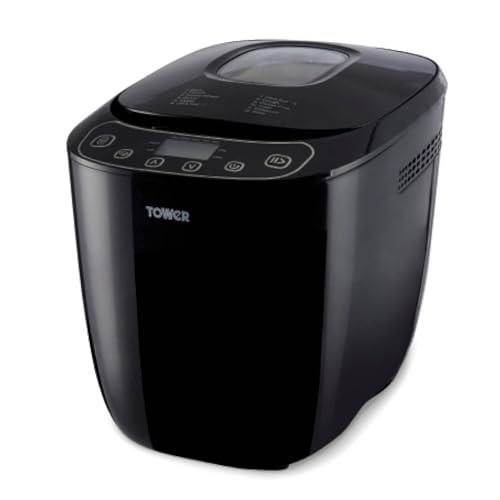
| Tower 2lb Digital | A familiar high-street name | 12 prog | £ | An everyday British kitchen name, with fast bake and keep-warm at a budget price | Check price → |
Finding the best bread maker means thinking about loaf size, programme range, and how much counter space you’re willing to give up. A good machine earns its keep quickly — home-baked bread costs a fraction of the equivalent supermarket loaf. For other useful kitchen appliances, see our best slow cooker guide. For an independent perspective, Which? bread maker reviews provide reliable benchmark data.
A bread maker is one of those rare kitchen appliances that earns its worktop space every single day. There’s real satisfaction in setting it going before bed and waking to a fresh loaf — and the saving over bought bread adds up quickly. This guide covers the best bread makers available in the UK in 2026, from reliable budget machines to the Panasonic models that serious home bakers swear by.
Which Bread Maker Is Right for You?
- Best overall: Panasonic SD-R2530 — the most reliable bread maker you can buy
- Best with automatic yeast dispenser: Panasonic SD-YR2540 — set it and truly forget it
- Best budget: Morphy Richards Fastbake 48281 — fast, affordable, and dependable
- Best mid-range: Lakeland Compact 1lb Compact — slim design, 12 programmes
- Best for gluten-free: Panasonic SD-R2530 — four dedicated gluten-free settings
- Best familiar-brand pick: Tower 2lb Digital — a name you already know, 12 programmes and a 60-minute fast bake, at the budget end
Why Buy a Bread Maker?
A decent 800g loaf from a supermarket costs £1.50–£3.00. Made at home in a bread maker, the ingredients for the same loaf typically cost 35–50p. If you bake three or four loaves a week, a bread maker pays for itself within a few months. And unlike a sourdough starter demanding constant attention, a bread maker needs nothing from you except ingredients and a programme selection.
Beyond the economics, there’s the question of what goes into your bread. Home-baked loaves contain flour, water, yeast, salt, and whatever else you choose to add. That’s it. No emulsifiers, no preservatives, no additives keeping a factory loaf springy for ten days.
Is a Bread Maker Worth It? The Real Cost Per Loaf
It’s the question we’re asked most, so here are the actual numbers. A standard 800g white loaf needs roughly 500g of strong bread flour, a sachet of yeast, a spoon of salt and a little oil or butter — about 35 to 50p of ingredients at supermarket prices, and less again if you buy flour in bigger bags. The machine itself draws around 0.4 to 0.6kWh per cycle, which at the October–December 2026 price cap of about 26.32p/kWh comes to 11 to 16p of electricity. Call it 46 to 66p for a fresh loaf — against £1.50 for a basic supermarket equivalent and £3 or more for a decent bakery sourdough.
On those figures a £70 budget machine pays for itself in roughly 67 to 83 loaves — about eight to ten months if you bake twice a week, sooner if you bake more. A dearer Panasonic takes longer to break even on price alone, but the gap closes quickly once you count the loaves a cheaper machine quietly gets wrong. The honest summary: if you’ll use it once a week or more, a bread maker pays for itself and then keeps paying. If you’ll use it twice a year, buy a good loaf from a proper bakery instead.
What to Look For in a Bread Maker
- Loaf size: Most UK bread makers produce 750g or 1kg loaves. If you’re feeding a family, go for a machine that handles at least 1kg. Smaller households do well with 500g–750g capacity.
- Number of programmes: More programmes means more versatility — wholemeal, rye, sourdough assist, cake, jam, pizza dough. The Panasonic models have up to 32 programmes.
- Delay timer: A 13-hour delay timer lets you load the machine at night and wake to a fresh loaf. Essential for most people.
- Automatic dispensers: Higher-end models (like the Panasonic SD-YR2540) have an automatic yeast dispenser that adds yeast at exactly the right moment in the cycle — significantly improving results with wholemeal and specialty loaves.
- Crust settings: Light, medium, and dark crust options let you match the loaf to your preferences.
- Footprint: Bread makers are bulky. Measure your worktop space before buying — dimensions vary considerably between models.
Our Top Bread Maker Picks
Best Overall
Panasonic SD-R2530
Why we like it: Panasonic has been making bread machines longer than almost anyone, and the SD-R2530 is the current expression of that experience. It’s reliable in a way cheaper machines simply aren’t — the timing is precise, and the dual temperature sensors monitor both the room temperature and the dough temperature during mixing, adjusting the cycle automatically so your loaf comes out right whether it’s a warm August afternoon or a cold January morning. Thirty automatic programmes cover everything from a basic white loaf to wholemeal, rye, gluten-free and cake, and the automatic raisin and nut dispenser adds extras at exactly the right moment. The four dedicated gluten-free programmes are genuinely useful rather than an afterthought.
- Programmes: 30
- Gluten-free modes: 4
- Raisin/nut dispenser: Yes (automatic)
- Max loaf size: 1kg
- Delay timer: 13 hours
- Price: see the product card for today’s price
Our honest take: The bread maker we’d recommend to almost everyone. Not the cheapest, but built to last — and the consistency of the loaves it produces makes budget machines feel like a false economy. If you don’t need the automatic yeast dispenser of the SD-YR2540 below, this is the Panasonic to buy.
Affiliate link — we may earn a small commission at no extra cost to you.
Check price on Amazon →
Best with Automatic Yeast Dispenser
Panasonic SD-YR2540
Why we like it: The SD-YR2540 is the SD-R2530’s more capable sibling. The headline feature is the automatic yeast and raisin/nut dispenser — a small compartment on top of the machine that dispenses yeast at precisely the right point in the mixing cycle. This makes a genuine difference to wholemeal, rye, and specialty loaves where yeast timing affects the final rise. It also has 32 programmes (compared to 30 on the R2530), including brioche, sourdough assist, and a pizza dough setting that produces excellent results.
- Programmes: 31
- Gluten-free modes: 4
- Max loaf size: 1kg
- Automatic yeast dispenser: Yes
- Delay timer: 13 hours
- Price: see the product card for today’s price
Our honest take: Worth the extra over the R2530 if you bake wholemeal or specialty loaves regularly. For basic white bread every day, the R2530 is indistinguishable in the results it produces.
Affiliate link — we may earn a small commission at no extra cost to you.
Check price on Amazon →
Best Budget
Morphy Richards Fastbake 48281
Why we like it: The Morphy Richards Fastbake is the bread maker that launched many people’s home baking habits — it’s been a bestseller for years because it does the basics well at a price that removes any hesitation. The Fastbake setting produces a usable loaf in under an hour, which is genuinely useful when you’ve run out of bread and don’t have time to wait for a standard cycle. Twelve programmes cover the most common bread types, plus cake and jam. The 13-hour delay timer works reliably.
- Programmes: 12
- Max loaf size: 1kg (500g, 750g, 1kg settings)
- Delay timer: 13 hours
- Fastbake: Yes — loaf in under 1 hour
- Price: see the product card for today’s price
Our honest take: An excellent entry point. The loaves it produces won’t match a Panasonic, but they’re far better than anything from a supermarket. If you’re not sure whether a bread maker is for you, start here.
Affiliate link — we may earn a small commission at no extra cost to you.
Check price on Amazon →
Best for Small Kitchens
Lakeland Compact 1lb Daily Loaf Bread Maker
Why we like it: The Lakeland Compact bakes a fresh 1lb loaf each day — smaller than most competitors, which suits smaller households well and means the machine itself has a noticeably smaller footprint. Twelve programmes, three crust settings, and a 15-hour delay timer. The compact design makes it easier to store in a cupboard between uses. Results are consistent and the machine is quiet enough that running it overnight doesn’t disturb anyone.
- Programmes: 12
- Max loaf size: 600g
- Delay timer: 15 hours
- Footprint: Notably smaller than most machines
- Price: see the product card for today’s price
Our honest take: The right choice if you cook for one or two and are short on kitchen space. The smaller loaf size is a limitation if you need to feed a family, but for everyday use it’s ideal.
Affiliate link — we may earn a small commission at no extra cost to you.
Check price on Amazon →
Best for a Neat Loaf Base
Tefal PF611838 Pain & Délices Bread Maker
Why we like it: The Tefal is now the dearest machine on this list, so it has to earn its place on what it does rather than what it costs. Twenty automatic programmes include speciality settings for brioche, country bread, and sandwich loaf. The kneading paddle is easy to remove before baking, which reduces the hole in the bottom of the finished loaf — a small but genuinely useful feature. The Keep Warm function holds the loaf at temperature for up to an hour after baking.
- Programmes: 20
- Max loaf size: 1kg
- Delay timer: 15 hours
- Keep warm: Up to 1 hour
- Price: see the product card for today’s price
Our honest take: The dearest machine here, with more programmes than the Morphy Richards but none of the Panasonic’s price advantage. The removable paddle feature is more useful than it sounds.
Affiliate link — we may earn a small commission at no extra cost to you.
Check price on Amazon →
Best from a Familiar High-Street Name
Tower 2lb Digital Bread Maker
Why we like it: Tower is a name most British kitchens already know, and its 2lb Digital Bread Maker keeps the specification honest at a budget price. Twelve programmes cover the loaves most households actually bake — mixed grain, wholemeal and French white among them — and it is suitable for gluten-free bread. A 60-minute fast bake handles the last-minute loaf, three crust shades let you set it to taste, the 13-hour delay timer means a fresh loaf waiting at breakfast, and a 60-minute keep-warm stops the crust sweating if you’re not there the moment it finishes.
- Programmes: 12 (suitable for gluten-free bread)
- Crust settings: 3 (light / medium / dark)
- Loaf size: up to 2lb
- Delay timer: 13 hours
- Extras: 60-minute fast bake, 1hr keep-warm, 550W
- Guarantee: 1 year, extended to 3 with online registration
- Price: see the product card for today’s price
Our honest take: If the Panasonics feel like more machine than you need and you’d rather buy a name you already know, this is the sensible choice. It won’t match the Panasonic’s dual sensors for consistency, but for everyday loaves at this price it’s hard to argue with. Already own one? Our Tower breadmaker recipes are written for it.
Affiliate link — we may earn a small commission at no extra cost to you.
Check price on Amazon →
A Bread Maker vs Baking by Hand
After twenty-five years of baking by hand, the honest position is this: a bread maker doesn’t replace a properly hand-made loaf, and it doesn’t try to. What it replaces is the reason you don’t bake — the time, the mess, and needing to be in the house for three hours while dough proves. A machine gives you a genuinely good everyday loaf for five minutes of effort, on a timer, while you sleep. A slow hand-made loaf with a long ferment will out-flavour and out-texture it — but only if you actually find the time to make it, and most weeks most of us don’t.
If you want the best of both, use the machine for weekday sandwich loaves and keep your hands free for a weekend bake. Several of the Panasonic programmes will also just mix and prove the dough for you and stop before baking, so you can shape it by hand and finish it in the oven — the closest thing to having it both ways. And if a machine really isn’t for you, a no-knead loaf baked in a Dutch oven is the other low-effort route worth knowing.
Tips for Better Results
Weigh your ingredients rather than measuring by volume — flour especially is inconsistent when measured in cups or scoops. Add the liquid first, then the dry ingredients, with the yeast going in last and kept away from the salt until the machine starts mixing. Strong white bread flour (sometimes labelled “bread flour”) gives better results than plain flour; the higher protein content helps gluten develop properly.
In cold weather, your loaves may not rise as well — use slightly warmer water (around 35°C rather than cold from the tap) and keep the machine away from draughts. In summer, the opposite applies — cooler water helps prevent over-proving.
A bread maker as a gift
A bread maker suits someone who would eat fresh bread every day but does not have the three hours a hand-made loaf takes: it mixes, kneads, proves and bakes on a timer, so the loaf can be ready in the morning. For most people the Panasonic SD-R2530 is the safe present, reliable and with 30 programmes, and its four gluten-free settings make it the thoughtful choice for someone who avoids gluten. For a keen baker of wholemeal and rye, the SD-YR2540 adds an automatic yeast dispenser. For one or two people short of worktop space, the Lakeland Compact makes a smaller loaf and fits in a cupboard, and for a first machine on a budget there is the Morphy Richards Fastbake.
Bread makers are bulky, so if it is a surprise, take a discreet look at the worktop first.
Frequently Asked Questions
Can I use plain flour in a bread maker?
You can, but strong bread flour will give you a better rise and a better texture. Plain flour has a lower protein content which means less gluten development — the loaf will be denser. For best results, use strong white bread flour for white loaves and strong wholemeal flour for wholemeal.
How much does it cost to run a bread maker?
A typical bread maker cycle uses around 0.4–0.6kWh of electricity. At current UK electricity rates (approximately 26.32p/kWh), that’s roughly 11–16p per loaf in electricity. Combined with ingredient costs of about 35–50p, your total cost per loaf is typically 46–66p — well below supermarket prices for comparable quality.
Is a bread maker worth it?
For most people who bake at least two loaves a week, yes. The machine pays for itself within a few months in ingredient savings alone. The more significant benefit, however, is the quality and consistency of the bread — once you’re used to a fresh loaf every morning, supermarket bread is a difficult step back.
Can bread makers make gluten-free bread?
Yes, but you need a machine with a dedicated gluten-free programme — gluten-free dough behaves differently and requires a different mixing and baking cycle. The Panasonic SD-R2530 has four gluten-free programmes and is one of the best options for this purpose.
Do you still have to knead the dough?
No — that’s the whole point. The machine’s paddle kneads the dough for you, then proves and bakes it in the same bowl. You add the ingredients, choose a programme and walk away. The only manual step worth doing is removing the paddle before the final prove on some models, which leaves a smaller hole in the base of the loaf.
Can you make sourdough in a bread maker?
Partly. A bread maker can’t replicate a true long, slow sourdough ferment, but many machines (including the Panasonic SD-YR2540) have a “sourdough assist” programme that builds a starter-style culture over several hours before baking. The result is a pleasant tangy loaf rather than a bakery sourdough — good, but not the real thing. For genuine sourdough you’ll still want to prove by hand and bake in the oven.
Are expensive bread makers worth it, or will a cheap one do?
A budget machine like the Morphy Richards makes perfectly good everyday bread. What you pay extra for in a Panasonic is consistency — dual temperature sensors that adjust the cycle to the weather, better handling of wholemeal and gluten-free, and a build that lasts years rather than seasons. If you bake occasionally, save your money. If bread becomes a habit, the Panasonic stops feeling expensive surprisingly quickly.
What size bread maker do I need?
Match the maximum loaf size to your household. A 1kg machine suits a family and still bakes smaller 500g and 750g loaves when you want them. For one or two people, a compact 600g machine like the Lakeland takes up less worktop and wastes less bread — a fresh loaf has no preservatives, so it’s best eaten within two or three days, and sizing down often makes more sense than baking a 1kg loaf you can’t finish.
Is a bread maker a good gift?
For someone who would like fresh bread most days, yes. The Panasonic SD-R2530 is the safest choice and has four gluten-free programmes, the Lakeland Compact suits one or two people with little worktop space, and the Morphy Richards Fastbake is the budget pick. They are bulky, so check there is room for one first.
Related Guides
If you already own a Panasonic, our Panasonic breadmaker recipes guide covers eight reliable loaves with programme-by-name settings for the SD-YR2550 and SD-R2530.
There are matching recipe sets for three other common machines: Russell Hobbs (everyday sandwich loaves), Morphy Richards (sorted by timing, for the rapid programme and the delay timer) and Salter (small-batch loaves for compact machines).
Already baking with a Tower machine? We keep a dedicated set of Tower breadmaker recipes written for it.
— Gareth
🛡 Our standards: How we research · Editorial policy · Affiliate disclosure · Corrections

About Gareth
Gareth Isherwood is the editor of Danbury & Lovejoy. He has baked bread at home for 25+ years and has 15 years of growing experience across gardens, containers and other growing spaces, including an East Sussex allotment for the past three years. Read his full story →
Was this useful?