Some of the links below are affiliate links: if you buy through them we may earn a small commission at no extra cost to you. As an Amazon Associate I earn from qualifying purchases. We only suggest things we would recommend to a friend — see our affiliate disclosure and how we research.
✉ Join the Dispatch — a calm weekly note, every Thursday. Free.
A slow Saturday routine is one of the simplest ways to reclaim the weekend — structured loosely enough to rest, but with just enough shape to feel good.
Saturday has become a complicated day. It is often asked to do too many things at once — shopping, other people’s plans, social obligations, home maintenance, the week’s accumulated admin, and ideally something that feels like rest. The result is a day that ends with a vague sense of having been busy without having done anything that felt chosen.
The Slow Saturday is a different proposition: a day with a gentler architecture, where the essential things get done without dominating, and where enough time is protected for the kind of unhurried activity that makes the weekend feel genuinely restorative. This isn’t just about doing less. It’s about doing things in a different order, and at a different pace.
The morning — unhurried by design
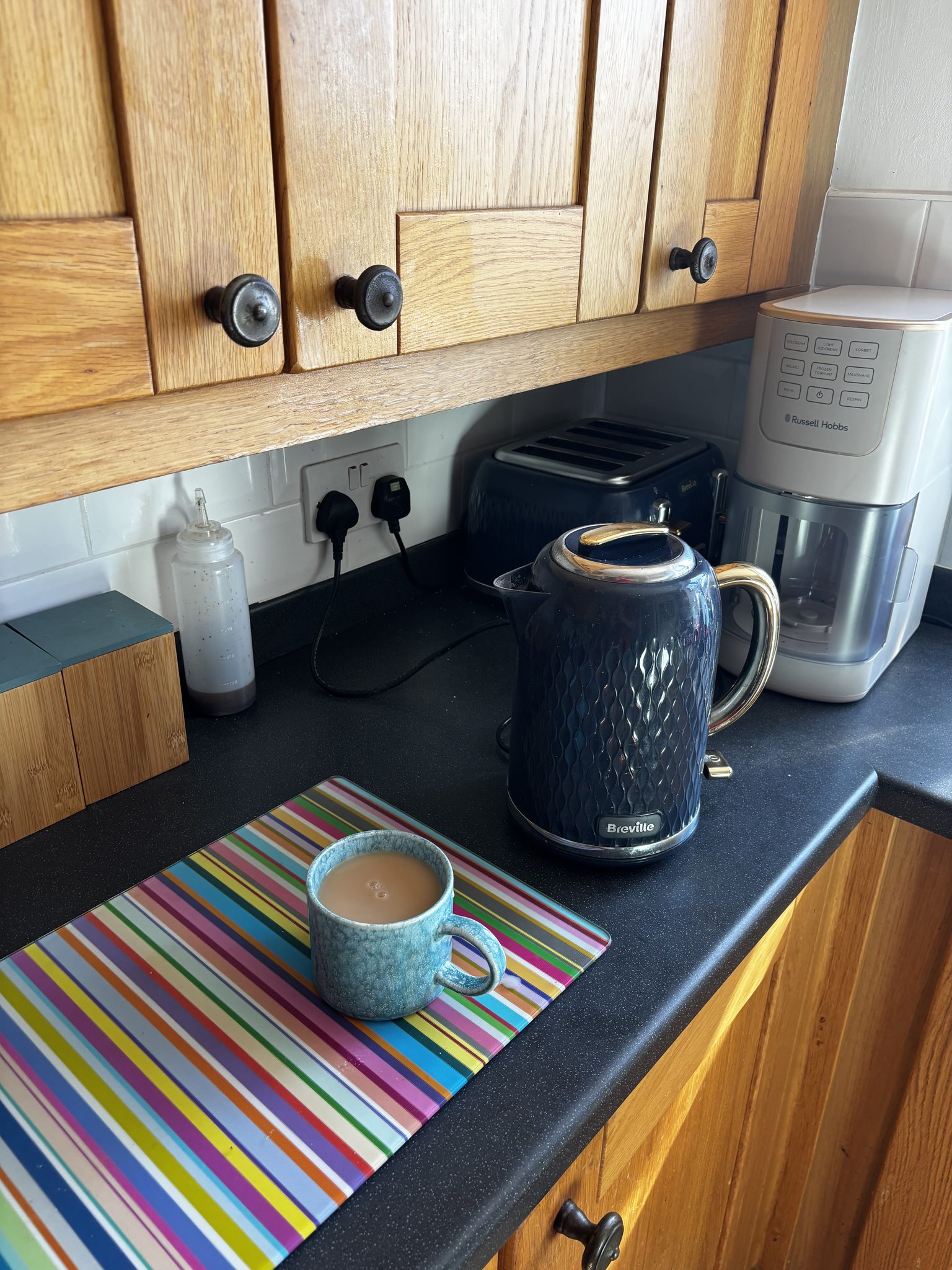
Saturday morning should begin without an alarm, or at least without urgency. The single most useful habit is to keep Saturday morning free of appointments for as long as possible — no bookings before 10am, no commitments that require leaving the house before 9am. This one decision changes the character of the whole day.
A slow Saturday morning has a natural rhythm: wake without haste, make something worth making for breakfast (not just toast grabbed en route), have a proper cup of coffee or tea in a room that isn’t the bedroom. Read something — a newspaper, a magazine, a book — for thirty minutes before opening a screen. This is not a productivity prescription. It is a small act of claiming the morning before the day claims it. Our Sunday coffee ritual makes a nice companion to this — a slower way to start the next day too.
If you take a flask out with you, our best UK thermos flasks roundup covers what actually keeps coffee hot past lunchtime.
The essential tasks — done efficiently, not reluctantly
There are things that have to happen on a Saturday: the main shop, the laundry, whatever home maintenance has accumulated. The Slow Saturday approach doesn’t avoid these — it batches them into the mid-morning slot (roughly 10am to 1pm) and does them with reasonable efficiency so they don’t expand to fill the day.
A week’s shopping done from a list takes approximately forty-five minutes. Two loads of laundry set up on a heated airer takes twenty minutes. One small maintenance job or repair takes between fifteen minutes and an hour. Together, these essential tasks fit comfortably into three hours, leaving the afternoon genuinely free.
The afternoon — for what you actually want to do
The point of the efficient morning is a free afternoon. Not a scheduled afternoon — a free one. This might mean an hour in the garden. A walk. A project started and not finished. Cooking something that takes longer than usual because you have the time. Reading. Doing nothing in particular, deliberately. If a slow cook is part of your weekend, our low and slow roast ideas are a good way to fill the house with good smells.
The common mistake is to fill the free afternoon with more tasks, more efficiency, more productivity. The Slow Saturday is not a different flavour of busyness. It is a genuine alternative to it. The afternoon needs protecting from the impulse to use it “well” in the sense of getting more done.
The Saturday supper — the unhurried reward
Saturday evening supper is the meal most worth making properly. Not elaborate — but chosen, and prepared without haste. Something that involves actual cooking rather than assembling from packets. Something that fills the kitchen with smell. This might be a slow-cooked braise that started in the afternoon, a roasted chicken, a proper risotto stirred while someone keeps you company in the kitchen.
The kitchen on a Saturday evening, with something good cooking and nowhere to be, is one of the most satisfying places in a British home.
Doing less, on purpose
A slow Saturday is easier when the rest of the week has a little more room in it too. Doing less isn’t doing nothing, or giving up on ambition; it comes down to a handful of specific habits:
- Fewer commitments at any one time. Be choosy about what you say yes to, and leave some time that isn’t promised to anything. It’s harder than it sounds, and it changes how a week feels more than almost anything else.
- One thing at a time. Eat without a screen, walk without a podcast now and then, and keep the phone off the table when you’re talking to someone. Constant switching between tasks is tiring in a way that’s easy to miss.
- Slower changeovers. Leave five minutes of nothing between one thing and the next: between work and home, or between one job and another. Those small gaps are where you get your breath back.
- Time with nothing in it. Not leisure, not errands, not seeing people: just time. It can feel like laziness at first. It isn’t.
The main obstacle is guilt: the feeling that rest without a purpose is self-indulgent and a slow day is a wasted one. Rest isn’t a reward you earn by being busy. Autumn and winter make the case for you, with shorter days and more time indoors; going with that slower pace, rather than trying to keep up summer’s, usually makes the colder months easier. Stop scheduling every evening, let some weekends stay unplanned, and give the restlessness that comes with doing less a little time to pass.
When it’s a long weekend at home
A bank holiday stretches the same idea over three days. A long weekend at home can be more restful than a trip that ends in a crowded car park, as long as each day has a loose shape rather than drifting past:
- Day one: make something. Bake bread, biscuits or a cake, or give the garden or your pots one focused session and stop at a good point rather than when you’re worn out. Keep the afternoon for rest: reading, sitting, no screens if you can manage it.
- Day two: the main meal. The day for the slow roast or the pudding that takes time, eaten at the table without rushing, with people you like. Leave the afternoon free: a walk if the weather is good, or nothing in particular.
- Day three: wind down gently. Skip the last-minute outing. A local walk, an easy lunch of leftovers, then an hour of unhurried prep for the week: a pot of soup or a slow-cooker stew, the week’s meal plan, clean sheets on the bed. Going back then feels like a fresh start rather than the break being cut short.
Small touches make a stay at home feel like a break: fresh flowers or a candle in the main room, a café-style coffee and a pastry at the table rather than on the sofa, and one meal or one afternoon without screens.
What the Slow Saturday is not
It is not a lifestyle aspiration available only to people with few obligations. It is not a prescription for doing nothing. It is not incompatible with a busy household, social commitments, or working Saturdays. It is a set of small, intentional decisions about how the day is shaped — decisions that can be applied partially, imperfectly, and still make a difference to how Saturday feels.
A Saturday that begins slowly and unhurriedly, even if the afternoon becomes busy, is a better Saturday than one that starts with urgency. The morning sets the register for the whole day.
Quick Picks
- Wool Tartan Blanket — for the Saturday morning chair by the window. Well reviewed and properly warm. Browse on Amazon →
- Collagen Coffee — for a slow Saturday morning coffee that goes a little further than the usual cup. Browse on Amazon →
- Washed Cotton Bed Linen Set — for a Saturday morning that begins in genuinely comfortable surroundings. Browse on Amazon →
- Bodum Chambord French Press — a properly slow way to make coffee. The 1-litre / 8-cup version suits a household. Browse on Amazon →
- Lakeland Dry:Soon Heated Clothes Airer — gets two loads done without a tumble dryer. Quiet, efficient, and genuinely useful on a wet Saturday. Browse on Amazon →
- ProCook Cast Iron Casserole Dish — for the Saturday supper braise that started in the afternoon. 24cm / 4.7L suits most households. Browse on Amazon →
If your Saturday involves time in the kitchen, our spring batch cooking guide turns one slow afternoon into five weeknight meals. And for a gentler Sunday, try the Sunday morning coffee ritual.
Disclosure: This article may contain affiliate links. If you click and make a purchase, we may earn a small commission at no extra cost to you. We only recommend products and services we genuinely believe in. Read our full disclosure policy.
Further Reading
📖 From the D&L Shop: Looking for a calmer way to organise your week? Our Calm Week Planner is designed for people who want structure without pressure — printable, fillable, and tablet-optimised versions included. £3.99. Browse the full shop →
🛡 Our standards: How we research · Editorial policy · Affiliate disclosure · Corrections · Last reviewed: April 2026

About Gareth
Gareth Isherwood is the editor of Danbury & Lovejoy. He has baked bread at home for 25+ years and has 15 years of growing experience across gardens, containers and other growing spaces, including an East Sussex allotment for the past three years. Read his full story →
Was this useful?