✉ Join the Dispatch — a calm weekly note, every Thursday. Free.
If you’re putting together a comfort basket for yourself or as a gift, Daylesford Organic is a genuinely good source — their small hampers and pantry items have the right feeling for this kind of low-key winter treat.
When the house feels chilly, the instinct is to nudge the thermostat up. But some of the biggest “I feel warmer” gains come from tiny changes: what you touch, the light you live in, and the sneaky places heat leaks out. Here’s a comfort basket of small upgrades — each around £10–£30 — that make home feel warmer without turning the heating up. For practical ways to stay comfortable, our guide to feeling warmer at home has the rest.
I’ve been building this kind of low-cost warmth system for years, partly out of genuine interest in what makes a house feel comfortable, and partly out of the East Sussex coastal context: winters here aren’t dramatic cold, but the damp gets into things. The most useful discovery has been that warmth is partly temperature and partly sensation — and sensation is often cheaper to address than temperature.
Start with 3–5 upgrades for the room you use most. Begin with “touch and light” for instant cosiness, then add one heat-leak fix for lasting warmth. If the house feels cold and clammy rather than just cold, go straight to the damp-awareness section — damp air feels colder than dry air at the same temperature.
1. Soft Warmth — The Fastest Way to Feel Cosy
Warmth is partly temperature and partly sensation. If your pillowcase, throw or bedding feels soft and insulating, you feel warmer even before the room changes.
Brushed cotton pillowcases — Brushed cotton is the flannel shirt of bedding: softer, warmer, and instantly inviting on cold nights. Owners who switch to brushed cotton for winter consistently report the difference is immediate from the first cold night — a bedroom reads as warmer once the things you’re touching feel genuinely warm rather than just neutral. It’s one of the best-value upgrades for a bedroom, and it costs under £15 a pillowcase.
Brushed cotton pillowcases at Secret Linen Store → (Awin affiliate link)
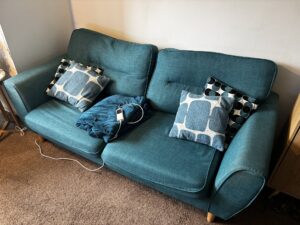
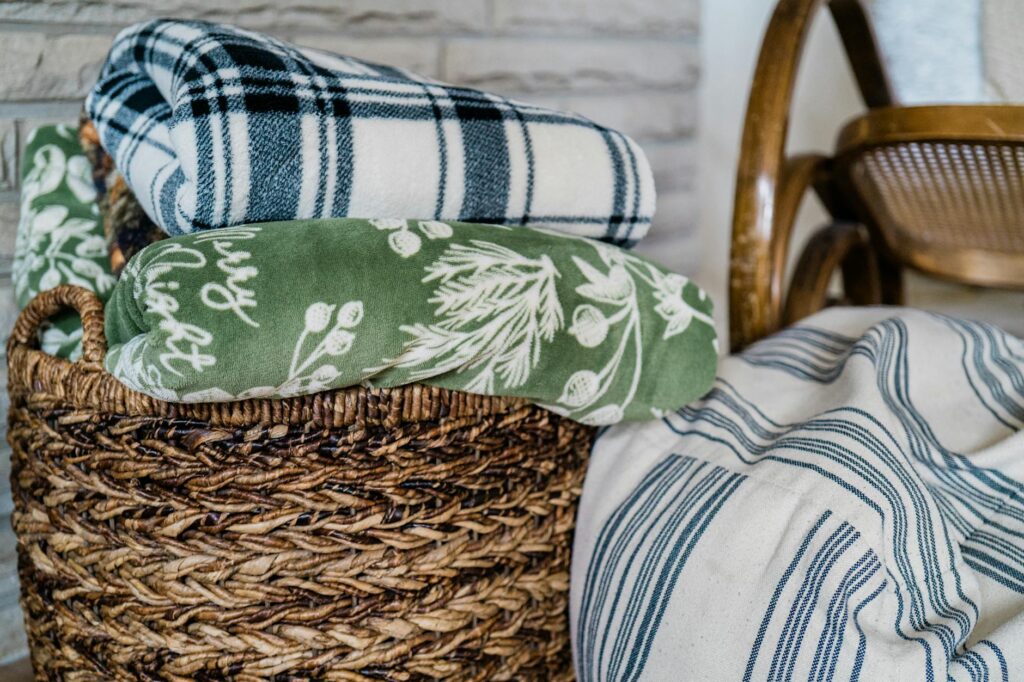
A throw you actually use — A throw isn’t décor; it’s a warm layer on demand. Keep one folded at the sofa end and you’ll reach for it without thinking. The easier it is to grab, the more use you’ll get from it.
Throws and blankets at Secret Linen Store → (Awin affiliate link) If you are looking for a good throw, we picked out the best throws and blankets for UK homes.
2. Gentle Lighting — Warm Glow Makes Rooms Feel Warmer
Cool overhead lighting can make a room feel colder. A warm lamp in a dark corner changes the mood — and the perceived temperature — instantly.
An east-facing bedroom can get reasonable morning light but still turn genuinely dim by 3pm in winter. Leaving the overhead light on tends to give a room a slightly clinical quality; owners who switch to two table lamps on a timer often find the room feels different enough to comment on, with the overhead barely used afterwards. The “warmth” a room radiates under lamp light versus ceiling light is almost architectural — it changes where the eye rests and how the space feels to be in.
Placement tip: Put one lamp where the room currently drops off into shadow — corner by the sofa, behind a chair, or on a hallway console. Your eye reads the space as warmer and more finished.
Warm touch-control table lamp →
3. Stop Heat Leaks — Tiny Fixes That Make a Big Difference
Draughts are comfort thieves. Fixing one door gap can make a room feel dramatically less bitey around the ankles.
Weighted door draught excluder → — a well-made weighted fabric door snake. Best for interior doors and anywhere you want a flexible draught fix.
If a radiator is mounted on an external wall, reflector foil behind it pushes more warmth back into the room instead of letting it soak into the wall.
Radiator reflector foil on Amazon →
Quick win: Do one room first — the room you’re in most. If it feels better, roll out the rest.
4. Personal Warmth — Heat the Person, Not the House
This is the most cost-effective comfort move of all: warm yourself directly while keeping the room at a sensible baseline. Pre-warm the bed for 5–10 minutes, then move the hot water bottle to your feet while reading. For sofa evenings, tuck it behind your lower back or across your lap under a throw.
Extra-long hot water bottles on Amazon →
5. Damp Awareness — The Hidden Reason a Home Feels Colder
Damp air can feel colder and heavier — and it feeds condensation, musty smells, and mould. A small hygrometer helps you spot when the air needs ventilation or moisture control.
A hygrometer is one of the most informative £10 purchases for a home. A main bedroom reading of 74% relative humidity is the kind of number that explains condensation, explains why a room feels heavier than it should, and explains why the heating isn’t quite doing what you’d expect. Bringing that down to 50–55% with a combination of ventilation and targeted dehumidifier use reliably changes the feel of a room — the number gives you something to aim at rather than just a vague sense that things aren’t right.
Many homes feel best around 40–60% humidity. If you’re consistently higher, prioritise ventilation after showers and cooking, and consider your damp-control routine.
ThermoPro TP49 mini hygrometer on Amazon →
Where to start
The next time your home feels chilly, build a mini comfort kit for one room rather than turning the heating up. Brushed cotton pillowcases, a lamp in the dark corner, a throw within arm’s reach, and a draught excluder on the worst door. That four-item combination changes the feel of a room more than most people expect, and costs less than one month’s extra heating would.
FAQs
What should I do first: draught-proofing or bedding?
If you want the fastest cosy payoff: bedding and throw plus a warm lamp. If you’re bothered by cold ankles or a “moving air” feeling at floor level: draught-proofing first. In most cases, both are worth doing within the same winter.
Do I need a dehumidifier?
Not always. Start with a hygrometer and good ventilation habits after cooking and showering. If humidity stays consistently above 60% and condensation persists, that’s when a dehumidifier is worth considering. For coastal or older UK properties, the bar is often lower — the air is wetter to begin with.
Are these really £10–£30?
Prices move online. I’ve chosen items that typically sit in the £10–£30 zone, but check the current price before buying — especially during sales. The category searches will show you current options and prices.
The Danbury Dispatch — Free Weekly
One calm note every Thursday — seasonal guides, practical ideas, and quietly useful recommendations.
Quick Picks

Radiator Foil Reflector Roll 5m x 60cm – Heat Reflective Radiator Foil Panels and Insulation Sheet – Radiator Reflector Foil for Behind Radiators – Thermal Radiator Insulation Includes Sticky Pads

Ram® Extra Long Grey Hot Water Bottle for Back Ache Pain Relief Hot Water Bottle 72CM

TempPro TP49 Digital Room Thermometer Mini Temperature Monitor, 2 Pieces | Indoor Hygrometer and Humidity Meter for Home, Office, Baby Room, Air Comfort Thermo-Hygrometer(Previously ThermoPro)
Further Reading
🏠 From the D&L Shop: Making your home warmer this winter? Our Winter Home Survival Guide covers heating, draught-proofing, condensation, energy bills, and keeping comfortable through the cold months — 11 pages, £8.99. Also free: the Sunday Reset Checklist (a calm weekly home reset, instant download). Browse the full shop →
🛡 Our standards: How we research · Editorial policy · Affiliate disclosure · Corrections · Last reviewed: July 2026

About Gareth
Gareth Isherwood is the editor of Danbury & Lovejoy. He has baked bread at home for 25+ years and has 15 years of growing experience across gardens, containers and other growing spaces, including an East Sussex allotment for the past three years. Read his full story →
Was this useful?