Home Edit
Some of the links below are affiliate links: if you buy through them we may earn a small commission at no extra cost to you. As an Amazon Associate I earn from qualifying purchases. We only suggest things we would recommend to a friend — see our affiliate disclosure and how we research.
✉ Join the Dispatch — a calm weekly note, every Thursday. Free.
If your dehumidifier keeps freezing up, you’re not alone. This is a common problem in UK homes during autumn and winter — especially in colder rooms, flats, and utility spaces. A frozen dehumidifier is usually a sign that the unit is being used outside its comfort zone. The good news is that, in most cases, it’s fixable without replacing the machine.
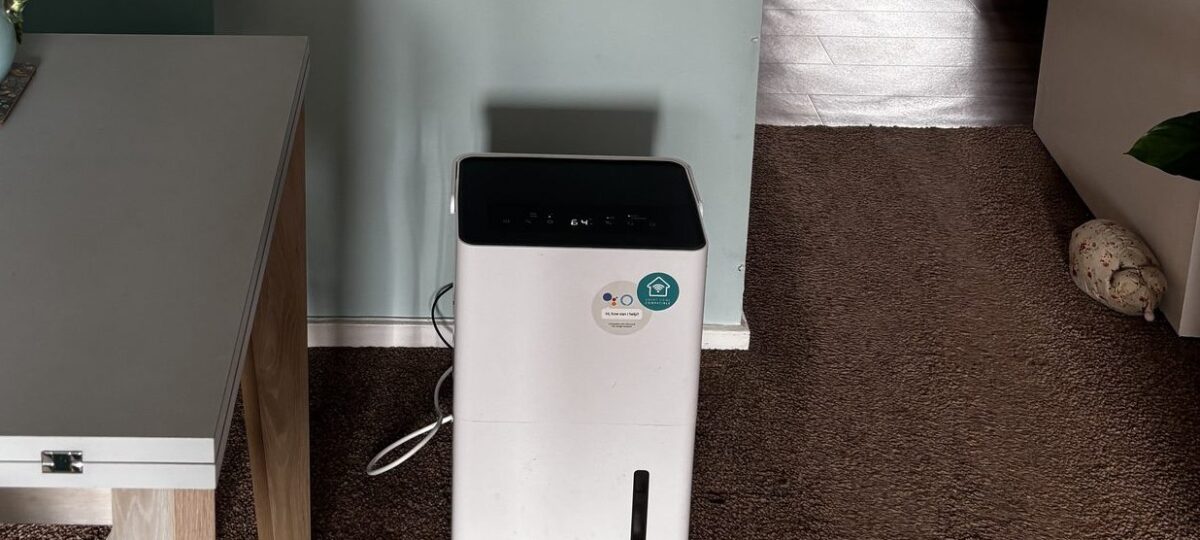
I had a dehumidifier freeze up on me the first winter I used one. The spare room I dry laundry in runs colder than I’d realised, and a compressor dehumidifier in a cold room ices its coils and stops collecting water while still sounding busy. These days I warm the room first: the radiator in there goes on for about an hour before a drying session. In most cases a frozen dehumidifier needs a warmer room, not a replacement.
This guide explains why dehumidifiers freeze, what you can do immediately, and when it’s time to consider a model better suited to UK conditions. If you’re also dealing with general damp and steamed-up windows, start with our bigger hub guide: How to Reduce Damp & Condensation in UK Homes.
Quick Picks
In a hurry? Start with these reliable UK options.
- MeacoDry Arete® One 20L — good all-round choice for most UK homes
- MeacoDry Arete® One 25L — for larger homes or heavy laundry
- Meaco DD8L desiccant — for a room that stays cold
Remove moisture first — rooms warm faster when air is dry.
What Does It Mean When a Dehumidifier Freezes?
Freezing happens when moisture removed from the air turns to ice on the internal coils instead of draining away as water. When this happens, you may notice ice forming inside or behind the filter, reduced water collection, the unit running but doing very little, or the dehumidifier stopping altogether. Left unresolved, freezing makes a dehumidifier ineffective and can shorten its lifespan.
The Most Common Reasons Dehumidifiers Freeze in UK Homes
1. The Room Is Too Cold
This is the most common cause. Many dehumidifiers struggle when temperatures fall below 15°C. Typical problem areas include utility rooms, garages and outbuildings, and spare bedrooms with minimal heating. In cold air, moisture condenses and freezes on the coils before it can drain away.
That spare room runs cold on winter nights unless I heat it first, and that is below the comfortable range for most compressor dehumidifiers (roughly 15°C and up). With the room warmed, the door shut and the dehumidifier on Laundry Mode, a load dries in three or four hours instead of seven or eight.
2. The Dehumidifier Isn’t Designed for Low Temperatures
Older or budget compressor dehumidifiers are especially prone to freezing in winter. Models without automatic defrost or low-temperature operation modes are far more likely to ice up in UK conditions.
3. Restricted Airflow
Blocked filters, walls placed too close to the unit, or clothes draped nearby can all reduce airflow. When air can’t circulate properly, the coils cool too quickly — leading to ice.
4. Very High Humidity in a Cold Room
Drying laundry or dealing with persistent condensation in a cold space increases the freezing risk. This is common in homes drying clothes indoors during winter — and it’s also why window condensation tends to flare up at the same time.
Related: Dehumidifier & Window Condensation (UK): what actually works.
How to Stop Your Dehumidifier Freezing (Practical Fixes)
Raise the Room Temperature (Slightly)
Aim for at least 15–17°C where possible. Even gentle background heat helps — a small oil-filled radiator on a low setting is often enough to keep a spare room above the freezing threshold.
Improve Airflow
Clean the filter regularly. Leave space around the unit (check manufacturer guidance). Avoid drying clothes directly over or next to it.
Use Timed Sessions
Instead of running continuously, try shorter, timed runs — especially overnight. Continuous overnight running in a cold room is one of the most reliable ways to produce a frozen unit by morning.
Move the Unit to a Warmer Room
If possible, relocate the dehumidifier to a slightly warmer area and let moisture drift towards it via an open internal door.
If you notice ice forming: switch the unit off and allow it to defrost naturally. Do not chip away ice or use direct heat. Repeated freezing isn’t usually dangerous in the short term, but it does reduce efficiency and may cause long-term damage.
When a Different Type of Dehumidifier Makes Sense
If freezing keeps happening, the unit may simply be the wrong type for the room. For a room that regularly sits below about 10–15°C, a desiccant dehumidifier is the better tool: there are no refrigerant coils to ice up, and it gives off a little warmth as it works. If the room is heated and only chilly overnight, a compressor model copes once you warm the room first.
Options to consider:
- Meaco DD8L desiccant dehumidifier — the cold-room choice: Meaco rate it at 39 dB and recommend desiccant below 10°C.
- MeacoDry Arete® One 20L Dehumidifier & Air Purifier — a compressor all-rounder with an H13 HEPA filter, for heated homes.
- MeacoDry Arete® One 25L Dehumidifier & Air Purifier — better suited to larger homes, heavier moisture, or laundry drying most days.
If you want help choosing by room size and use-case, see: Meaco Dehumidifiers in the UK: which model should you buy?
Freezing, Condensation & Damp: How It All Connects
A freezing dehumidifier is often a symptom of a bigger moisture issue — cold surfaces + trapped humid air. If you’re also dealing with steamed-up windows, musty smells, or mould returning after cleaning, it’s worth stepping back and tackling the whole pattern room by room.
Start here: How to Reduce Damp & Condensation in UK Homes (Room-by-Room Guide)
Drying Laundry Without Making Freezing Worse
Indoor laundry is one of the biggest contributors to both damp and dehumidifier freezing — because you’re dumping a lot of moisture into cold air. Avoid radiators (they push moisture straight into the room). Use a heated clothes airer with good airflow. Keep laundry in one room, door closed. Vent briefly while drying.
For comparisons and running-cost notes: Best Heated Clothes Airers UK
Quick Checklist: If Your Dehumidifier Keeps Freezing
- Check the room temperature (aim for 15–17°C+ where possible)
- Clean the filter
- Improve airflow around the unit
- Reduce laundry moisture in cold rooms
- Consider a model designed for winter conditions
If you’re replacing a unit that has struggled in cold temperatures, our Meaco model guide covers which Meaco suits which room.
The most common fix
In the majority of cases, a dehumidifier freezing in a UK home is a room-temperature problem, not a unit fault. Bringing the room to 15–17°C before running the dehumidifier, cleaning the filter, and running timed sessions rather than continuous overnight operation will resolve it for most people. If none of that works, it’s a sign the unit’s operating range isn’t suited to UK winter conditions — and a model with genuine low-temperature performance will make a significant difference.
Common Questions About Dehumidifier Freezing
Is it normal for a dehumidifier to ice up?
A thin layer of frost during the first few minutes of operation is normal, especially in rooms below 15°C. However, if ice builds up steadily and does not clear within 30 minutes, something needs attention — the room may be too cold for a compressor model, or airflow may be restricted.
Should I turn off my dehumidifier if it freezes?
Yes — switch it off and let the ice melt naturally before restarting. Running a frozen dehumidifier forces the compressor to work harder, shortens its lifespan, and wastes electricity without removing moisture.
What temperature is too cold for a dehumidifier?
Most compressor dehumidifiers struggle below 15°C and will freeze up regularly below 10°C. If your room regularly drops below this, a desiccant dehumidifier is a better choice — they work efficiently right down to 1°C.
Can a dehumidifier defrost itself?
Many modern dehumidifiers have an auto-defrost function that pauses the compressor and runs the fan to melt ice. Check whether yours has this feature — if it does, let it complete the cycle rather than switching the unit off manually.
Why does my dehumidifier freeze up overnight?
Rooms cool down significantly at night as heating switches off. If the temperature drops below 15°C, a compressor dehumidifier will start to frost. Using a timer to run it during warmer daytime hours, or switching to a desiccant model, usually solves overnight freezing.
Last reviewed: September 2026
🏠 From the D&L Shop: Making your home warmer this winter? Our Winter Home Survival Guide covers heating, draught-proofing, condensation, energy bills, and keeping comfortable through the cold months — 11 pages, £8.99. Also free: the Sunday Reset Checklist (a calm weekly home reset, instant download). Browse the full shop →
🛡 Our standards: How we research · Editorial policy · Affiliate disclosure · Corrections · Last reviewed: September 2026

About Gareth
Gareth Isherwood is the editor of Danbury & Lovejoy. He has baked bread at home for 25+ years and has 15 years of growing experience across gardens, containers and other growing spaces, including an East Sussex allotment for the past three years. Read his full story →
Was this useful?