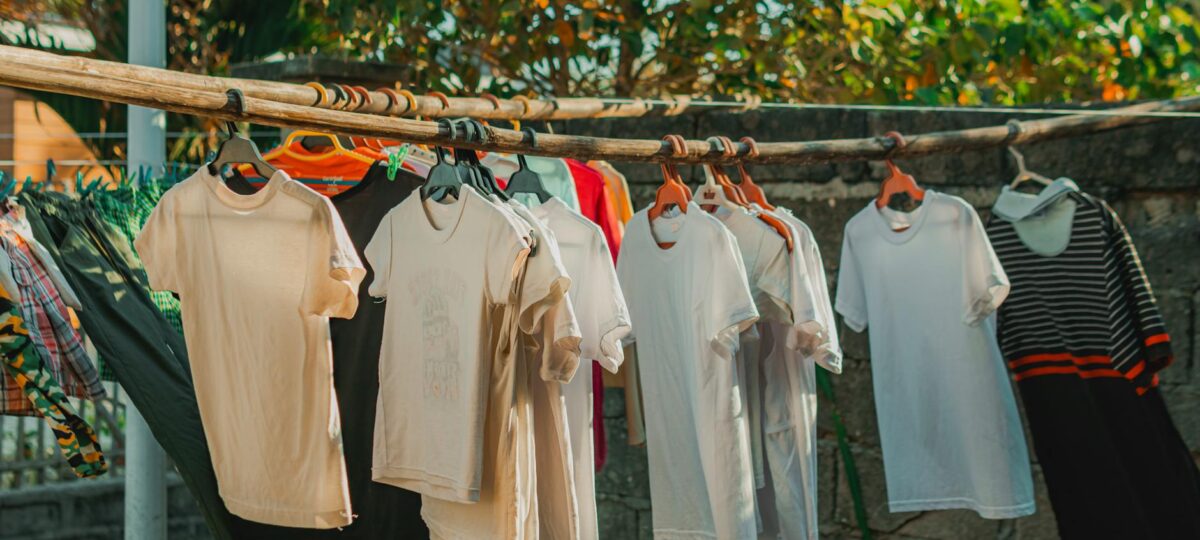
This guide is about making the move back to outdoor drying a practical one — knowing when it’s genuinely worthwhile, what helps, and how to handle the inevitably unpredictable British spring weather.
Table of Contents
Some of the links below are affiliate links: if you buy through them we may earn a small commission at no extra cost to you. As an Amazon Associate I earn from qualifying purchases. We only suggest things we would recommend to a friend — see our affiliate disclosure and how we research.
✉ Join the Dispatch — a calm weekly note, every Thursday. Free.
When outdoor drying actually works in the UK in spring
Temperature matters less than wind and humidity. Laundry dries through evaporation, and moving air accelerates that process more than warmth does. A cold, dry, breezy day in March can dry clothes faster than a still, warm, humid day in June.
The key conditions are: low humidity (below about 70%), some air movement, and no rain forecast for at least three to four hours. On the coast, this combination arrives later than inland. Southern England inland typically sees reliable outdoor drying days from mid-March. On the coast, where outdoor humidity stays higher and the temperature lag from the sea is noticeable, late March to mid-April is more realistic. In Scotland, northern England, and Wales, April is the sensible starting point.
Even then, spring remains unpredictable — the practical approach is to check the forecast the evening before rather than committing to outdoor drying on a fixed day of the week.
One coastal advantage: when the wind does arrive in spring, it’s strong. A brisk south-westerly in April can dry a full load of washing in two or three hours — faster than it would dry on an airer indoors.
There’s more in our five small things earning their keep at ours this may roundup.
The transitional period: using both inside and outside
Most households find the spring transition involves using both methods depending on the day. The heated airer handles bad-weather days and smaller loads; outdoor drying handles the good days and larger items like bedding and towels. This combination tends to reduce electricity use naturally through spring without requiring a dramatic switch.
A useful habit I’ve settled into: put the laundry on in the morning, check the forecast, and decide. On a clear day with any breeze, outside. On a grey or damp day, airer with the spare room door closed. Don’t feel pressure to choose one method — the hybrid approach is realistic for British weather and removes the anxiety of making the wrong call.
What actually helps outdoor drying
Spin speed is the most underused laundry adjustment. Increasing from 1000 to 1400 rpm removes a significant amount of extra water before the clothes go outside. I started doing this a couple of years ago and the difference to drying time — both outdoors and on the airer — is noticeable. If your machine has a separate spin cycle, running an extra spin on towels and thick items before hanging them out is worth the extra five minutes.
Hanging technique matters. Clothes hung so air can circulate around them dry faster than clothes pressed against each other. Shake items out before hanging. Hang larger items — sheets, duvet covers — folded in half over the line with the open edges hanging free so air can move through the interior rather than being sealed in. This reduces drying time for bedlinen by a third compared to leaving it doubled and closed.
Positioning of the rotary airer or line. A position with afternoon sun and a clear run of air is better than a sheltered corner. Shelter reduces the airflow that does most of the drying work. On the coast, this means accepting that the rotary airer will be in the windiest part of the garden rather than the most convenient one. If you are getting the garden sorted, our spring garden guide covers the rest of the outdoor jobs.
Rotary airers and wall-mounted lines
A quality rotary airer is one of the better garden investments for UK laundry. Look for sturdy steel construction, proper stabilisers, and lines that run straight and tight — saggy lines mean clothes droop and touch, slowing drying.
Wall-mounted retractable lines are excellent for small gardens or yards; they take no permanent space and can be extended across the garden when needed. Many households use both: the rotary for large loads, a wall-mounted line for smaller loads where speed matters more than capacity.
When to stick with the airer indoors
High humidity (above about 70–75%), still air, persistent drizzle, or a cold overcast day with no wind: these are the conditions where outdoor drying is counterproductive. The clothes will absorb moisture from the air rather than releasing it.
On these days, a heated airer in a closed spare room with a dehumidifier running is still the most efficient indoor option — the same system that handles all of winter drying, still earning its keep in spring. For reliable, energy-efficient dehumidifiers suited to UK laundry drying, Meaco’s dehumidifier range is the one we’d recommend — their machines are specifically designed for UK humidity levels and run quietly enough for a spare bedroom. Drying outside saves energy — our spring energy saving guide has more ideas along these lines.
What We’d Have Ready for Spring
A good heavy-duty rotary airer for the outdoor days, and a Meaco dehumidifier for when the weather doesn’t cooperate. Those two together cover the full spring laundry situation — outdoor drying when conditions allow, efficient indoor drying when they don’t.
When can I start drying laundry outside in the UK?
In most of southern England inland, mid-to-late March on good days. On the coast and in northern England, late March to April is more realistic. The key indicator is a combination of low humidity (check the forecast) and some wind rather than temperature alone.
Why do my clothes smell musty when dried outside in spring?
Usually because humidity was too high when they were hung out, or because they dried too slowly (no wind) and sat damp for too long. Wet laundry left damp for several hours can begin to develop a musty smell before it dries. Check humidity and wind conditions before putting things out, and bring them in if the weather turns before they’re dry.
Does a higher spin speed actually help outdoor drying?
Yes, meaningfully. Increasing from 1000 to 1400 rpm removes a significant amount of water mechanically before the clothes go outside, which reduces the drying time once they’re on the line. For towels and thick items especially, this is worth doing.
The Danbury Dispatch — Free Weekly
One calm note every Thursday — seasonal guides, practical ideas, and quietly useful recommendations.
Quick Picks

SA Products Rotary Washing Line | 45m Rotating Heavy Duty Clothes Airer Outdoor | Garden 4 Arm Rotary Washing Line | Washing Line Rotary with Ground Spike & Cover

Brabantia WallFix Retractable Clothes Line with Cover, Silver, 24m | Foldable Rotary Dryer, UV-Resistant Non-Slip Lines, Easy to install, Cover Included, 184 x 182cm

SG 4 Arm 60m Rotary Washing Line Outdoor, Heavy Duty Large Clothes Rotating Airer Dryer Garden use, Easy to Open and Close along with Ground Spike and Cover - Silver (60m)
🌱 From the D&L Shop: Easing into a new season? Our Sunday Reset Checklist is a free printable — a calming weekly routine to help you feel organised and ready for the week ahead. Browse the full shop →
🛡 Our standards: How we research · Editorial policy · Affiliate disclosure · Corrections · Last reviewed: August 2026

About Gareth
Gareth Isherwood is the editor of Danbury & Lovejoy. He has baked bread at home for 25+ years and has 15 years of growing experience across gardens, containers and other growing spaces, including an East Sussex allotment for the past three years. Read his full story →
Was this useful?