Spring in the UK is unpredictable. Find out when a dehumidifier still earns its keep, and when you can switch it off.
Some of the links below are affiliate links: if you buy through them we may earn a small commission at no extra cost to you. As an Amazon Associate I earn from qualifying purchases. We only suggest things we would recommend to a friend — see our affiliate disclosure and how we research.
✉ Join the Dispatch — a calm weekly note, every Thursday. Free.
Not sure which type to choose? Our UK dehumidifier guide explains compressor vs desiccant models, capacity, and our top picks.
Every year I have this same internal conversation in March: should I keep the dehumidifier running or is it warm enough to ease off? Living on the East Sussex coast, the answer is almost always “keep going longer than you think.” The sea keeps things cool and damp well into spring, and I’ve learned not to pack the dehumidifier away until I have at least a full week of dry bedroom hygrometer readings. Here’s the honest guide to how I make the call.
Most people associate dehumidifiers with winter — cold walls, condensation, indoor laundry drying in unventilated rooms. But spring in the UK is unpredictable, and the answer to whether to keep yours running is more nuanced than a simple yes or no.
Why Spring Can Still Be Damp
The British spring is famously capricious. You get a few mild days, then a cold snap. The soil thaws and starts releasing moisture back into the atmosphere. Heating is reduced, which means room surfaces cool faster at night, increasing condensation risk. All of this means spring can still be surprisingly damp.
Even on a day when the outdoor temperature reaches 12–13°C, if that temperature drops to 5°C overnight and you’ve reduced your heating significantly, condensation will form on windows and cool surfaces — particularly in bedrooms and bathrooms. On the coast, where outdoor humidity stays higher for longer, this effect is more pronounced.
A dehumidifier running in these conditions genuinely helps — not just for comfort, but to protect plaster, window frames, and anything stored in cool rooms.
When to Keep the Dehumidifier Running
Continue running your dehumidifier if any of these apply:
You’re still drying laundry indoors on wet days. Indoor laundry drying dramatically increases humidity — a full load can add 2 litres of moisture to the air. A dehumidifier makes the process faster and keeps moisture from settling on cold surfaces. I close off the spare room and run both the airer and the dehumidifier together: drying time drops from 7–8 hours to 3–4 hours.
Your bedroom windows are still showing condensation in the morning. This is the key indicator. If moisture is condensing overnight, your dehumidifier is earning its keep regardless of what month it is.
Humidity readings (from a hygrometer) are above 60%. A cheap hygrometer (around £12) placed in your bedroom tells you exactly what’s happening. If readings consistently exceed 60%, keep running the dehumidifier. This is so much more useful than guessing — it took me buying one to realise my bedroom was hitting 74% overnight in winter.
You live in an older or less-well-insulated home. These homes hold humidity higher and are slower to dry out in spring. If your walls are cold to the touch, your dehumidifier is still doing useful work.
When You Can Start Switching It Off
Daytime temperatures consistently above 15°C. This usually happens by late April or early May in most UK regions. At this temperature, your home starts to dry out naturally. On the coast, add two to three weeks to this estimate — the sea temperature lags behind inland conditions significantly.
You’re primarily drying laundry outside. A bright, breezy day at 12–13°C will dry most items almost as fast as a heated airer indoors. When outdoor drying becomes viable most days, your dehumidifier use naturally drops. The first time I can line-dry properly — usually mid-to-late April on the coast — is one of my clearest spring markers.
Condensation has stopped appearing on windows. This is the practical test. If your bedroom windows are dry in the morning, humidity is no longer a problem overnight. Track this for a full week before deciding to switch off.
For most UK homes, May to June is the natural switch-off point. From June onwards, most homes can stop running a dehumidifier until September.
Running a Dehumidifier Efficiently in Spring
If you’re still using one, use it sensibly rather than running it the same way you did in January.
Use it on a timer rather than running 24/7. Set it to run for 4–6 hours in the morning or evening rather than continuously. A timer plug (around £11) automates this for you.
Lower the extraction setting as the weather warms. Most dehumidifiers have a humidity threshold setting — set it to 55–60% in spring rather than the winter setting of 50%, and it’ll run less often without you having to think about it.
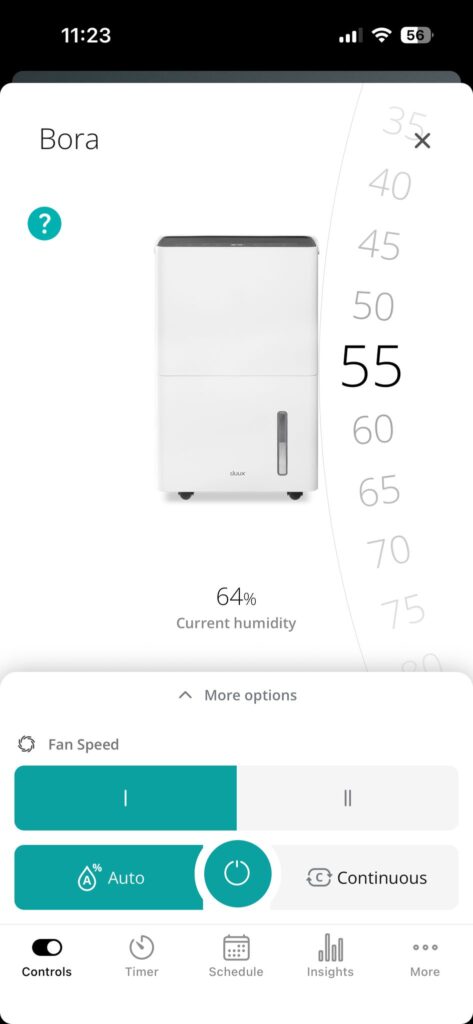
Target the laundry room or bedroom rather than trying to run it across the whole house. Close doors and run the dehumidifier in the room where you’re drying laundry or where condensation is worst. This is far more energy-efficient than whole-house dehumidification.
What we recommend
If you’re looking to upgrade your dehumidifier before the next damp spell, Meaco UK make some of the best-regarded home dehumidifiers available — quiet, energy-efficient, and designed specifically with UK homes and damp climates in mind. A good dehumidifier is the first thing I’d recommend to anyone dealing with persistent indoor humidity.
If you’re still choosing a dehumidifier for the year-round role, our Meaco dehumidifier guide walks through the Arete Two and ABC ranges by home size.
FAQ
Is it worth using a dehumidifier in spring?
Yes, in many UK homes — especially in March and April when weather is still cold and damp. Use a hygrometer to guide your decision: if readings are above 60%, a dehumidifier helps. On the coast or in older properties, spring dampness can persist well into May.
When can I stop using my dehumidifier for the year?
From May or June in most parts of the UK, though keep it accessible for wet spells. Spring in the UK can be surprisingly damp, and on a cold, rainy April morning you’ll be glad you have it. Keep it somewhere easy to reach until at least mid-May — it earns its place on the occasional wet week.
Does running a dehumidifier cost a lot?
A typical dehumidifier uses 300–700W, so running it 6 hours a day costs roughly £0.50–£1.20 per week. Not expensive, and if it’s preventing damp or speeding laundry drying, it’s more than paying for itself. Running it on a timer is the most efficient approach — you only use it when needed rather than leaving it running continuously.
How do I know if my dehumidifier is still making a difference?
A hygrometer is the honest answer. Place one in the room where you run the dehumidifier and compare readings with it running versus with it off. If it’s making a measurable difference (dropping RH from 65% to 50%, for example), it’s earning its keep. If RH stays below 55% without it, you can switch off.
For more detailed guidance on managing your home’s humidity year-round, see our guide to healthy humidity levels in UK homes.
Related Buying Guides
- Best Dehumidifiers for Drying Clothes UK — compressor vs desiccant, our honest picks
- Best Heated Clothes Airers UK
- Drying Clothes Indoors UK: How to Do It Without Causing Damp
Last reviewed: April 2026
🏠 From the D&L Shop: Making your home warmer this winter? Our Winter Home Survival Guide covers heating, draught-proofing, condensation, energy bills, and keeping comfortable through the cold months — 11 pages, £8.99. Also free: the Sunday Reset Checklist (a calm weekly home reset, instant download). Browse the full shop →
You might also find our guide to Why Your Dehumidifier Keeps Freezing (UK Causes & Fixes That Work) useful.
🛡 Our standards: How we research · Editorial policy · Affiliate disclosure · Corrections · Last reviewed: April 2026

About Gareth
Gareth Isherwood is the editor of Danbury & Lovejoy. He has baked bread at home for 25+ years and has 15 years of growing experience across gardens, containers and other growing spaces, including an East Sussex allotment for the past three years. Read his full story →
Was this useful?