Beef carbonnade is Belgium’s beef and beer stew, known as carbonade flamande in French and stoofvlees in Flemish. Chunks of beef are braised slowly with a lot of golden, slow-cooked onions and a malty ale, until the beef is tender and the onions have melted into a rich, glossy sauce. What sets it apart from a British beef and ale stew is the balance: it’s rich and savoury, with a gentle sweet-and-sour edge from a spoonful of brown sugar and a splash of vinegar.
Two traditions make it. The onions are cooked low and slow before any liquid goes in, and a slice of bread spread with mustard is laid on top of the stew, where it slowly melts into the sauce and thickens it. Allow about an hour and a quarter on the hob, most of it letting the onions cook down, then the oven does the rest. Like most braises, it’s even better the next day, and it freezes well.
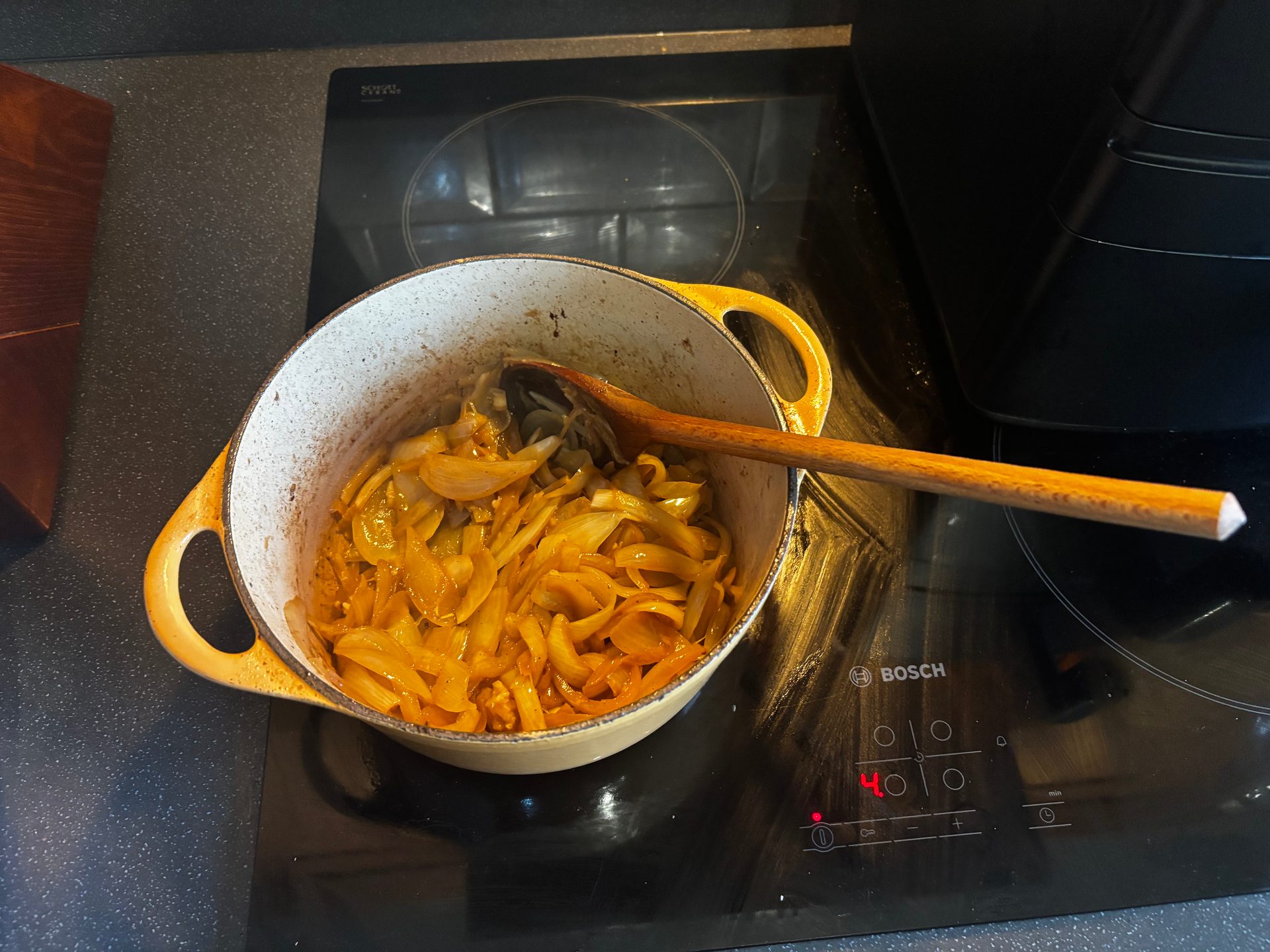
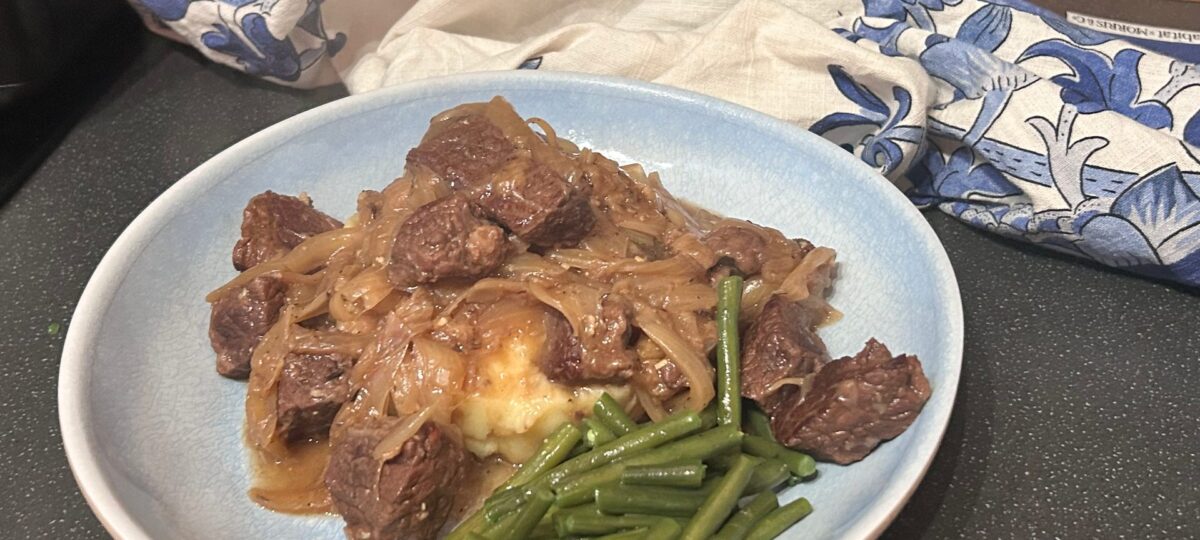
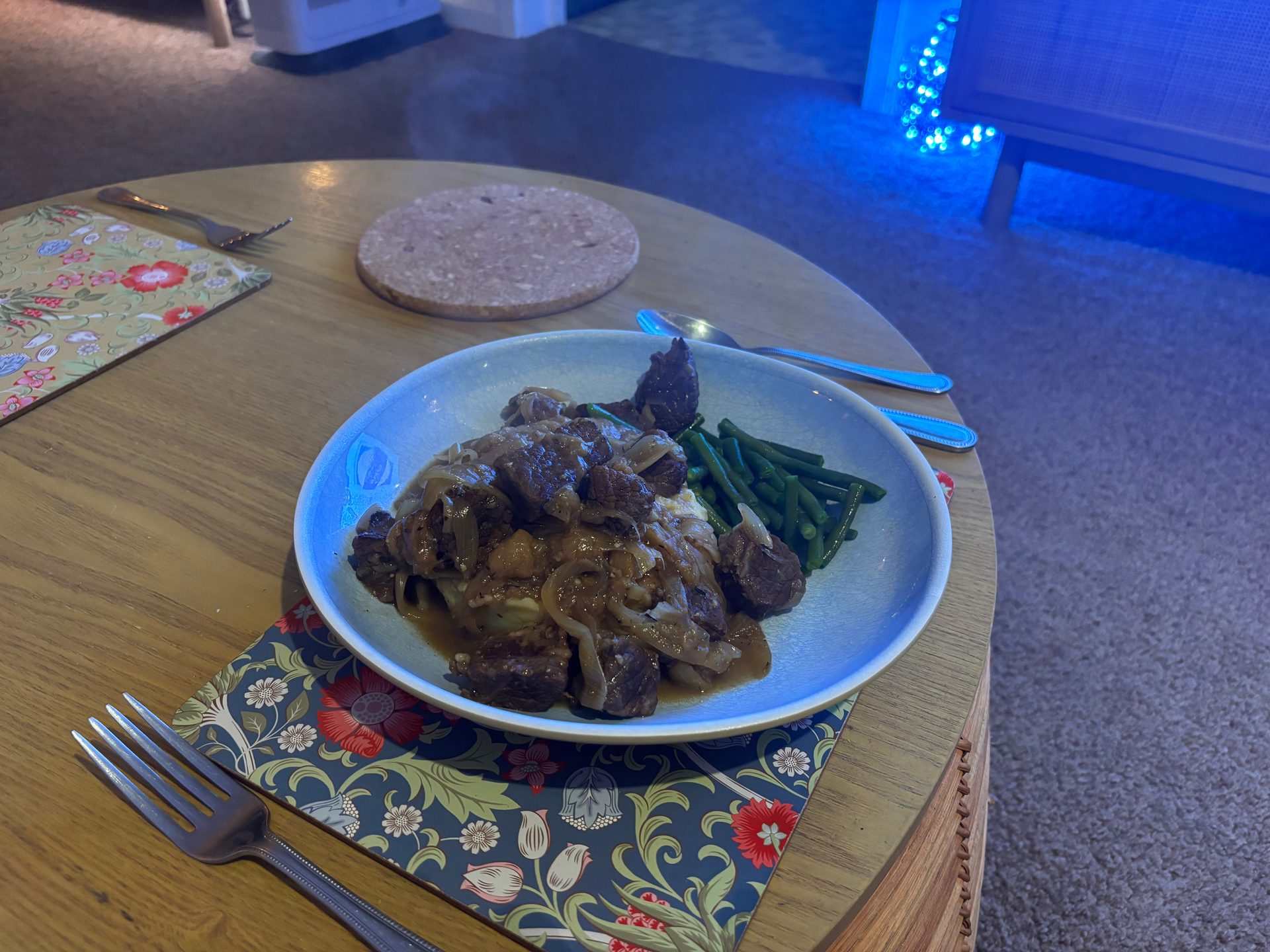
When I made this for the photos, I used Greene King’s Abbot Ale, a rich, malty English ale, and a fan oven at 130°C. The onions took about 45 minutes to turn soft and golden, so give them time, and the beef spent about 2¾ hours in the oven. The sauce was still on the thin side at the end, so I reduced it before serving it with mash and green beans, and it made about six portions. At Sainsbury’s prices in late September 2026, it works out at about £2.70 a head, and around three-quarters of that is the beef.
You need a large casserole dish with a lid that can go on the hob and then into the oven, so the browned bits from the meat end up in the sauce rather than left behind in a frying pan. A heavy cast iron casserole holds a steady, low heat, which suits a long braise. There’s more on why in our guide to cast iron cooking, and our guide to the best cast iron cookware compares casseroles at different prices.
Beef Carbonnade (Flemish Beef and Beer Stew)
Tender beef braised with slow-cooked onions and a malty ale, thickened the traditional way with mustard-spread bread. About an hour and a quarter on the hob, then the oven does the rest.
Ingredients
- Braising or chuck steak, cut into 5cm (2in) chunks 1kg (2lb 4oz)
- Fine sea salt, plus more to taste 1 tsp
- Black pepper, freshly ground ½ tsp
- Rapeseed or sunflower oil 2 tbsp
- Butter 25g
- Large onions, halved and thinly sliced (about 700g) 3
- Garlic cloves, crushed 2
- Plain flour 1 tbsp
- Malty ale, such as Abbot Ale or a Belgian brown ale like Leffe Brune 660ml
- Beef stock 250ml
- Soft dark brown sugar 1 tbsp
- Cider vinegar or red wine vinegar 1 tbsp
- Fresh thyme sprigs (or 1 tsp dried thyme) 4
- Bay leaves 2
- Thick slices of bread, crusts removed 2
- Dijon mustard 2 tbsp
Method
- Heat the oven to 150°C (fan 130°C, gas 2). Pat the beef dry with kitchen paper and season it with the salt and pepper.
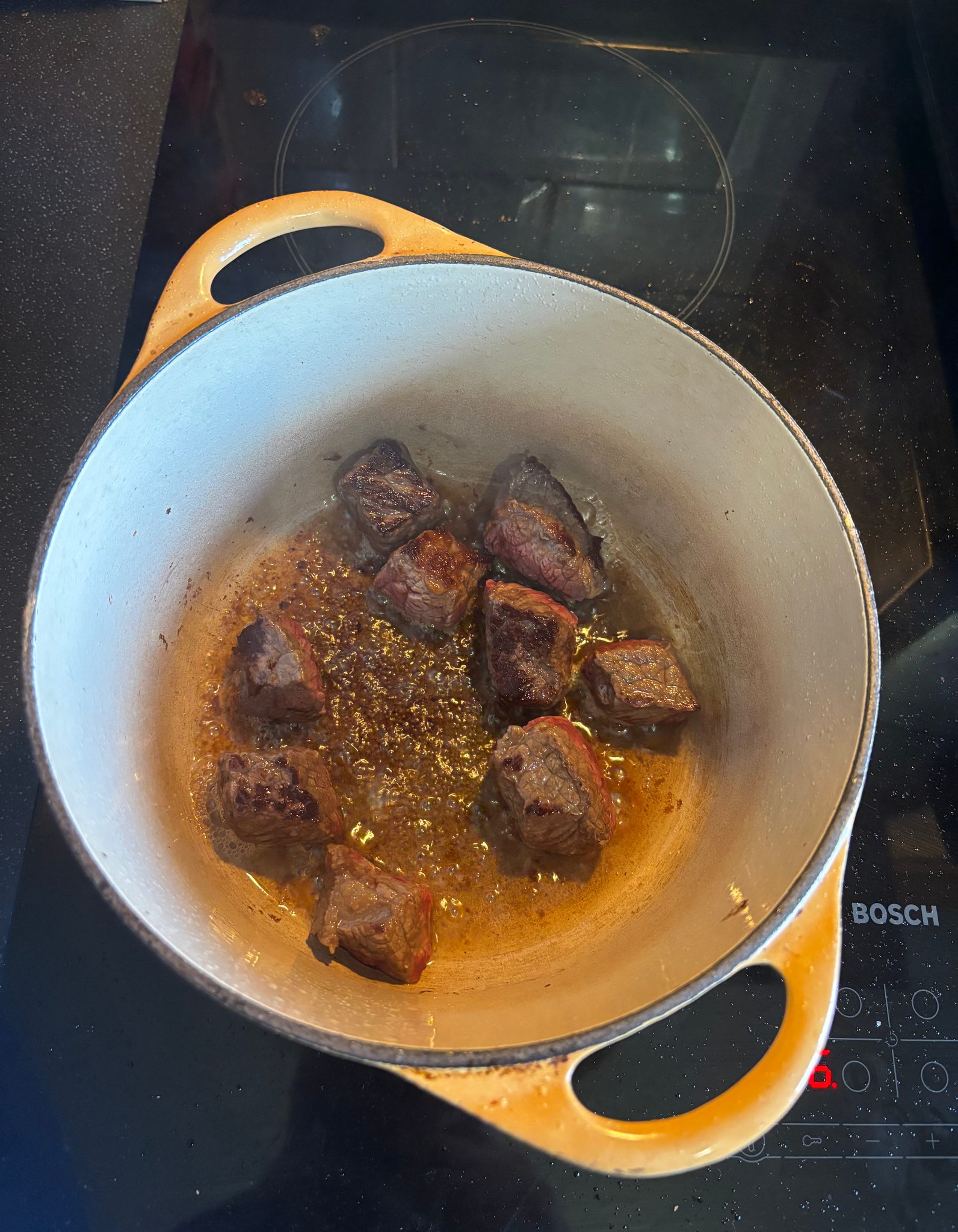
- Heat 1 tbsp of the oil in a large flameproof casserole dish over a medium-high heat. Brown the beef in three batches, 4–5 minutes a batch, turning it until it’s well browned on at least two sides, and lift each batch into a bowl. Add a little more oil if the pan looks dry. Crowding the pan steams the meat instead of browning it.
- Turn the heat down to medium-low. Add the butter, the onions and a pinch of salt, and scrape up the browned bits from the bottom of the pan as the onions start to soften.
- Cook the onions for 40–45 minutes, stirring every few minutes, until they’re soft, sticky and golden. If they start to catch, add a splash of water. Don’t rush this: most of the flavour comes from the onions.
- Stir in the garlic and cook for a minute, then stir in the flour and cook for another minute.
- Pour in the beer a little at a time, stirring and scraping the bottom of the pan; it will foam up, then settle. Add the stock, sugar, vinegar, thyme and bay leaves, then return the beef and any juices from the bowl. Bring it to a gentle simmer. The liquid should almost cover the meat, so top it up with a little water if it doesn’t.
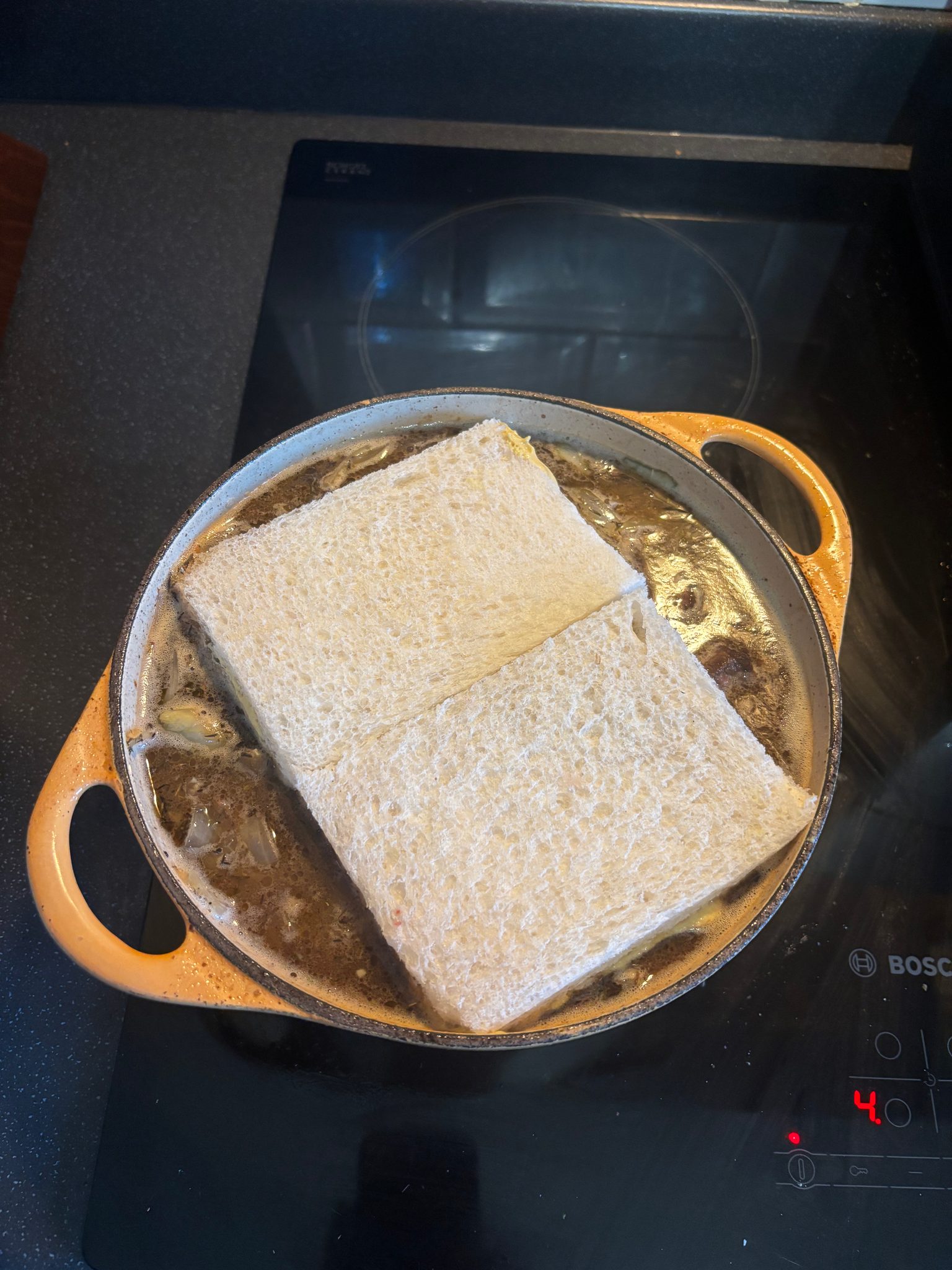
- Spread the mustard thickly over one side of each slice of bread and lay the slices on top of the stew, mustard side down. Cover with the lid.
- Cook in the oven for 2½–3 hours. After 2 hours, stir the softened bread into the sauce, which it will thicken as it breaks down, then put the dish back with the lid slightly ajar so the sauce can reduce. If it looks dry, add a splash of water.
- It’s ready when a piece of beef breaks apart easily with a spoon. If the sauce is still thin, lift the beef out with a slotted spoon and boil the sauce on the hob, stirring, until it’s thick enough to coat the back of a spoon, then put the beef back.
- Remove the thyme stalks and bay leaves, then taste: add more salt and pepper if it needs it, and a little more vinegar or sugar to sharpen or soften it. Leave it to stand for 10 minutes before serving.
Which beer to use for carbonnade
A Belgian brown ale is the classic choice: malty, slightly sweet and low in hop bitterness. Leffe Brune is widely sold in UK supermarkets, and other Belgian brown or “dubbel” ales work just as well. A malty English ale does a similar job, and it’s what I used: Abbot Ale, which gives a lighter, more amber sauce than a dark Belgian beer. Brown ale, dark mild and old ale work too.
- Avoid IPAs and other strongly hopped beers. Hop bitterness concentrates over a long cook and can leave the sauce harsh.
- Stout and porter will work, but they give a darker, more bitter, roasted flavour that’s closer to a beef and stout stew than a carbonnade. If you use one, you may want a little extra sugar.
- For an alcohol-free version, use an alcohol-free dark or brown beer.
The best beef for carbonnade
Use a cut with plenty of marbling and connective tissue, which turns meltingly tender over a long, slow cook. Chuck steak and braising steak, sometimes sold as casserole or stewing steak, are the easiest to find. Beef shin is even richer, but it can take an extra 30–60 minutes to soften. Avoid lean cuts such as topside or rump, which go dry and stringy when braised.
Cut it into big chunks, about 5cm across. Ready-diced packs are often cut small, and small pieces tend to dry out before they turn tender, so if you can, buy the steak in one piece and cut it yourself.
Oven, hob or slow cooker
- Oven: the method above. The heat surrounds the pot evenly, so there’s nothing to watch apart from the check at 2 hours.
- Hob: keep it at the barest simmer with the lid on for 2–2½ hours, stirring every half hour or so, because a pot on direct heat can catch on the bottom.
- Slow cooker: brown the beef and cook the onions in a frying pan first, as a slow cooker can’t brown them. Then put everything in the slow cooker with about half the liquid (330ml of ale and 150ml stock), because a slow cooker loses very little to evaporation. Lay the mustard bread on top and cook on Low for 8 hours or High for 5, then stir the bread into the sauce.
There are more ideas for the slow cooker in our slow cooker comfort food recipes, and if you’re wondering what a long cook adds to your bill, we’ve worked out how much a slow cooker costs to run.
What to serve with beef carbonnade
- Buttery mash, which soaks up every bit of the sauce.
- Chips, the Belgian way. In Belgium it’s usually eaten with chips, often with mayonnaise on the side.
- Crusty bread, for mopping up.
- Something sharp or green alongside: braised red cabbage, a crisp green salad, buttered cabbage or green beans.
Make it ahead, freeze it, use the leftovers
- Make ahead: it’s a good dish to cook the day before, as the flavours settle and the sauce thickens overnight. Cool it quickly, cover and refrigerate it within 2 hours, and eat it within 2 days.
- Freeze: freeze it in portions for up to 3 months, and defrost it in the fridge overnight.
- Reheat: gently, in a covered pan on the hob or in the oven, until it’s steaming hot all the way through. Add a splash of water if the sauce has thickened too much. Reheat only what you need, and only once.
- Leftovers: they make a good pie filling under puff pastry or mash.
FAQs
What is beef carbonnade?
A Belgian stew of beef braised in beer with lots of slowly browned onions, known as carbonade flamande in French and stoofvlees or stoverij in Flemish. It’s usually seasoned with thyme, bay, a little brown sugar and vinegar, and thickened with a slice of bread spread with mustard.
What’s the difference between beef carbonnade and beef and ale stew?
Carbonnade is built on onions and a malty brown beer, balanced with sugar and vinegar, so it’s gently sweet and sour, and it usually has no root vegetables. A British beef and ale stew typically uses bitter or ale with carrots and other vegetables, and is often finished with dumplings or baked under pastry.
What beer is best for beef carbonnade?
A Belgian brown or dubbel-style ale such as Leffe Brune is the classic, and a malty English ale such as Abbot Ale works too. Avoid IPAs and other strongly hopped beers, because their bitterness concentrates as the stew cooks.
Why do you put bread and mustard on top of carbonnade?
It’s the traditional way to thicken it. The bread soaks up the cooking liquid and gradually breaks down into the sauce, while the mustard adds a gentle tang. In Belgium, a slice of spiced gingerbread called peperkoek is often used instead of bread.
Does the alcohol cook off in beef carbonnade?
Not completely. Long cooking removes most of it: in the US Department of Agriculture’s widely used table, about 5% of the alcohol remains after 2½ hours of simmering. If you need it alcohol-free, use an alcohol-free dark beer.
Can I make beef carbonnade in a slow cooker?
Yes. Brown the beef and cook the onions in a pan first, then use about half the liquid (330ml of ale and 150ml stock), because a slow cooker loses very little to evaporation. Cook on Low for 8 hours or High for 5.
Can you freeze beef carbonnade?
Yes. Cool it quickly, then freeze it in portions for up to 3 months. Defrost it in the fridge overnight and reheat it until it’s steaming hot all the way through.
Was this useful?