Home Kitchen
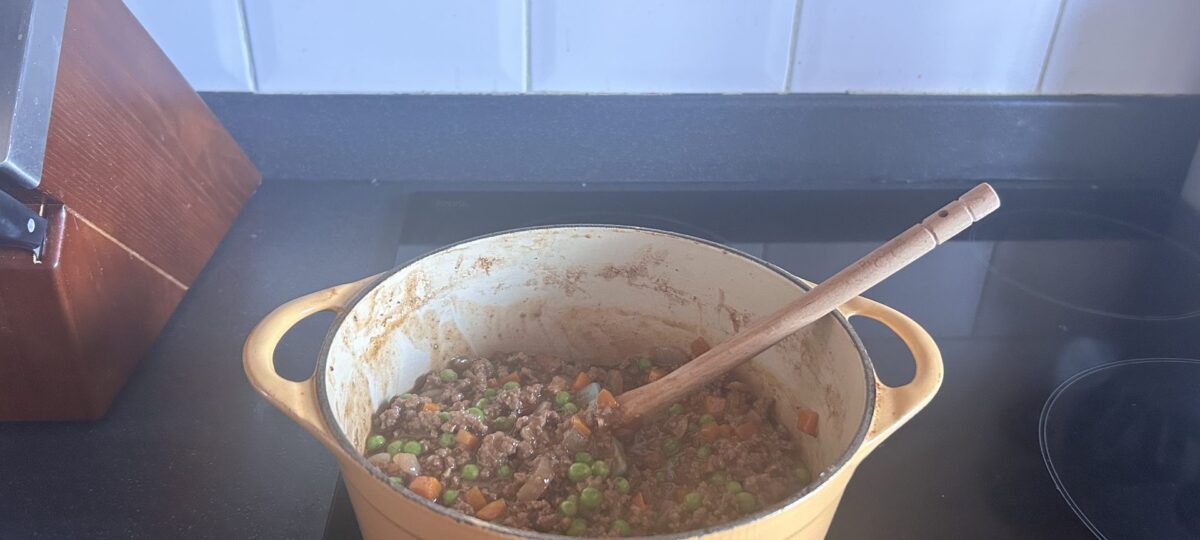
I’ve been cooking with cast iron for most of my adult life — a 24cm enamelled casserole that goes from hob to oven to table and rarely leaves the kitchen. Near the East Sussex coast, where the winters are damp and the evenings want something long and slow on the stove, a cast iron casserole isn’t a luxury. It’s the most useful thing in the kitchen. I use it for braises, soups, slow-cooked lamb, slow-cooked chicken, bread — and occasionally just for holding heat while something else finishes. If you’re only going to invest in one piece of serious cookware, this is it. For more on choosing the right pots and pans, our best cookware guide covers the full range. If low-and-slow cooking appeals, our guide to slow cookers covers the electric option. Our kitchen tools guide has more on building a kit that lasts.
Some of the links below are affiliate links: if you buy through them we may earn a small commission at no extra cost to you. As an Amazon Associate I earn from qualifying purchases. We only suggest things we would recommend to a friend — see our affiliate disclosure and how we research.
✉ Join the Dispatch — a calm weekly note, every Thursday. Free.
A cast iron casserole is one of those kitchen investments that reveals itself slowly. You don’t understand it until you’ve used it properly, for a season. And then you wonder why you waited.
In a hurry? Here’s what matters
- Cast iron holds heat evenly — no hot spots, no stirring anxiety
- Enamelled versions need no seasoning and work on induction
- A 24cm round casserole is the most versatile size for 2–4 people
- They go from hob to oven to table — one dish, whole dinner
- With care, a good cast iron casserole lasts your lifetime
Best Cast Iron Casserole Dishes UK (2026)
- Best value: Tower Foundry Cast Iron Casserole 3.5L — enamelled, induction-safe, oven-safe to 200°C. The right size for 2–4 people. Works on all hobs.
- Budget pick: Enamelled cast iron casserole, 24–26cm — under £40, induction-compatible. Good starting point if you’re new to cast iron cooking.
- Upgrade: Le Creuset or Staub 26cm Round Casserole — buy-for-life quality. Often significantly reduced in sales. Worth the wait.
What Cast Iron Actually Does Differently
The physics are simple, but the results feel like alchemy. Cast iron has exceptional thermal mass — it takes time to heat up, and it holds that heat consistently once it gets there. This means even gentle simmers stay even. Meat braises in its own steam without the liquid evaporating too quickly. A ragù develops depth in three hours that a thin-bottomed pan could never achieve in five.
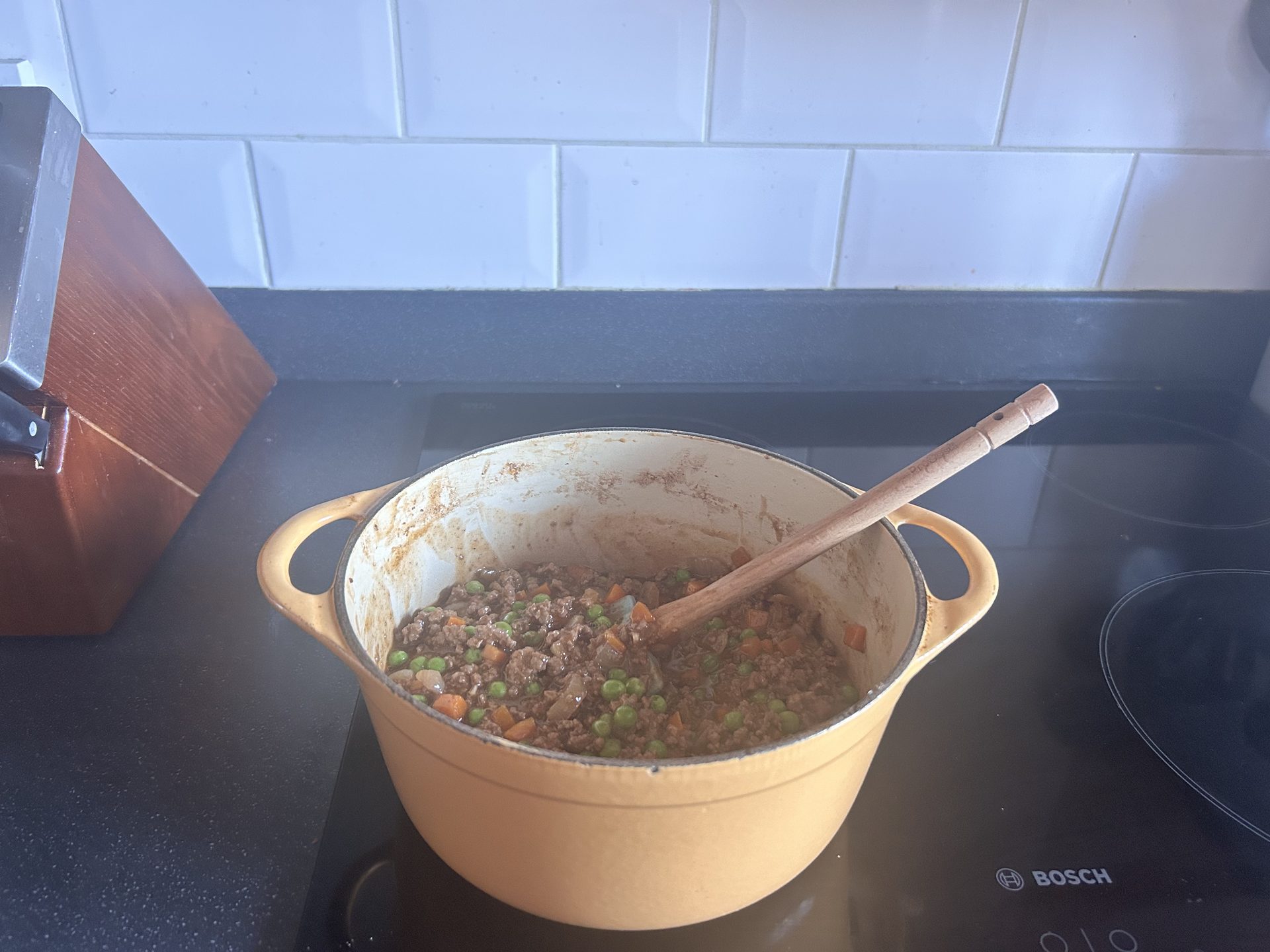
The enamelled interior — that smooth, glassy surface inside your casserole — means you can cook acidic ingredients without any metallic reaction. Wine, tomatoes, citrus: all fine. The enamel also makes cleaning straightforward and means there’s no seasoning ritual to maintain.
The difference is most obvious with braised meat. I’ve made beef shin in a thin-bottomed pot and in a cast iron casserole using the same recipe, the same timing, the same oven temperature. The cast iron version is noticeably better — richer, more yielding, with a gravy that has more body. The heat distribution is doing something that matters. After many years of cooking this way, I’d find it difficult to go back.
What to Cook: A Slow Season Kitchen
A cast iron casserole is exactly right for the shoulder seasons — autumn through spring, when the evenings come in early and you want something warm by five o’clock.
- Slow-braised chicken thighs with fennel and white wine
- A pot of spiced lentil dahl that improves over three days
- Slow-cooked lamb shoulder with rosemary and pearl onions for a Sunday that earns its rest
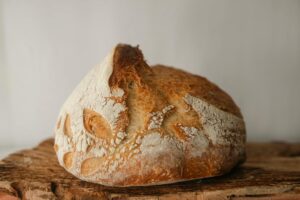
- No-knead bread — a lidded casserole creates the steam environment for a crackling crust
For the quality ingredients that suit this kind of slow, unhurried cooking — good stocks, organic grains, proper pulses — Daylesford Organic’s online grocery range is worth keeping bookmarked. The kind of pantry staples that make a simple braise taste like something special.
These aren’t complicated recipes — but they want a pan that can go from a high sear to a low simmer to a 160°C oven without you changing anything except the dial. The cast iron casserole as bread tin: a round casserole with a tight lid creates the steam environment that gives no-knead bread its crackling crust. If you’ve been meaning to try the five-minute bread method, a lidded casserole is all you need — no Dutch oven required.
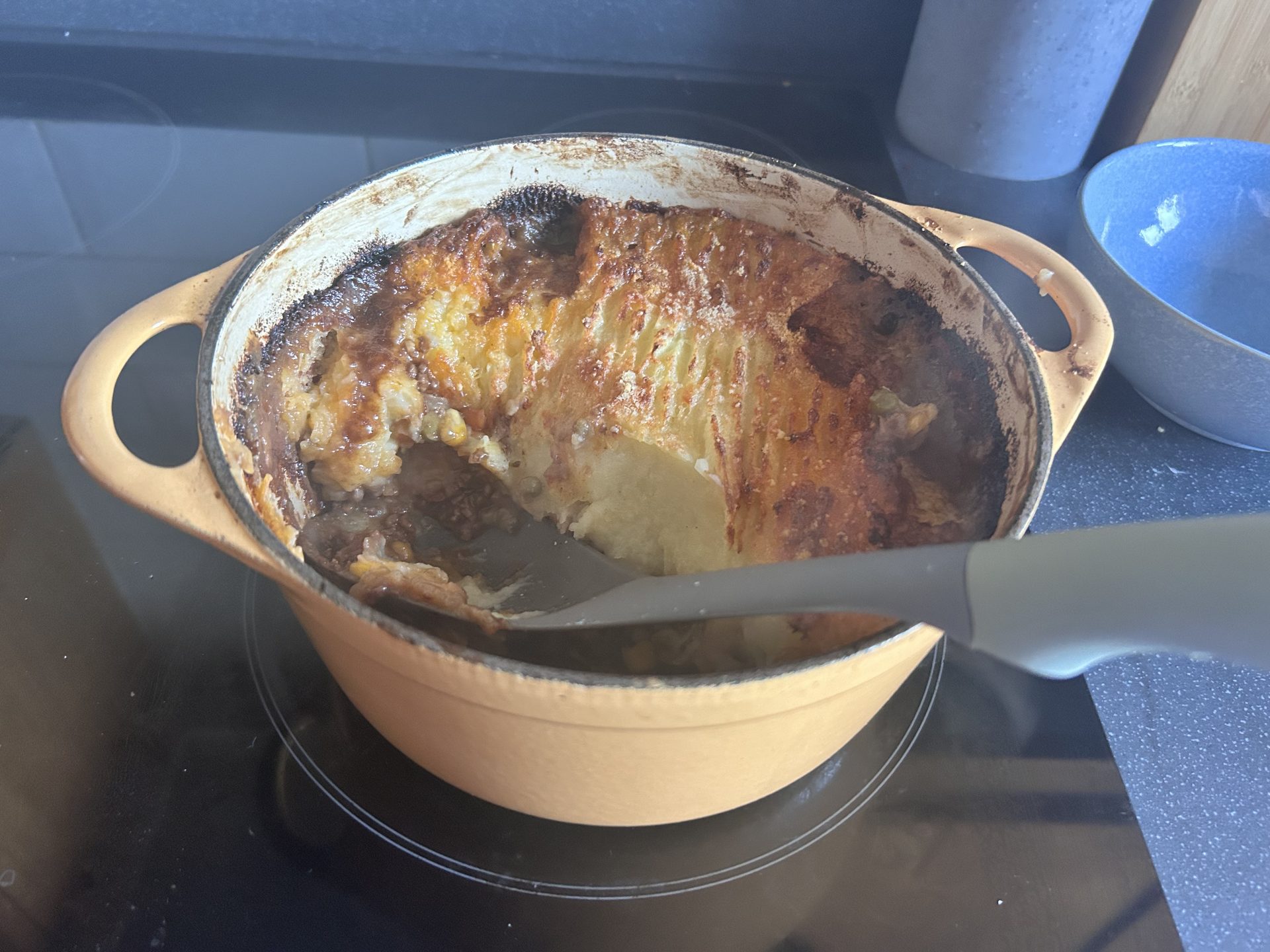
Choosing the Right Size
This is where most people overthink it. For a household of two to four:
- 20cm round (roughly 2.5L): ideal for soups, individual servings, small gratins
- 24cm round (roughly 4L): the workhorse. Most people should start here.
- 28–29cm or oval (5–6L): batch cooking, whole chickens, larger families
If you’re buying one piece, buy the 24cm. It will do almost everything. Add the oval later for roasts. Cast iron is perfect for a Sunday roast — our low and slow roast ideas make the most of it.
Care: The Only Thing Cast Iron Asks of You
Enamelled cast iron is not as fragile as its price tag might suggest, but it does ask for a few things.
- Don’t plunge a hot casserole into cold water — thermal shock can crack the enamel.
- Avoid metal utensils on the interior — wooden or silicone only.
- Hand-wash where you can, though occasional dishwasher use won’t damage most enamelled pieces.
- For staining: a paste of bicarbonate of soda and a little water, left to soak, lifts even deep tomato stains without effort.
Frequently Asked Questions
Is a cast iron casserole dish worth the money?
Yes. The cost per use of a well-made cast iron casserole, used weekly for twenty years, is negligible. It’s one of the kitchen investments that genuinely improves with time — both in cooking results and in character.
What size cast iron casserole do I need?
A 24cm round is the most versatile for most households. Go to 28cm if you regularly cook for five or more, or batch cook for the week. The 24cm is the one I reach for most.
Can I use a cast iron casserole on an induction hob?
Yes. Enamelled cast iron is compatible with all hob types including induction, gas, electric, and ceramic.
What’s the difference between enamelled and bare cast iron?
Enamelled cast iron has a glass coating inside, so it doesn’t need seasoning and won’t react with acidic ingredients. Bare cast iron needs regular oiling but develops a natural non-stick surface over time. For most home cooks, enamelled is the better starting point.
🍲 From the D&L Shop: Want a system for cooking smarter? Our Batch Cooking Planner gives you a weekly prep schedule, shopping lists organised by aisle, a freezer tracker, and practical tips — 5 pages, £3.99. Also free: the Weekly Budget Meal Planner. Browse the full shop →
🛡 Our standards: How we research · Editorial policy · Affiliate disclosure · Corrections · Last reviewed: July 2026

About Gareth
Gareth Isherwood is the editor of Danbury & Lovejoy. He has baked bread at home for 25+ years and has 15 years of growing experience across gardens, containers and other growing spaces, including an East Sussex allotment for the past three years. Read his full story →
Was this useful?