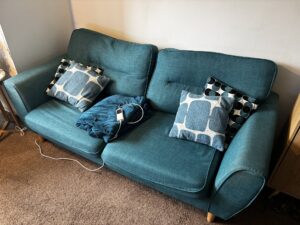
Living in a small flat sharpens your relationship with your possessions in a way that larger homes don’t require. Every object competes for space. Every cupboard needs to earn its contents. And the difference between a small flat that feels calm and liveable and one that feels cramped and chaotic is mostly organisation — specifically, the discipline to have only what you need, and to store it well.
Here’s what works, based on the real constraints of one-bedroom and studio flats in UK cities.
The First Principle: Edit Harder
The single most effective thing you can do in a small flat is reduce the amount of stuff in it. Not to an uncomfortable minimum, but to a level where what’s there is genuinely used and the right size for the space. In a large house, a mediocre organisation job is liveable. In a small flat, there’s nowhere for clutter to hide — it just sits there, on every surface and in every corner.
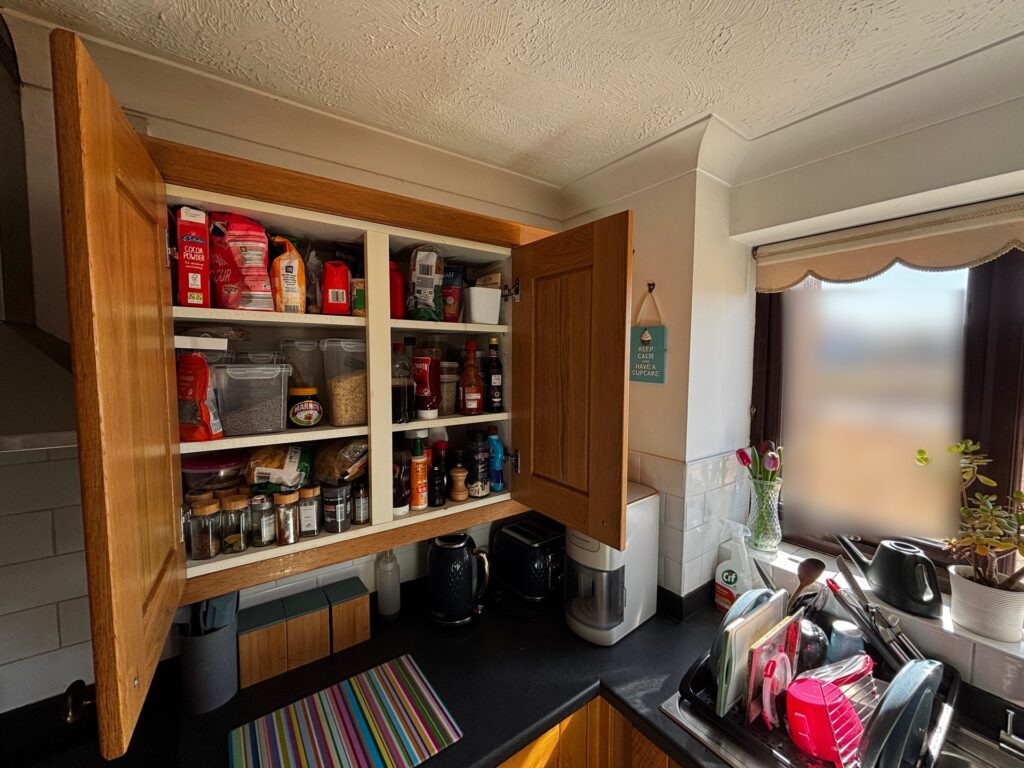
The edit needs to be more rigorous than in a larger home: things kept “just in case” at a rate that works in a four-bedroom house will overwhelm a one-bedroom flat. The threshold question isn’t “might I use this?” but “do I actually use this?” and “is it worth the space it takes up?”
Furniture That Works Harder
In a small flat, furniture needs to do more than one job. The classic examples:
- Ottoman or storage footstool — seating plus hidden storage for blankets, books, or seasonal items
- Bed with storage drawers or lift-up base — the largest piece of furniture in the flat, with typically wasted space beneath it converted to useful storage
- Dining table that folds or extends — takes up minimal space day-to-day, expands when guests come
- Sofa bed — only if you host overnight guests often enough to justify the compromise on daily sofa comfort
- Bench at the end of the bed — seating, somewhere to put tomorrow’s clothes, possible storage underneath
Go Vertical
Floor space is limited in a small flat; wall space is not. Shelving that goes to ceiling height holds far more than shelving that stops at eye level, and makes use of the foot or two of wall above where most people put their shelves. Tall, narrow bookshelves work better than wide, low ones in most small flats — they take up less floor space and store more.
In the kitchen, wall-mounted magnetic knife strips, hanging rails with hooks (for utensils, small pans, herbs), and open shelves all free up worktop and cupboard space. In the bathroom, over-toilet shelving is almost always available and underused. In the bedroom, hooks on the back of every door — wardrobe door, bedroom door, bathroom door — provide hanging space that doesn’t compete with floor space at all.
The Wardrobe
Clothes are often the biggest storage challenge in a small flat. A built-in wardrobe helps if the flat has one; if not, a freestanding one takes up significant floor space and needs to earn every centimetre. Either way, the edit is essential: a wardrobe that works in a small flat contains things you actually wear, in quantities that fit comfortably with room to see what’s there.
Double hanging rails — a second rail hung from the first at a lower level — effectively double the hanging space for shorter items (shirts, jackets, folded trousers). Shelf dividers keep folded items from collapsing sideways. Slim velvet hangers rather than chunky plastic ones make a noticeable difference to how much fits on the rail.
Off-season clothes in a small flat need a proper home: vacuum storage bags under the bed or in a top shelf box, rather than at the back of the wardrobe where they crowd out current items.
The Kitchen
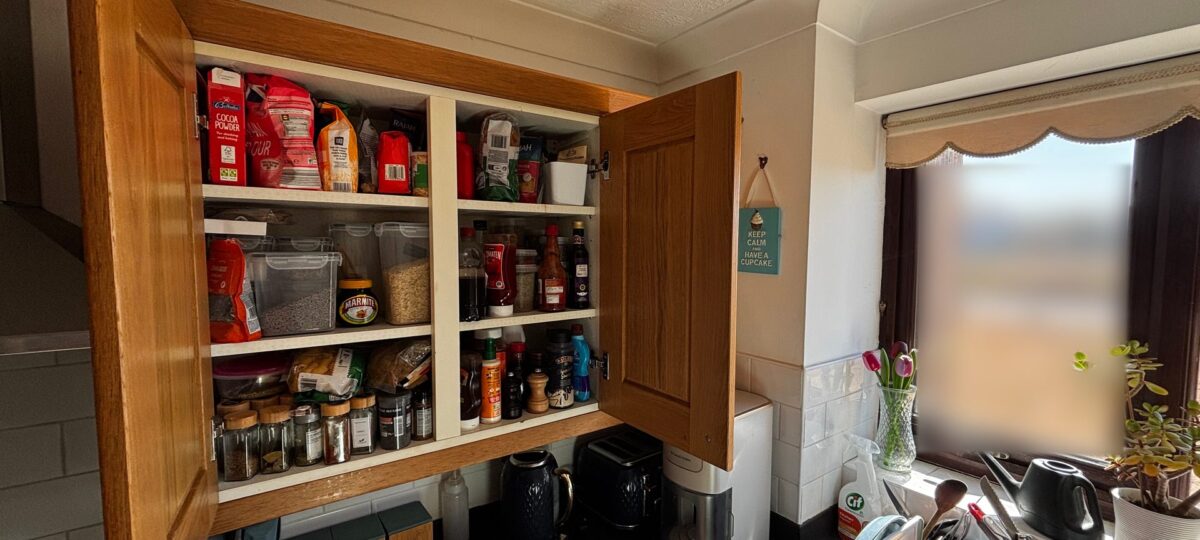
Small flat kitchens are often galley kitchens with limited cupboard space. The edit is, again, the most effective intervention: the fewer things you own, the more easily what you have fits. Keep only kitchen equipment you actually use — the rule of thumb of one or two of each essential (one frying pan, one large saucepan, one small) works particularly well in a small kitchen where there simply isn’t room for duplicates and aspirational gadgets.
Drawer inserts, shelf risers, and pull-out organisers make a real difference in small kitchens. See our kitchen declutter guide for the full approach.
Creating a Sense of Space
Organisation in a small flat is partly practical and partly optical. A few things that make a small space feel larger than it is:
- Clear surfaces — empty worktops and tables make a room feel bigger immediately
- A large mirror — reflects light and extends the apparent depth of a room
- Consistent colour palette — a coherent colour scheme makes a small space feel more deliberate and less chaotic than a mix of styles and materials
- Good lighting — dark corners make rooms feel small; a lamp in each corner rather than a single overhead light transforms the feeling of a room
- One large rug rather than several small ones — defines the seating area and visually enlarges the floor space rather than chopping it up
For the bigger picture on home organisation, including the seasonal edit that keeps things under control over time, browse the full Home Organisation hub.
Last reviewed: April 2026
📖 From the D&L Shop: Looking for a calmer way to organise your week? Our Calm Week Planner is designed for people who want structure without pressure — printable, fillable, and tablet-optimised versions included. £3.99. Browse the full shop →
🛡 Our standards: How we research · Editorial policy · Affiliate disclosure · Corrections · Last reviewed: April 2026

About Gareth
Gareth Isherwood is the editor of Danbury & Lovejoy. He has baked bread at home for 25+ years and has 15 years of growing experience across gardens, containers and other growing spaces, including an East Sussex allotment for the past three years. Read his full story →
Was this useful?