Some of the links below are affiliate links: if you buy through them we may earn a small commission at no extra cost to you. As an Amazon Associate I earn from qualifying purchases. We only suggest things we would recommend to a friend — see our affiliate disclosure and how we research.
✉ Join the Dispatch — a calm weekly note, every Thursday. Free.
A kitchen declutter is one of the most impactful things you can do for your home — the kitchen is used every day, so getting it sorted makes daily life noticeably calmer.
The kitchen is the hardest room in the house to keep organised — and also the one where good organisation pays the greatest daily dividend. You use it multiple times a day, it accumulates things faster than any other room, and the line between functional chaos and genuine clutter is blurry enough that it’s easy to let things slide for longer than you notice.
A kitchen declutter doesn’t need to be a weekend project. Done methodically — one area at a time — it’s something you can make real progress on in a couple of hours. Here’s how.
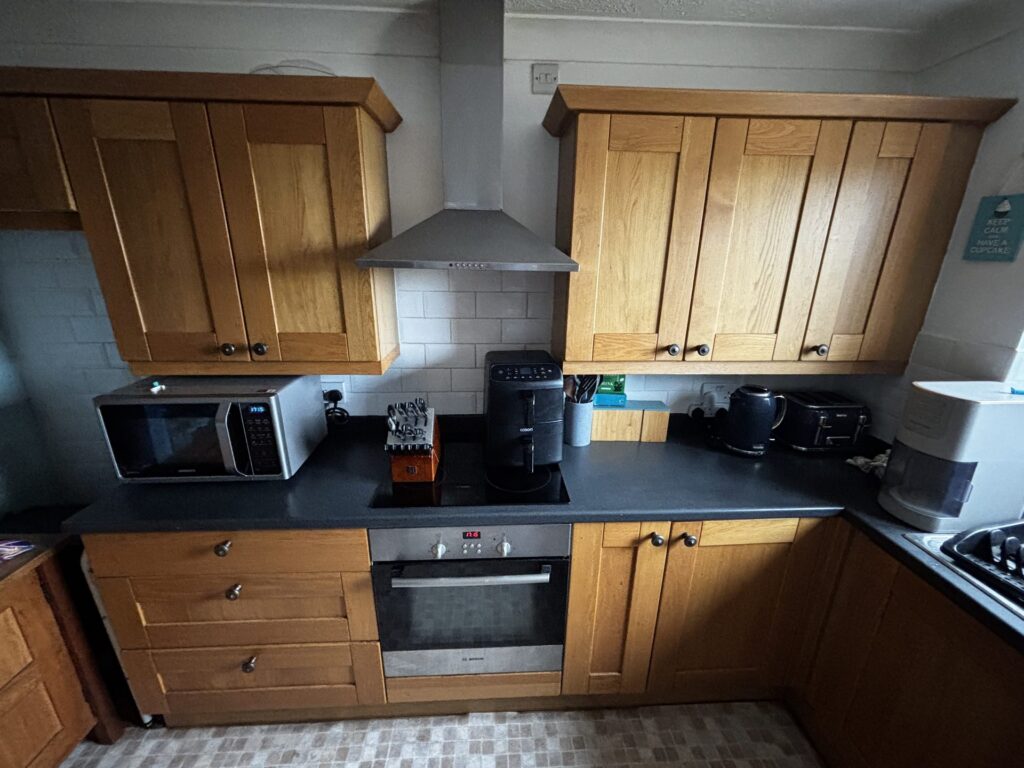
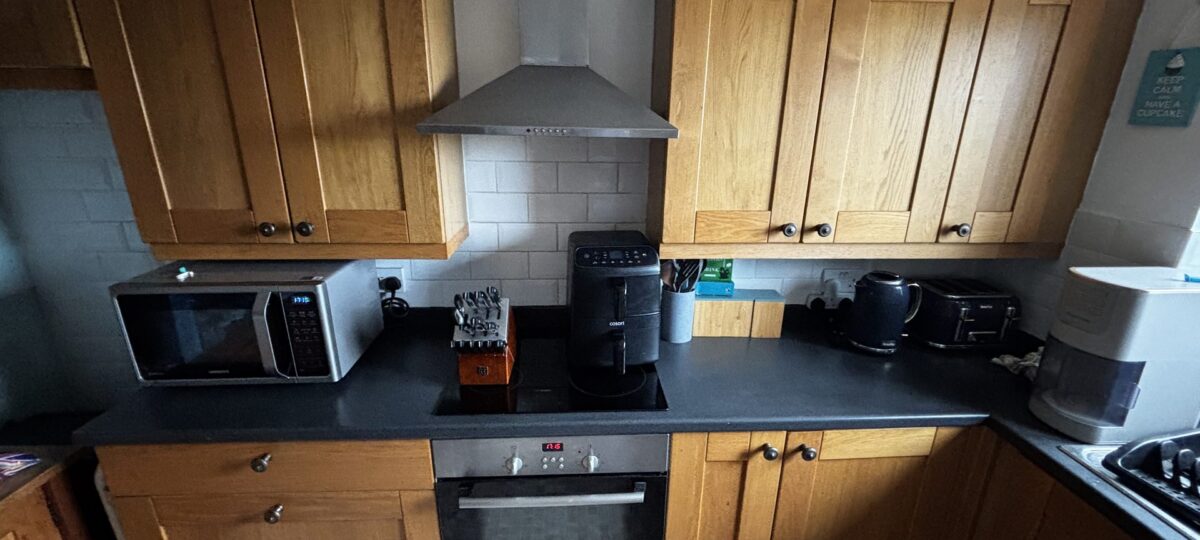
This is what “decluttered worktops” looks like in a kitchen that is actually cooked in, and it is worth setting against the empty expanses in most photographs of the subject. What is out is what gets used daily: the kettle, the toaster, the microwave, a knife block, a pot of utensils. Everything else lives behind a door. The useful test is not how much is on the surface but whether you can wipe the whole run without lifting more than two things — and on the counter above, you can.
Start with the Worktops
Worktops are the most visible part of the kitchen and the place where clutter accumulates most visibly. A clear worktop makes a kitchen feel ordered even when the cupboards are a mess. Start by removing everything that doesn’t need to live there permanently.
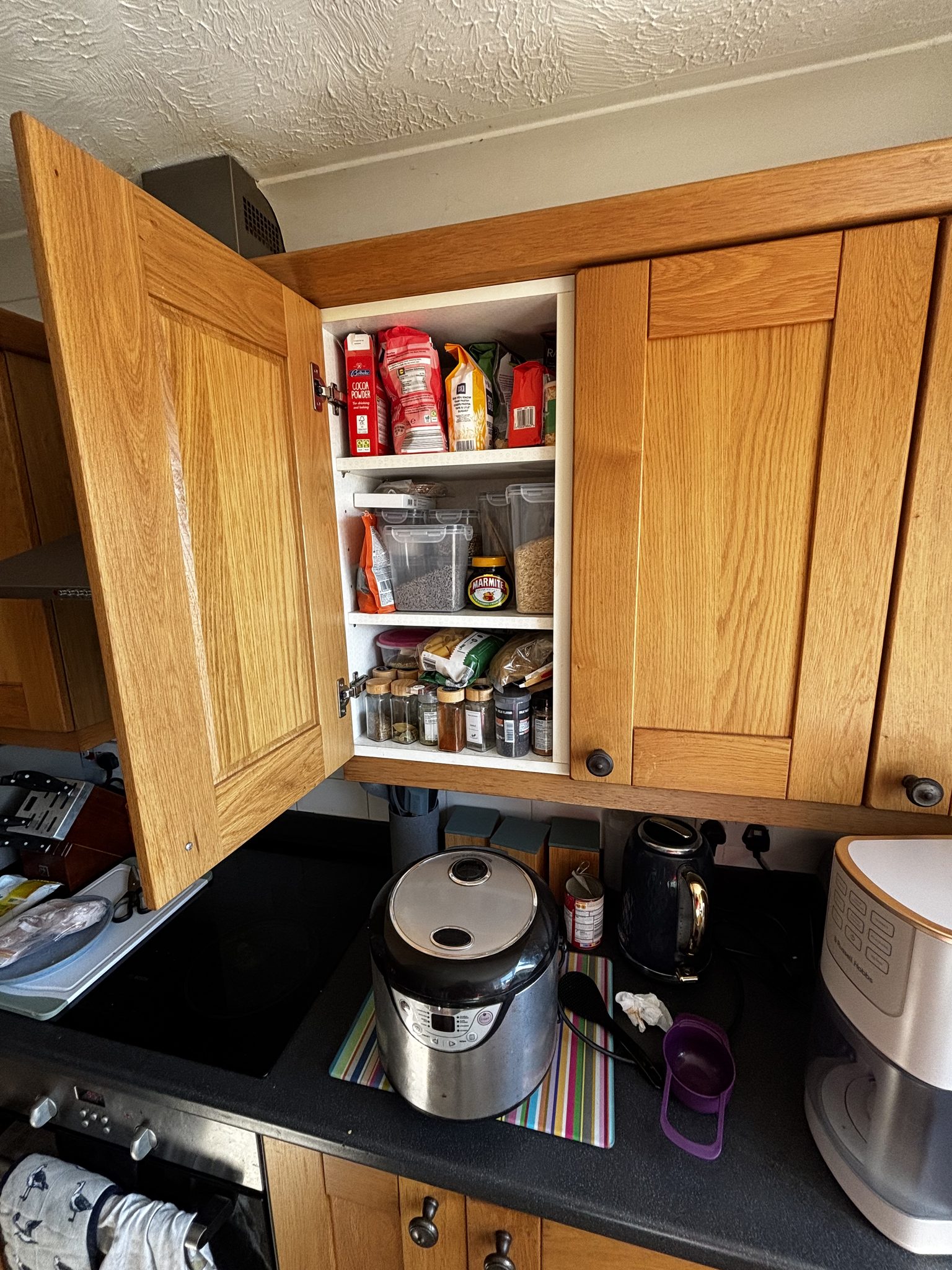
What deserves a permanent worktop spot? Equipment you use daily: the kettle, the toaster, the coffee machine, possibly a knife block. Everything else — the bread bin, the fruit bowl, the stand mixer, the air fryer — should earn its place based on how often you actually use it. If it’s used less than three times a week, it might be better stored in a cupboard and brought out when needed.
A clear stretch of worktop on each side of the hob — even just 40cm — transforms how easy it is to cook.
The Cupboard Edit
Crockery and Glassware
Take everything out and put back only what you actually use. The mugs you’ve accumulated over years of gifts and market stalls. The glasses from a matching set, three of which have since broken. The serving bowls used once at Christmas. Be honest about what’s earning its cupboard space.
A good working kitchen needs: enough plates, bowls, and mugs for your household plus a few extra for guests — not a complete second set. If you host regularly, the extras earn their keep. If you don’t, they’re just occupying space.
Pots, Pans, and Baking Tins
Pull out every pot, pan, and baking tin. Check for items that are warped, scratched beyond use, or have missing lids that you’ve been meaning to replace for three years. A well-equipped kitchen needs fewer pans than most of us own: a large saucepan, a medium saucepan, a small saucepan or milk pan, a frying pan, and a casserole or sauté pan covers most cooking. Two or three baking trays, a roasting tin, and a couple of cake tins handles most baking.
The rest is optional, based on what you actually cook.
The Gadget Drawer
Every kitchen has a drawer that contains: a broken can opener, seven spatulas, mystery keys, a wine stopper, three lighters, and things of entirely unknown purpose. Empty it completely. Keep only what you use regularly. The rest goes.
Food Cupboards and the Dry Goods Audit
Check dates on tinned goods, dried pasta, grains, and spices. Spices lose their potency quickly — anything older than two years is contributing flavour only in your imagination. Condiments accumulate at the back of shelves; many of them expire, and many of them were bought for a single recipe and never used again.
The goal isn’t an Instagram-worthy pantry with matching jars — it’s a cupboard you can see into, where you know what you have, and where things don’t get lost and duplicated because you forgot they existed.
The Fridge
Empty and wipe out the fridge completely every few weeks — not as a deep clean but as an opportunity to see what’s actually in there. Front-and-centre is where things get used; the back is where things go to die. Keeping frequently used items at eye level and using the drawers properly (meat in the coldest drawer, vegetables in the humidity-controlled one) reduces both waste and the endless mystery of what’s at the back.
Keeping it clear: a 30-minute kitchen reset
A declutter gets the kitchen into shape once. A short reset, done two or three times a week, keeps it there. It is not a deep clean: it’s the same few steps every time, with a timer set for 30 minutes so it doesn’t turn into 90. After a few weeks the clear counter becomes the state the kitchen returns to, rather than something you occasionally restore.
Surfaces first: fast, not fussy
- Move out anything that doesn’t live in the kitchen: post, chargers, the things put down “just for now”.
- Deal with the bin and the recycling while you’re at it.
- Wipe the one counter you look at all day, usually the main one.
- Leave that counter with one nice thing on it, such as a fruit bowl or a bread board. A completely bare counter can feel empty rather than calm; one object makes it look arranged.
The sink: the mood changer
Stack the dishes properly to make space, then run the dishwasher or wash the quick wins by hand: mugs, glasses and anything you’ll need later. Finish with a rinse and a quick scrub of the sink and a wipe of the tap. It takes about a minute and changes how the whole room feels.
One fridge shelf, not the whole fridge
Trying to sort the entire fridge is where a reset stalls. Do one shelf, the one you actually use (usually eye level): take everything off, wipe it, and put things back in three small zones.
- Eat first: leftovers, opened packs and anything on the turn, at the front.
- Building blocks: milk, butter, eggs, yoghurt.
- Condiments: jars and sauces, at the back or in the door.
A tiny plan, so dinner is easier
On a sticky note or your phone, write down five things that need using first: the veg drawer bits, cooked chicken, half a jar of pesto, leftover rice. Then decide on one easy meal and one comfort meal for the next couple of days. They don’t have to be clever, just decided in advance, which is what stops the 6pm panic-shop. For more on making the food go further, see saving money in the kitchen.
Last, a three-minute set-up for tomorrow: mugs where you want them, tea, coffee and sugar topped up, breakfast basics within reach.
Storage That Actually Helps
Once you know what you’re keeping, storage solutions become genuinely useful rather than just additional clutter. A few that make a real difference in most kitchens:
- Pull-out drawer inserts for deep cupboards — so things at the back are actually accessible
- Shelf risers inside cupboards to double the usable shelf space for tins and jars
- A pot lid rack — lids are the most disorganised thing in most kitchens; a simple vertical rack solves this instantly
- Uniform containers for dry goods — not necessary for everyone, but they do help you see quantities at a glance and make the most of shelf space
For broader storage ideas across the home, see our home storage solutions guide. And if you’re tackling the whole house, the seasonal home edit gives a framework for doing this room by room. All our guides are in the Home Organisation hub.
Last reviewed: April 2026
📖 From the D&L Shop: Looking for a calmer way to organise your week? Our Calm Week Planner is designed for people who want structure without pressure — printable, fillable, and tablet-optimised versions included. £3.99. Browse the full shop →
Once you’ve pared back, the next question is what to store the keepers in — see our storage round-up for smaller UK kitchens.
🛡 Our standards: How we research · Editorial policy · Affiliate disclosure · Corrections · Last reviewed: April 2026

About Gareth
Gareth Isherwood is the editor of Danbury & Lovejoy. He has baked bread at home for 25+ years and has 15 years of growing experience across gardens, containers and other growing spaces, including an East Sussex allotment for the past three years. Read his full story →
Was this useful?