The food bill is one of the few significant household costs you can actually influence week to week. Unlike energy or rent, it responds to small decisions — and most of those decisions don’t require sacrifice, just a bit of attention. Here’s what actually makes a difference. For the energy side of things, our piece on energy-efficient cooking covers which appliances cost least to run.
Start with What You’re Already Spending
Before changing anything, spend two weeks tracking what you actually buy. Most households have a vague sense of their food costs but are surprised by the specifics — how often they replace things that went off, how much goes on lunches and coffees outside the house, how many items land in the trolley without any particular plan. You don’t need a spreadsheet. A running note on your phone or a kept receipt is enough. The point is to see where the money actually goes before deciding where to cut. If you need some specific ideas, our cheap meals guide is a good place to start. We also have a collection of budget-friendly winter meals that stretch the weekly shop further.
This matters because the most effective savings are almost always different for each household. One household wastes a lot of fresh produce. Another spends heavily on convenience food because evenings are too rushed for cooking from scratch. A third has perfectly good habits but is shopping in the wrong supermarket for their usual basket. You can’t fix what you haven’t looked at.
Shop Your Own Kitchen First
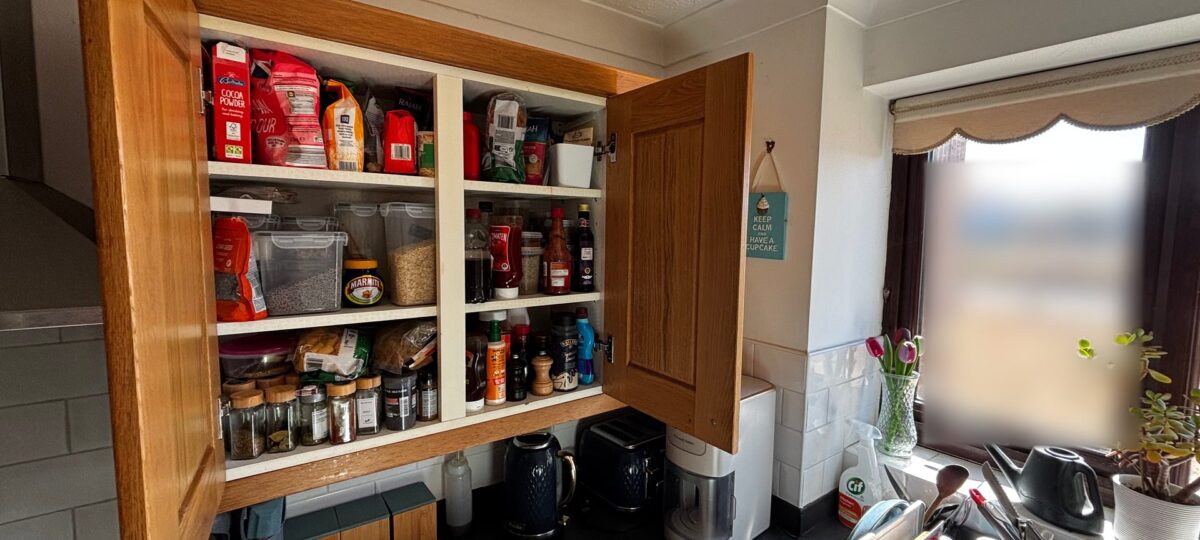
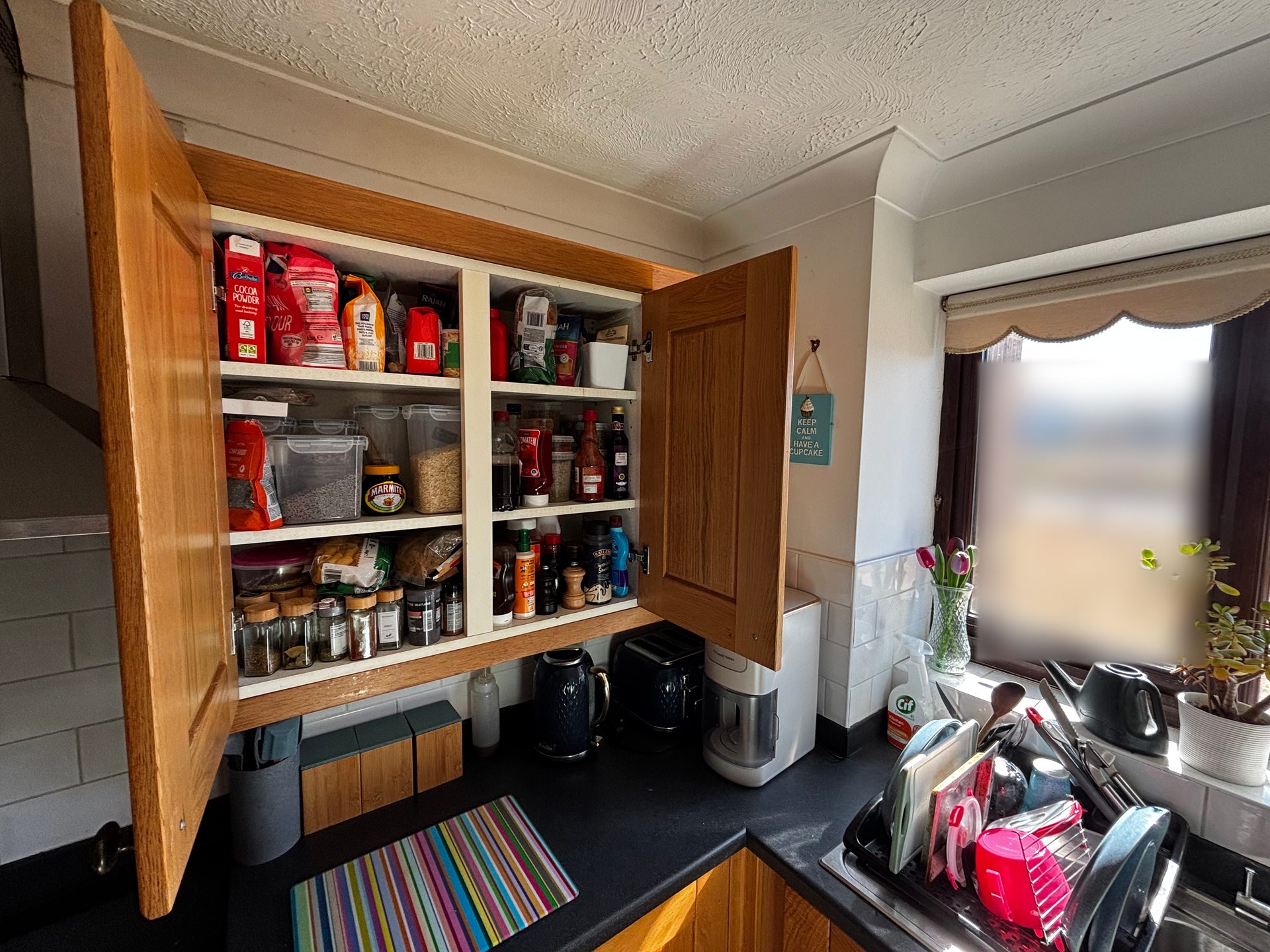
Before writing a list, spend five minutes with the cupboard, freezer and fridge, and build two or three meals around what’s already there: the half bag of red lentils, the tin of tomatoes at the back of the shelf, whatever’s been sitting in the freezer a while. Most households quietly waste a fair amount of food a year, nearly all of it bought with good intentions on a previous shop. Using it up isn’t glamorous, but it costs nothing extra and is one of the biggest savings available.
Shop Less Often, Not Just More Carefully
The single most effective change most households can make is reducing the number of shopping trips. Every trip generates unplanned purchases — that’s simply how supermarkets are designed. One weekly shop, done with a list, almost always costs less than three or four smaller trips across the week even if you’re buying the same things. If you currently shop three or four times a week, dropping to once or twice will reduce your bill noticeably without changing what you eat at all. A slow cooker helps here too, turning cheaper cuts into several meals from one shop: our guide to the best slow cookers has our honest picks.
The same principle applies to top-up shops. A quick trip for one or two items almost never results in buying just one or two items. If you can reduce these — by keeping a better-stocked pantry of staples, by planning slightly further ahead — the savings add up quickly over a month.
Build a Short List of Cheap, Useful Meals
Most households rotate a set of fifteen to twenty meals. The problem is that not all of them cost the same, and when you’re tired or distracted you default to whichever ones are easiest rather than cheapest. The practical fix is to identify which of your regular meals cost least per portion and make those easier to reach for — by keeping the ingredients stocked, by writing them somewhere visible, by making them more often so they feel habitual rather than effortful.
In a typical British household, the cheapest reliable meals tend to involve: eggs, lentils or dried pulses, frozen vegetables, tinned tomatoes, pasta, rice, and cheaper cuts of meat cooked slowly. A dish of pasta with a simple sauce, a lentil soup with bread, a fried egg on toast with some beans — these cost £1–2 for an adult portion and take twenty minutes or less. Building a habit of reaching for these on weeknights, rather than defaulting to something more expensive, is one of the most effective long-term savings.
Halve the Meat, Don’t Skip It
Going meat-free saves money but doesn’t suit every household. A gentler version: keep the meat, halve the quantity, and make up the bulk with lentils, beans or pearl barley. A bolognese with half the usual mince and a tin of green lentils still tastes like bolognese, and red lentils disappear almost entirely into anything tomato-based. Done across a few meals a week, it makes a real difference to the bill without anyone feeling the meal has been cut back.
Waste Less — Specifically, Not Generally
Reducing food waste is the most-mentioned food budget tip and often the least acted on — more practical guides like this in our Money & Sense hub, partly because “waste less” is too vague to be useful. The more practical approach is to identify the specific things your household wastes repeatedly and address just those. For most households, the culprits are: salad leaves and fresh herbs that don’t get used, bread that goes mouldy before it’s finished, leftover cooked food that doesn’t get eaten the next day, and fresh produce bought with a meal in mind that never got made.
Each of these has a specific fix. Salad leaves: buy whole lettuces rather than bags, or switch to frozen spinach for cooking. Fresh herbs: grow a pot of basil or parsley, or buy dried for everyday use and fresh only when the herb is central to the dish. Bread: freeze half the loaf when you open it. Leftovers: put them in a clearly visible container at eye level in the fridge, not buried at the back. Uncooked produce: keep a “use first” section in the fridge and plan one “clear the fridge” meal per week.
Then use the ends and bits. A Parmesan rind goes into a soup or stock; a chicken carcass makes a pot of broth; onion skins, carrot tops and celery ends can go in a freezer bag until there’s enough for stock. Soup, stew and cooked grains all freeze well (cool rice quickly and get it into the fridge or freezer within the hour), so a little left over becomes a lunch later rather than a loss.
Switch Selectively, Not Across the Board
Switching to own-brand or value products across the board sounds sensible but rarely works well in practice — some substitutions are unnoticeable, others are genuinely worse and lead you to buy the branded version anyway or just not enjoy the meal. The better approach is selective switching: identify the specific items where the cheaper version is indistinguishable from the more expensive one, and switch only those.
If you like finding ways to spend less without feeling like you’re going without, The Danbury Dispatch might be right up your street. It’s our free Thursday email — full of budget-friendly home tips, seasonal recipes, and the quiet kind of advice that actually helps. Join us here.
In most households, these include: tinned tomatoes, dried pasta, rice, lentils, flour, cooking oil, frozen peas and sweetcorn, and most baking ingredients. The items where the quality difference tends to matter more: bread (if you eat a lot of it and the texture matters to you), butter, cheese, meat, and anything where flavour is the point of the dish rather than a background ingredient. Being deliberate about which substitutions work for your household — rather than applying a blanket rule — means you keep the savings without the feeling that you’re compromising.
Use the Freezer More Systematically
The freezer is the most underused cost-reduction tool in most British kitchens. Bread, meat, bananas going soft, leftover portions of batch cooking, cheese grated before it goes hard, milk when you’ve bought too much — all of these can be frozen rather than wasted. The cost of food that goes in the bin is one of the main reasons food bills feel higher than they should. Our batch cooking guide has some ideas for getting ahead with meals.
A practical system helps: keep one shelf or drawer specifically for “frozen to use soon” items, label bags with what’s in them and when they went in, and build one meal per week around what’s in the freezer. This last habit alone — one “freezer meal” per week — can meaningfully reduce what you spend at the shops over a month.
For more of our reviewed kitchen recommendations, have a look at the Buying Guides.
Cook With Less Energy
The food bill and the energy bill meet at the hob. None of these habits changes what you eat; together they trim what it costs to cook it. Our guide to energy-efficient cooking compares the appliances in more detail.
- Put a lid on it. A covered pan comes to the boil faster and holds a simmer on a lower setting.
- Boil only the water you need. Fill the kettle for the cups you’re making, not to the top, and boil water for pasta or veg in the kettle rather than heating it from cold on the hob.
- Match the pan to the ring. A small pan on a big ring or a wide flame mostly heats the air around it.
- Use the slow cooker for long cooks. For stews, soups and braises it draws far less power than an oven running for hours, and cheaper cuts come out better for it.
- Reheat in the microwave. Warming a portion of leftovers doesn’t need a whole oven.
- Small portions, small appliance. Cooking for one or two, an air fryer or the microwave heats a much smaller space than a full-size oven.
- Fill the oven when it’s on. If it’s running for a roast, use the spare shelf: a tray of veg for the week, a crumble, or a casserole to reheat later.
- Let the hob finish the job. On an electric hob, switch the ring off a couple of minutes early: it stays hot enough to finish rice or a simmering sauce.
- Let the fridge breathe. Don’t pack it so tightly that air can’t circulate, and let hot food cool before it goes in (within a couple of hours).
If you have a smart meter, glance at the in-home display while you cook: it makes it obvious which appliances draw the most.
What’s Worth Buying, and What Isn’t
Kitchen kit that promises savings rarely delivers. The things worth having replace a real cost or habit; the rest add clutter without removing anything.
- Worth having: a slow cooker (cheaper cuts, less oven time, easy batch cooking); a set of stackable freezer containers, because batch cooking only saves money if the portions get eaten; kitchen scales, which cut waste in baking and keep portions consistent; and a good flask if you often buy tea or coffee out.
- Usually not worth it: single-job gadgets such as spiralisers, quesadilla makers and egg cookers, which tend to get used twice and then live in a drawer; “miracle” appliances that don’t replace an existing cost; and big knife sets, when one good chef’s knife, kept sharp, does more than a block of mediocre ones.
The Compounding Effect of Small Changes
If all of this feels like a lot, start with one habit: cook one extra portion of whatever you’re making tonight, then box it, label it and put it in the fridge or freezer. Do that consistently and both the food bill and the weeknight effort come down; the rest follows more easily once that habit sticks.
None of these individually saves a huge amount. But reducing shopping trips, cutting waste on the specific things your household actually wastes, making your cheapest reliable meals easier to reach for, and switching own-brand on the items where it genuinely doesn’t matter — together, these changes add up to a meaningfully lower food bill without changing the quality or enjoyment of what you eat. The key is that they’re sustainable, because they don’t require ongoing willpower or a sense of deprivation. They just become how you shop and cook.
How much these habits save varies a great deal from one household to the next, but the saving comes the same way every time — not from sacrifice, but from less waste, fewer unplanned purchases, and more deliberate defaults.
Last reviewed: April 2026
💰 From the D&L Shop: Ready to take control of your household budget? Our Household Budget Reset is a 5-page printable workbook covering income, outgoings, spending, and savings goals — £3.99. Also free: the Weekly Budget Meal Planner to cut your food bill. Browse the full shop →
🛡 Our standards: How we research · Editorial policy · Affiliate disclosure · Corrections · Last reviewed: April 2026

About Gareth
Gareth Isherwood is the editor of Danbury & Lovejoy. He has baked bread at home for 25+ years and has 15 years of growing experience across gardens, containers and other growing spaces, including an East Sussex allotment for the past three years. Read his full story →
Was this useful?