✉ Join the Dispatch — a calm weekly note, every Thursday. Free.
Looking for what fits in each size? That has its own guide — what actually fits in a 6×4, 7×5, 8×6 and 10×8 shed. This page is about which material to choose.
Timber vs Metal vs Plastic Sheds UK : Which Should You Choose?
When it comes to buying a shed in the UK, you have three main material choices: timber, metal, and plastic. Each has a genuinely different character — timber looks great but needs upkeep, metal is secure but can rust, plastic is low-maintenance but splits opinion on aesthetics. There is no single ‘best’ shed material: the right choice depends on your garden, your budget, your storage needs, and how much maintenance you are willing to do. This guide compares all three honestly, so you can make the right call for your situation.
At a Glance: Timber vs Metal vs Plastic
The table below summarises the key differences. Detailed sections follow.
| Feature | Timber | Metal | Plastic |
|---|---|---|---|
| Cost | Mid-range (£300–£1,500+) | Budget to mid (£200–£900) | Mid-range (£400–£1,200) |
| Durability | High if maintained | High (rust-prone if neglected) | Very high (UV-resistant grades) |
| Maintenance | Regular — treat every 2–3 years | Low — check for rust annually | Very low — wipe down only |
| Insulation | Good | Poor | Poor to moderate |
| Security | Moderate (can be reinforced) | Good (steel construction) | Moderate |
| Appearance | Traditional, attractive | Functional, utilitarian | Modern, divisive |
| Lifespan | 15–30+ years | 10–20 years | 20–25 years |
Timber Sheds
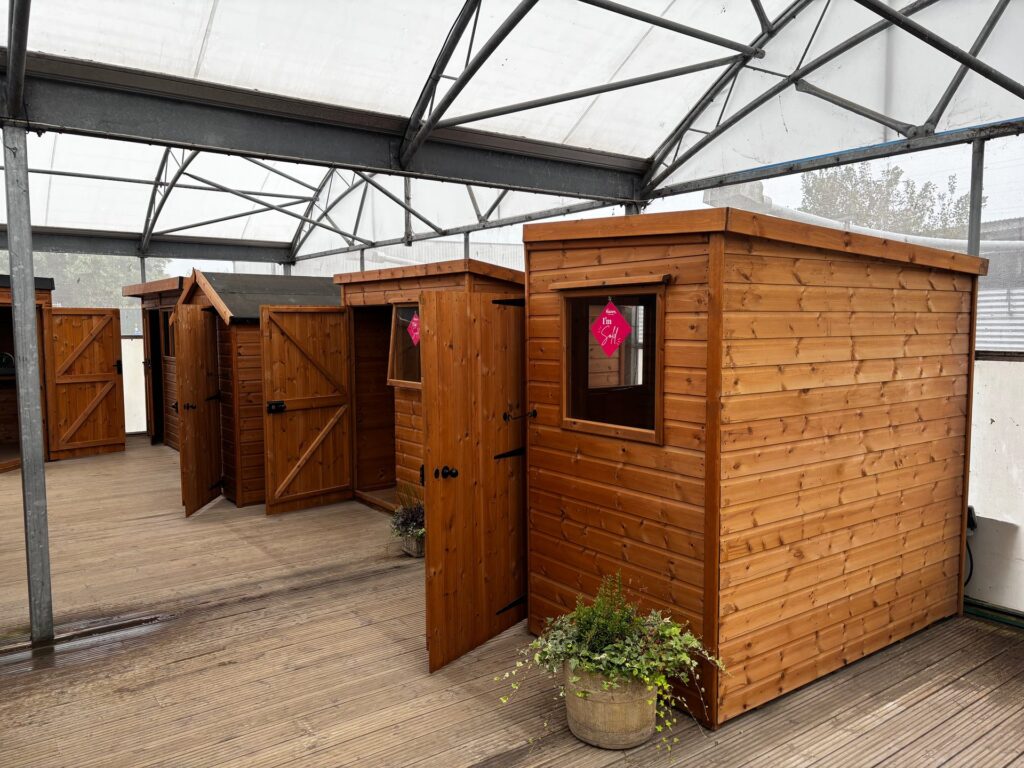
Timber remains the most popular shed material in the UK — and for most buyers, it offers the best combination of looks, versatility, and long-term value when properly maintained.
Pros
- Most attractive — blends with gardens naturally
- Good natural insulation compared to metal and plastic
- Customisable — can be painted, stained, or extended
- Wide range of styles and sizes available
- Longest potential lifespan when properly maintained (15–30+ years)
Cons
- Requires treatment every 2–3 years to prevent rot and UV damage
- More expensive to maintain over time compared to metal or plastic
- Can be susceptible to pests if untreated
Best for: Buyers who want a traditional aesthetic, plan to use the shed as a workshop or hobby space, or want the best natural insulation.
Timber Shed Maintenance
Timber sheds should be treated with a quality wood preserver every 2–3 years. Based on our research, Ronseal Total Wood Preserver is a good all-round choice.
Typical UK price range: £300–£1,500+ depending on size, cladding type (overlap vs. shiplap), and brand.
Recommended brands: Forest Garden, Mercia, BillyOh, Tiger Sheds.
Metal Sheds
Metal sheds offer strong security and very low maintenance — ideal for buyers who want pure storage with minimal upkeep.
Pros
- Strong and secure — steel construction resists forced entry better than timber or plastic
- Low maintenance — no treating or painting required
- Fire resistant
- Often cheaper at entry level than timber equivalents
- Pests cannot chew through steel
Cons
- Poor insulation — can get very hot in summer and cold in winter
- Susceptible to rust if the protective coating is damaged
- Less attractive — a purely functional, utilitarian look
- Can be noisy in heavy rain
Best for: Pure storage needs, buyers who want low maintenance, urban gardens where security is a priority.
Rust Prevention Tips
- Inspect joints and roof seams annually for signs of rust or coating damage
- Apply a rust-inhibiting metal paint to any bare metal spots as soon as they appear
- Ensure the shed is properly grounded and anchored to prevent water pooling at the base
- Consider applying a dedicated metal shed treatment spray each spring
Typical UK price range: £200–£900 depending on size and brand.
Recommended brands: Trimetals, Asgard, Yardmaster, Biohort.
Plastic Sheds
Plastic sheds have become significantly more popular in the UK over the past decade, driven by the appeal of truly zero-maintenance storage. Quality has improved substantially — the best plastic sheds are genuinely long-lasting.
Pros
- Virtually maintenance-free — no painting, treating, or rust to worry about
- Will not rot, warp, or suffer from pest damage
- Easy to clean — hose down or wipe with a damp cloth
- Very long lifespan in quality UV-resistant grades (20–25 years)
- Often supplied with a floor panel included
Cons
- Divisive aesthetics — does not suit all garden styles
- Poor insulation in standard grades
- Can become brittle in extreme cold if low-quality materials are used
- Fewer customisation options compared to timber
Best for: Buyers who want zero maintenance, coastal gardens exposed to salt air, or those storing items that don’t require insulation.
Plastic Shed Cleaning Tips
- Use a mild household detergent and warm water with a soft brush
- A pressure washer on a low setting works well for exterior surfaces
- Avoid harsh solvents or abrasive cleaners — these can damage the plastic surface
- Clean gutters and drainage channels annually to prevent water build-up
Typical UK price range: £400–£1,200.
Recommended brands: Keter, Lifetime, Palram, Duramax.
Which shed material should I choose? Use this quick decision guide:
- Want the best-looking shed you can customise and use as a workspace? → Choose timber
- Want maximum security with minimal maintenance? → Choose metal
- Want zero maintenance and the longest no-effort lifespan? → Choose plastic
- In a coastal or very exposed garden? → Choose metal (Asgard/Biohort) or plastic
- Budget tight? → Metal is usually cheapest at entry level
- Insulating the shed or using it as a room? → Always choose timber
Essential Shed Accessories — Whatever Material You Choose
Regardless of which shed type you buy, these accessories are worth adding. Based on our research, these are the ones to start with:
- Shed Anchor Kit — Secure your shed to the ground, especially important in exposed gardens. Our research-based pick: View Shed Anchor Kit on Amazon UK
- Shed Roofing Felt (for timber sheds) — Replacing worn felt is one of the most important timber shed maintenance jobs. A heavy-duty 10m roll covers most re-felts. View Shed Felt on Amazon UK
- Heavy Duty Shelving Unit — Maximise your shed’s storage potential with a proper shelving unit. View Rhino Racking on Amazon UK
- Padlock — All shed types benefit from a quality padlock.
- Shed Security Alarm — An affordable extra layer of protection for any shed type.
- Shed Base Kit — A level, free-draining base matters for every shed type. View Shed Base Kit on Amazon UK
- Shed Paint (for timber sheds) — A colour coat for timber, once it has been preserved. View Shed Paint on Amazon UK
Also see: Shed Size Guide UK — what size shed do you actually need?
Frequently Asked Questions
Which is the best shed material in the UK?
It depends on your priorities. Timber is best for aesthetics, insulation, and versatility. Metal is best for security and low upkeep. Plastic is best if you want zero maintenance. For most UK buyers who want a balance of looks and practicality, timber remains the most popular choice.
Do wooden sheds need treating?
Yes. Timber sheds should be treated with a quality wood preserver every 2–3 years to protect against rot, damp, and UV damage. Pressure-treated timber sheds require less frequent treatment but still benefit from periodic re-application. Based on our research, Ronseal Total Wood Preserver is a good all-round choice.
Are metal sheds secure?
Metal sheds offer better resistance to forced entry than timber or plastic due to their steel construction. However, no shed is completely secure — fitting a quality padlock, hasp and staple, and a shed alarm significantly improves security across all shed types.
How long does a plastic shed last in the UK?
A quality plastic shed from a reputable brand (such as Keter or Lifetime) can last 20–25 years with minimal maintenance. Key factors are UV resistance rating and build quality — cheaper plastic sheds may become brittle over time.
Which shed is warmest in the UK?
Timber sheds are significantly warmer than metal or plastic equivalents thanks to wood’s natural insulating properties. If you plan to use the shed as a workshop, hobby room, or home office, timber is the best starting point — and you can add insulation boards for even better performance.
📋 From the D&L Shop: Planning your growing year? Our Your First Year on the Allotment guide covers every month from clearing the plot to your first proper harvest — written from 15+ years of UK growing experience. £9.99, instant PDF download. Also useful: the Allotment Plot Planner (£4.99) for mapping beds and planning crop rotation. Browse the full shop →
You might also find our guide to How to choose the right shed: size, material & base (UK guide) useful.
For the deeper dive, see our garden sheds 2026.
🛡 Our standards: How we research · Editorial policy · Affiliate disclosure · Corrections

About Gareth
Gareth Isherwood is the editor of Danbury & Lovejoy. He has baked bread at home for 25+ years and has 15 years of growing experience across gardens, containers and other growing spaces, including an East Sussex allotment for the past three years. Read his full story →
Was this useful?