Some of the links below are affiliate links: if you buy through them we may earn a small commission at no extra cost to you. As an Amazon Associate I earn from qualifying purchases. We only suggest things we would recommend to a friend — see our affiliate disclosure and how we research.
✉ Join the Dispatch — a calm weekly note, every Thursday. Free.
Prices and availability checked 4 November 2026 against live Amazon listings; tap through for the current price.
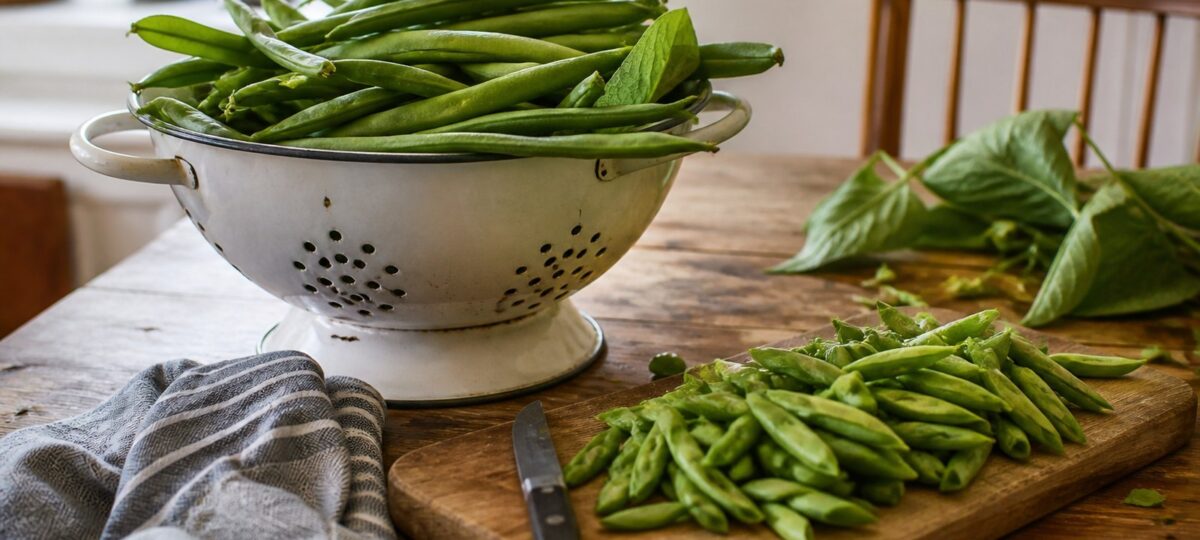
There is a point in August, usually about a fortnight after you stop paying attention, when the runner beans stop being a crop and start being a situation. You pick a colander on Tuesday, feel rather pleased with yourself, and by Friday there is another colander plus half a dozen you missed that are now the size and texture of a leather bootlace. It is the most reliable glut on the British allotment, and unlike the courgettes nobody ever seems to warn you about it.
The good news is that runner beans are one of the few gluts that stores genuinely well — a bag of properly frozen beans in February is close to the real thing, which is more than can be said for most frozen veg. Here is how we work through a heavy picking, from tonight’s dinner to next spring.
First: keep picking
It feels backwards when you already have more than you can eat, but the way to a smaller glut is to pick more often, not less. The plant is trying to set seed; every pod you leave to swell tells it the job is done and the flowering eases off. Pick every two or three days and you keep it cropping for weeks longer — and the beans you get are young, tender and worth eating. Our August jobs on the plot has the rest of the month’s running order.
Eat them now: the quick wins
- Beans in tomato sauce. Sliced beans simmered slowly in a garlicky tomato sauce with plenty of olive oil until they are soft rather than squeaky — the Greek approach, and the single best thing to do with a lot of beans at once. Better the next day, and it uses courgettes and tomatoes too if they are piling up as well.
- Butter, lemon and black pepper. Four minutes in boiling water, drained hard, tossed with butter and a squeeze of lemon. When the beans are young this is the one that reminds you why you grow them.
- In a salad, cold. Blanched, cooled and dressed sharply with mustard and vinegar, they hold up far better than most veg on a warm evening.
- Bulking a stew. A handful of sliced beans thrown into anything slow-cooked in the last twenty minutes disappears without complaint from anyone at the table.
The bottleneck is the slicing
Nobody gives up on a bean glut because they have run out of recipes. They give up because topping, stringing and diagonally slicing two carrier bags of beans by hand is a genuinely tedious hour, and it is the hour that stands between the beans and the freezer. A hand-cranked bean slicer takes that hour down to something closer to ten minutes: you feed the beans in, it tops, strings and slices in one pass. It is a single-purpose gadget with no other use for eleven months of the year, which is normally an argument against — but at seven pounds, on the one job it does, it is the difference between preserving the glut and composting it.

Blanch and freeze — the main answer
Freezing is where a bean glut actually goes. The method is short and the one step people skip is the important one:
- Top and tail, string if they need it, and slice — diagonally, about a centimetre wide.
- Blanch for two to three minutes in fast-boiling water. Do it in batches so the water stays at a rolling boil.
- Straight into cold water to stop them cooking, then drain properly. Wet beans freeze into a solid brick.
- Spread on a tray to open-freeze, then bag once solid — so you can tip out a handful rather than chipping at a block.
Blanching is not fussiness. It knocks out the enzymes that otherwise carry on working at freezer temperatures, and it is why an unblanched bean is dull and tough by Christmas while a blanched one is still worth serving in March. If you are freezing in real quantity, getting the air out is the other half of the job — a bag with air in it is a bag with freezer burn in it by the spring, which is where the best vacuum sealers earn their keep more than at any other time of year.
When they get away from you
Every grower ends up with a few monsters — lumpy, stringy, well past slicing. Do not bin them. Pod them like broad beans and cook the pale seeds inside: simmered until tender and dressed with good oil and lemon, they sit somewhere between a butter bean and a fresh flageolet, and most people who try it once start letting a few pods get big on purpose. Anything genuinely too far gone goes on the compost and comes back as next year’s soil.
Preserving beyond the freezer
Runner bean chutney is the traditional British answer and deserves its reputation — sliced beans, onions, vinegar, sugar and mustard, cooked down until thick. It is a good use for beans that are slightly past their best, since everything gets chopped and softened anyway. If you have never made one, the method is the same shape as any preserve.
You will also find older books recommending salting beans down in layers in a stoneware crock. It works, and it is a genuinely interesting bit of kitchen history, but it produces a saltier, softer bean that needs long soaking before use. Given a freezer, it is a curiosity rather than a recommendation.
And when there is still too much
There is no shame in giving them away. A box at the end of the drive with an honesty note goes in an afternoon; a bag left in a work kitchen makes you briefly very popular. If the courgettes and tomatoes have gone the same way at the same time — and they usually have — our courgette and tomato glut plan covers those, and eating with the seasons is the wider picture. A glut is only a burden while you are standing in front of it without a plan.
Runner bean FAQs
How do you freeze runner beans?
Top, tail and slice them, then blanch in fast-boiling water for two to three minutes, drop straight into cold water to stop the cooking, and drain very well before bagging. Blanching is the step people skip and it is the one that matters: it knocks out the enzymes that would otherwise turn frozen beans dull, tough and faintly grassy over a few months. Open-freeze them spread on a tray first if you want to be able to tip out a handful at a time rather than chipping at a block.
Can you freeze runner beans without blanching?
You can, and they will be safe to eat, but the quality falls away much faster — expect a softer, duller bean within a couple of months rather than a good one the following spring. If you are genuinely out of time, freeze them raw and use them first, in something saucy where texture matters less.
What do you do with runner beans that have got too big?
Beans that have gone stringy and lumpy are past slicing, but they are not wasted. Pod them like broad beans and cook the pale seeds inside — they are excellent simmered until tender and dressed with oil and lemon, somewhere between a butter bean and a fresh flageolet. Anything too far gone goes on the compost heap, and the plant will keep producing as long as you keep picking.
Why do runner beans need picking so often?
Because the plant’s aim is to set seed, not to feed you. Once pods are left to swell and mature, it eases off flowering and the crop tails away. Picking every two or three days keeps it in production for weeks longer, which is why a glut is largely self-inflicted and also why it keeps arriving.
Do you have to string runner beans?
Modern varieties are often sold as stringless and, picked young, genuinely need nothing more than topping and tailing. Older varieties and any pod you let get away from you will have a tough string down each edge that wants removing — run a knife or a peeler down both sides before slicing.
Was this useful?