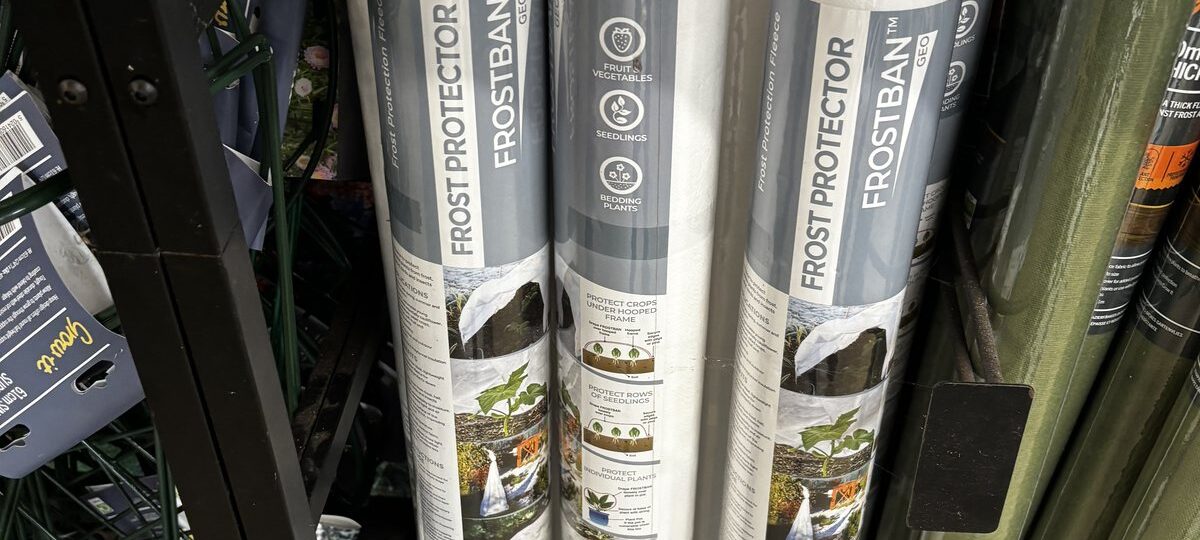
Kitchen Garden
January at the allotment doesn’t need grand gestures. It needs one small act of protection — done quickly, done well. After fifteen years of growing, the last three on an exposed East Sussex allotment, horticultural fleece has become one of the most-used items on the plot. It won’t turn winter into spring, but it does make the difference between crops that sulk and crops that keep quietly growing through the cold months.
Some of the links below are affiliate links: if you buy through them we may earn a small commission at no extra cost to you. As an Amazon Associate I earn from qualifying purchases. We only suggest things we would recommend to a friend — see our affiliate disclosure and how we research.
✉ Join the Dispatch — a calm weekly note, every Thursday. Free.
If you only do one thing before the next cold snap: cover one bed with fleece and pin it down properly.
Quick picks
Why Fleece Works (and What It Doesn’t Do)
On clear, still nights, the ground loses heat rapidly — that’s when frost bites hardest. Fleece reduces this heat loss and takes the edge off sudden temperature drops. On my East Sussex plot, where winter easterlies can drop the effective temperature several degrees below the air temperature through wind chill, fleece also provides meaningful wind protection for young or tender growth.
What it genuinely does:
- Buffers radiation frost (clear nights when everything feels colder than forecast)
- Reduces wind chill on exposed plots — significant on coastal sites
- Creates a slightly steadier microclimate that keeps hardy crops growing through cold spells rather than stalling
What it doesn’t do: it won’t save genuinely tender plants through a prolonged hard freeze, and it won’t help much if it’s flapping loose. Fleece works when it’s properly secured. A sheet that lifts in wind isn’t protecting anything — it’s just wearing itself out against whatever’s under it.
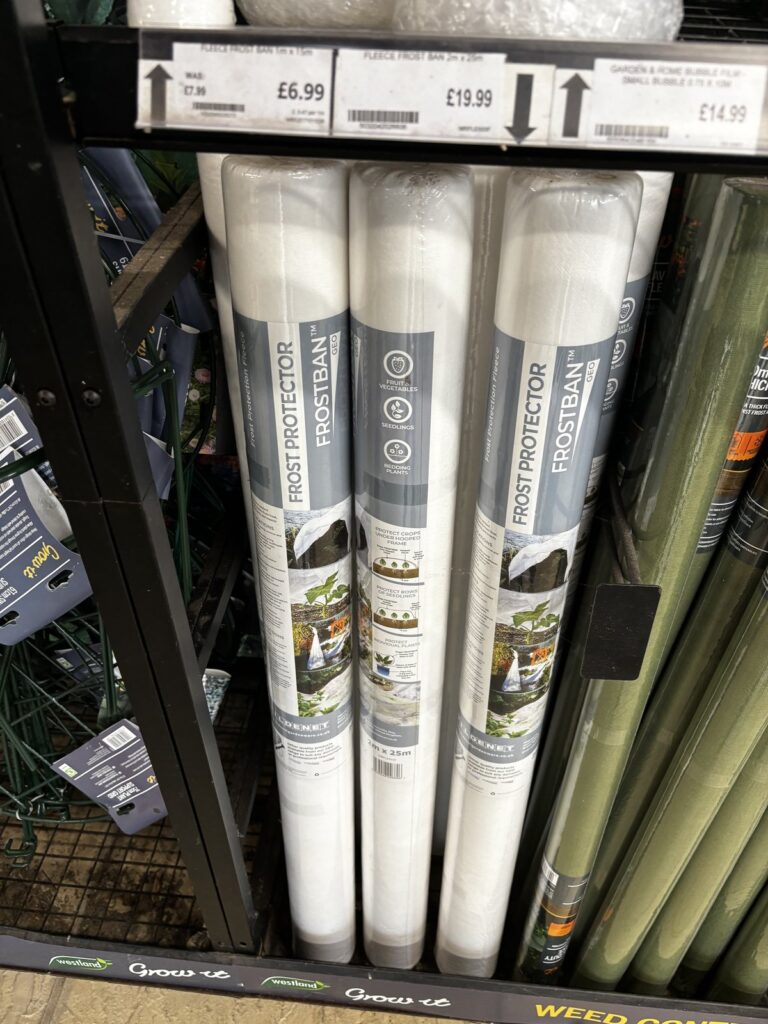
Buy fleece by the square metre, not by the roll — the shelf price hides which one is actually cheaper. At Tates in Newhaven on 29 August 2026 the small roll, 1m × 15m, was £6.99 reduced from £7.99; the large roll, 2m × 25m, was £19.99. That is about 47p a square metre against 40p — the big roll is roughly 14% cheaper for the same fleece. Fifty square metres sounds like far more than you need until you allow for the overlap at the edges and the slack you have to leave for the crop to grow into.
Choosing Fleece: Weight, Size and Supports
For general UK allotment use, 30gsm is the weight I’d recommend as a first purchase. It provides useful frost protection on most winter nights without being so thick that it blocks too much light in already-dim months. Heavier fleece (40–50gsm) makes sense for a very exposed or northerly plot, or for a hard cold snap forecast; lighter fleece (17–23gsm) is more useful as a pest barrier in spring and autumn.
| Weight | Best for | Trade-off |
|---|---|---|
| 17–23gsm | Spring/autumn, light frost nights, pest barrier | Less insulation on sharper frosts |
| 30gsm | UK winter “most days”, overwintering salads, beans, greens | Needs venting on mild sunny spells |
| 40–50gsm | Exposed coastal plots, hard cold snaps | Reduces light more; holds damp longer |
Support matters on exposed sites. Draping fleece flat over crops without hoops means the fabric eventually rests directly on leaves — poor airflow, more moisture, more risk of mould. Cloche hoops create an air gap that insulates better and reduces these problems. On a sheltered garden plot you can often get away without them; on an exposed coastal site they’re worth the small extra investment.
How to Apply Fleece Properly
- Cut generously: allow 15–20cm overlap on each side of the bed — you need enough to peg down securely without pulling the fleece drum-tight over the crop.
- Create a loose tent: a small air gap insulates better than fabric pressed directly onto leaves. Use hoops if you have them.
- Seal the edges: peg every 50–60cm along the sides. Double-secure corners, which take the most wind load.
- Vent on mild days: lift one side for an hour or two when temperatures rise to prevent moisture build-up and mould.
- Check after wind: a lifted edge undoes the protection entirely. On a coastal site I check the day after any significant gale.
Common fleece mistakes — and how to avoid them
- Leaving gaps at the edges: fleece flapping loose won’t protect anything. Peg every 50cm; weigh corners with bricks if the site is exposed.
- Pulling it drum-tight: a slight tent with an air gap insulates better than fabric pressed onto leaves.
- Forgetting to vent on warm days: a mild, wet January under sealed fleece creates perfect mould conditions. Lift one edge briefly when the weather improves.
- Covering a waterlogged bed and leaving it: fleece + damp soil + mild weather = fungal problems. Check what’s underneath periodically.
What to Cover First (UK Allotment Priority List)
On my plot, I prioritise in this order when fleece supply is limited or time is short:
- Young broad beans: especially if they’ve been battered by wind and cold rain. They’re hardy but a bad cold snap just after germination can check them for weeks.
- Winter salads: lamb’s lettuce, land cress, mizuna, winter lettuce — these keep producing through cold if protected, but stop entirely if hit hard by frost.
- Early sowings in modules: anything started under cover that’s about to be planted out benefits from a fleece layer over the bed for the first two weeks after transplanting.
- Overwintering brassicas: not because they’ll die, but because steady protection keeps them growing rather than just surviving.
Care and Re-use
- Dry before storing — even an hour draped over a fence saves you from unfolding a damp, mouldy mass next winter.
- Fold loosely and keep out of direct sun when stored — UV ages the fabric and makes it brittle.
- Patch small tears with tape before they spread into flapping holes that catch in wind.
- Replace when it looks tired: thinner, heavily snagged, noticeably less light coming through.
One bed at a time
The approach that works best: cover the most vulnerable thing first, do it properly, and extend the coverage gradually. One well-protected bed of broad beans through January is worth more than three poorly-secured sheets that lift in the first easterly. Start small, peg it down firmly, and check it after wind. That’s the entire system.
🏠 From the D&L Shop: Making your home warmer this winter? Our Winter Home Survival Guide covers heating, draught-proofing, condensation, energy bills, and keeping comfortable through the cold months — 11 pages, £8.99. Also free: the Sunday Reset Checklist (a calm weekly home reset, instant download). Browse the full shop →
🛡 Our standards: How we research · Editorial policy · Affiliate disclosure · Corrections · Last reviewed: July 2026

About Gareth
Gareth Isherwood is the editor of Danbury & Lovejoy. He has baked bread at home for 25+ years and has 15 years of growing experience across gardens, containers and other growing spaces, including an East Sussex allotment for the past three years. Read his full story →
Was this useful?