Condensation on windows is one of the most common moisture problems in UK homes — and one of the most fixable. It forms when warm, humid indoor air meets a cold glass surface, causing water vapour to condense into droplets. Left unaddressed, it leads to mould growth, rotting window frames, and structural damp.
Some of the links below are affiliate links: if you buy through them we may earn a small commission at no extra cost to you. As an Amazon Associate I earn from qualifying purchases. We only suggest things we would recommend to a friend — see our affiliate disclosure and how we research.
✉ Join the Dispatch — a calm weekly note, every Thursday. Free.
Quick answer: Condensation forms when warm, moist indoor air meets cold glass. Stop it with three moves: cut the moisture (lids on pans, run extractor fans, dry washing outdoors or with a dehumidifier), ventilate daily (trickle vents, or windows open ten minutes morning and night), and keep the glass warmer with steady low background heat overnight rather than short blasts. A dehumidifier clears the worst overnight, and wiping the panes each morning stops mould taking hold while you fix the cause. (figures reviewed July 2026)
Part of our Draught-Proofing Hub — the complete UK guide to doors, windows, letterboxes, chimneys, radiators and the cheap fixes that actually warm a home.
The good news: condensation on the inside of windows is almost always a ventilation and humidity problem, not a structural one. Every one of the fixes below addresses the root cause.
Fix 1: Ventilate Every Day
Opening windows for 10–15 minutes every morning — even in winter — flushes out the humid air that built up overnight. This single habit makes a noticeable difference within days. If your windows have trickle vents (the small slots at the top of the frame), keep them open year-round. They are designed for background ventilation and cause negligible heat loss.
Fix 2: Run a Dehumidifier
A dehumidifier actively removes moisture from the air, reducing indoor humidity to the level where condensation cannot form. The MeacoDry Arete One 20L is a well-reviewed option on Amazon UK — quiet enough for bedroom use and efficient enough to make a meaningful difference overnight. For single rooms, the Unibond Aero 360 is a no-electricity passive absorber well suited to wardrobes and smaller rooms.
Before you spend, get a cheap hygrometer to confirm your humidity is actually too high — and if it is, our dehumidifier picks for laundry rooms cut the damp at the same time.
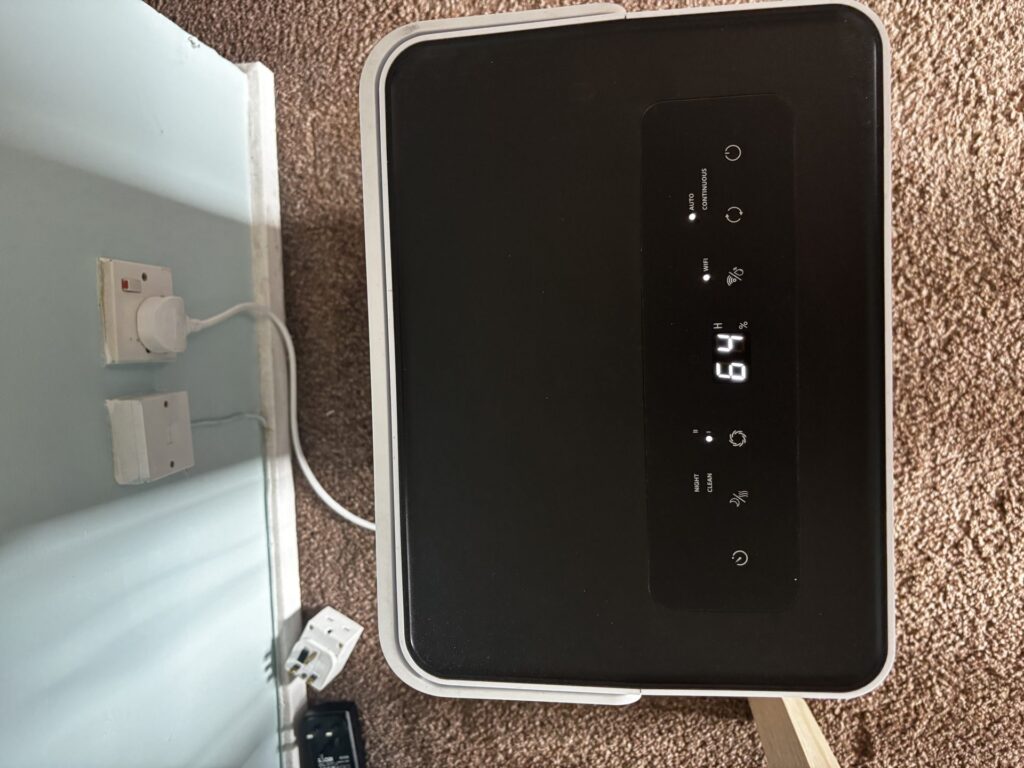
Getting the most from a dehumidifier
- Close the door so it works on the room where the condensation is worst, not the whole home.
- Stand it 1–2 metres from the window wall if you can, with its vents clear.
- Keep ventilating: open a window briefly after showers and cooking; a quick, full air change beats a window left on the latch.
- Run it when the moisture peaks: early evening and overnight catch most of it.
- Watch the hygrometer: aim for about 50–55%; once the room holds below about 60% on its own, you can run it for less time.
- In a cold or unheated room, a desiccant model copes better than a compressor one, which can ice up.
It helps most where moisture builds up and can’t get out: a closed room where laundry dries, bedrooms and living rooms that run wet every morning, and rooms with poor ventilation. If condensation only appears in one spot straight after a shower or cooking, better ventilation will usually sort it without one.
What it won’t fix on its own: cold air pouring in round doors and windows (that needs draught-proofing first), the chill of very cold glass (see Fix 7), or walls that stay wet because of a leak or damp in the structure (see below). And if moisture production is very high (several wet loads, cooking with no extraction), a dehumidifier will struggle unless the ventilation is improved too.
Fix 3: Keep Heating Consistent Overnight
Condensation peaks in the early hours before dawn, when glass surfaces are coldest. Keeping your thermostat at least 15°C overnight raises the window surface temperature enough to prevent condensation. Allowing rooms to go cold overnight and then heating sharply in the morning is one of the most common causes of heavy condensation.
Fix 4: Wipe Windows Each Morning
Wiping condensation off windows each morning prevents pooled water from soaking into timber frames and sills — the main route to rot and mould. A window vacuum makes this quick and mess-free. This treats the symptom rather than the cause, but it protects your home while you address the underlying humidity.
Fix 5: Use Extractor Fans When Cooking and Showering
Cooking and showering are the two largest single sources of indoor moisture in most UK homes. Run your extractor fan during and for at least 15 minutes after each. Keep kitchen and bathroom doors closed while generating steam to contain the moisture where extraction is available. If your bathroom extractor is weak or noisy, replacing it is one of the most cost-effective condensation fixes — see our guide to the best bathroom extractor fans.
Fix 6: Reduce Moisture at Source
Simple habit changes reduce the humidity load in your home significantly:
- Cover pans with lids while cooking — this alone reduces kitchen moisture substantially
- Avoid drying laundry indoors wherever possible — one load of wet washing releases around 2 litres of moisture into the air as it dries
- Keep shower times shorter and rinse down tiles with cold water before stepping out
- Ensure tumble dryers vent to the outside, not into the room
Fix 7: Improve Your Glazing
Condensation on the inside of windows is far more common with single glazing, which has a much colder surface temperature than double or triple glazing. If full replacement is not an option, window insulation film creates a secondary air gap and raises the glass surface temperature for a low upfront cost. Secondary glazing panels are a more durable option for period properties or rented homes.
Measure first
A cheap hygrometer tells you whether the problem is moderate or serious, and that decides the fix. At around 55–60% relative humidity, the habits above are usually enough; above about 70%, a dehumidifier in the worst room is the efficient answer. It took buying one for me to see that my own bedroom was hitting 74% overnight in winter. With a dehumidifier running, the morning condensation has reduced a lot, though it has never gone entirely.
A simple daily routine
- Morning: wipe the windows and sills, and open a window for five or ten minutes.
- Daytime: keep laundry in one closed room, and use lids when you cook.
- After showers: ventilate for five to ten minutes before closing the bathroom up.
- Evening: a short burst of cross-ventilation before you settle in for the night.
A 10-minute damp checklist
If you’re not sure what is driving the damp, a quick walk round the home usually points to the main cause before you spend anything. Work through it in this order.
- Feel for draughts. Hold a hand at ankle height along the bottom of external doors, then around window frames, sills and corners. Check internal doors between warm rooms and cold, unheated ones (a utility room, porch or store) too: cold air drifting through chills the walls it reaches, and those walls are where condensation forms. Our draught-proofing guide covers the fixes.
- Check the wet rooms. Hold a sheet of toilet paper against the extractor grille: if it doesn’t cling, the fan isn’t pulling enough air. Keep the bathroom door shut during a shower so the steam can’t drift into a colder hallway or bedroom, then open the window or run the fan afterwards.
- Look where the water collects. Bedroom windows first thing, kitchen tiles and glass, the wall behind a sofa on an outside wall, and wherever laundry dries. If it clusters where you dry clothes, the washing is the main source.
- Give the walls space. Pull wardrobes and sofas a few centimetres off outside walls, keep heavy fabric off radiators, and leave cupboard doors on outside walls slightly ajar so air can move.
- Take a humidity reading. Below about 60% is comfortable; above about 60%, cold surfaces start to collect condensation; above about 70%, expect wet windows most mornings and a real risk of mould. Much under 40% in winter, the air is drier than it needs to be.
What the checklist tells you:
- Wet glass every morning: daily ventilation and steadier overnight heat (Fixes 1 and 3 above).
- Cold moving air: draught-proofing first.
- Damp around the laundry: dry it in one closed room with a dehumidifier running.
- High humidity all through the home: better extraction and daily airing, then a dehumidifier in the worst room.
Black mould on walls
Black spots on walls, in corners or on the sealant round the bath mean a surface has been damp for a while. Deal with it promptly: mould can aggravate asthma, allergies and other breathing problems.
It usually starts where a cold surface meets still air: behind a wardrobe or sofa standing flush against an outside wall, in the window reveals (the sides of the window opening), in the corners furthest from a radiator, on the ceiling above the shower, and inside wardrobes kept shut against a cold wall. Moving furniture a few centimetres off the wall is often enough to stop it coming back there.
To clean it safely:
- Wear rubber gloves (ideally goggles and a mask too) and open a window.
- Don’t brush or scrub it dry, which sends spores into the air: dampen it first.
- Use a mould remover as the label directs, and never mix bleach with other cleaning products.
- Wipe it off, then dry the surface thoroughly and throw the cloth away.
Cleaning only removes what you can see. Unless the humidity comes down, the mould will return. Large patches, or mould that keeps coming back once the moisture is under control, point to one of the problems below.
When Condensation Signals Something More Serious
Surface condensation on the inside of windows is almost always a ventilation and humidity issue, not structural damp. However, if you also have damp patches on walls or ceilings, persistent mould that returns after cleaning, or condensation appearing between the panes of double-glazed units rather than on the surface, arrange a professional damp survey. Condensation between panes means the window seal has failed — the unit needs replacing, not surface treatment.
Two other kinds of damp look different from condensation. Rising damp shows as a tide mark or a white, salty bloom low down on ground-floor walls, and it stays whatever you do about ventilation. Penetrating damp shows as patches that grow after rain, often below windows, on chimney breasts or near gutters and downpipes, where water is getting in through the structure. Check the outside first: blocked or leaking gutters, cracked render and failed pointing are common causes, and a leaking pipe can mimic either. These need a repair, not a dehumidifier, so get an independent surveyor’s opinion before paying for any damp-proofing treatment.
One heater to avoid: portable bottled-gas (paraffin or LPG) heaters with no flue release a lot of water vapour as they burn, and make condensation much worse.
If you rent, damp that comes from the building (a leak, failed window seals, a broken extractor fan, rising or penetrating damp) is your landlord’s to fix. Report it in writing with dated photos, and keep a copy. If nothing happens, your local council’s environmental health or private housing team can inspect. In England, social landlords must now investigate and fix damp and mould hazards within set time limits under Awaab’s Law.
Window condensation FAQs
Why do I get condensation even when the heating is on?
Because condensation comes from humidity, not cold alone: humid air meeting any cold surface, windows included, condenses whatever the room temperature. The fix is less moisture in the air, plus steady background heat overnight, rather than simply turning the thermostat up.
Is window condensation harmful?
The condensation itself isn’t, but water sitting on the same surfaces day after day lets mould grow, particularly in corners and on sills. A daily wipe and lower humidity stop it progressing.
How long does it take to fix condensation?
With steady habits (a daily wipe, deliberate ventilation, laundry kept in one room), most homes see an improvement within a week or two, and a dehumidifier in the worst room speeds that up.
Should I buy a dehumidifier or just open windows more?
Ventilation comes first and often sorts out mild cases. If condensation is persistent or you dry laundry indoors, a dehumidifier adds capacity that ventilation alone can’t match in winter. The two together work best.
How do you get rid of black mould on walls?
Wear gloves and open a window, dampen the mould rather than scrubbing it dry, and wipe it off with a mould remover used as the label directs, then dry the surface thoroughly. Cleaning only removes what you can see, so bring the humidity down too or it will come back.
🛡 Our standards: How we research · Editorial policy · Affiliate disclosure · Corrections

About Gareth
Gareth Isherwood is the editor of Danbury & Lovejoy. He has baked bread at home for 25+ years and has 15 years of growing experience across gardens, containers and other growing spaces, including an East Sussex allotment for the past three years. Read his full story →
Was this useful?