Choosing quick crops to harvest by early summer is one of the most satisfying parts of spring planning — you sow in March or April and eat before the end of June. This guide covers the most reliable fast-turnaround crops for a UK plot. For full sowing timing, see our March sowing guide. The RHS quick-growing vegetables list covers a wider range of options.
One of the best things about March and April sowing is that several crops can be on your table by June — sometimes by May. These are the quickest-growing vegetables and salads you can start now and enjoy well before midsummer.
The first harvests from my East Sussex allotment each year are radishes and salad leaves — usually ready in late April if I sow in mid-March. That first picking is disproportionately satisfying after a winter of waiting. Everything below is on the plot or in the garden, producing something edible, well before the main season gets going. These are the crops that prove the season has properly started.
Radishes — 4 to 6 weeks from sowing
The ultimate fast crop. Sow outdoors in March and you’ll be harvesting by late April. So reliable they’re the perfect crop for rebuilding confidence after any failures. I use radishes as gap-fillers across the whole plot — wherever a space opens up between larger plants, a short row of radishes goes in. Cherry Belle and French Breakfast are classic varieties; both perform well in cool East Sussex spring conditions.
Sow a succession every two weeks for continuous harvests — a single sowing runs out quickly, but fortnightly sowings give you radishes through to July.
Lettuce and salad leaves — 5 to 8 weeks
Sow outdoors from March onwards and you’ll pick your first leaves in late April. Use the cut-and-come-again method — snip outer leaves and the plant keeps producing for weeks. Salad leaf mixes (mesclun or mixed leaves) can be ready in as little as 5 weeks. Container-friendly and productive; a 30cm pot produces more salad per week than most households need. I succession sow a small pot every fortnight from March to August.
Spring onions — 8 weeks
Very low maintenance once germinated. Sown in March, ready from late May. Broadcast densely or space 5cm apart and harvest every other plant to give the rest room to grow. Sow successionally every two weeks — spring onions flower and become unusable if left too long, so consistent re-sowing matters. The succession habit takes about five minutes and gives you spring onions all season.
Peas — mange tout and snap peas — 10 to 12 weeks
Early varieties sown in March produce in early June. Mange tout (eat the whole pod) and snap peas (eat the immature pod) are quicker than harvesting full-sized peas. Support is essential — peas need a trellis or stakes — but once they start flowering, they produce for weeks with regular picking. Hazel sticks make near-free supports, and the combination of quick harvest and near-zero support cost makes mange tout one of the best-value crops you can grow.
Spinach and chard — 6 to 8 weeks to first pick
Both ready in 6–8 weeks if you pick outer leaves. Sown in March, harvesting by May. Spring spinach is less likely to bolt than summer spinach — spring sowing is ideal. Chard is more heat-tolerant and produces right through summer and into autumn. One plant in a 30cm pot will feed you for months with regular harvesting. Rainbow chard is also decorative enough for a border or patio pot.
Beetroot — 8 to 10 weeks
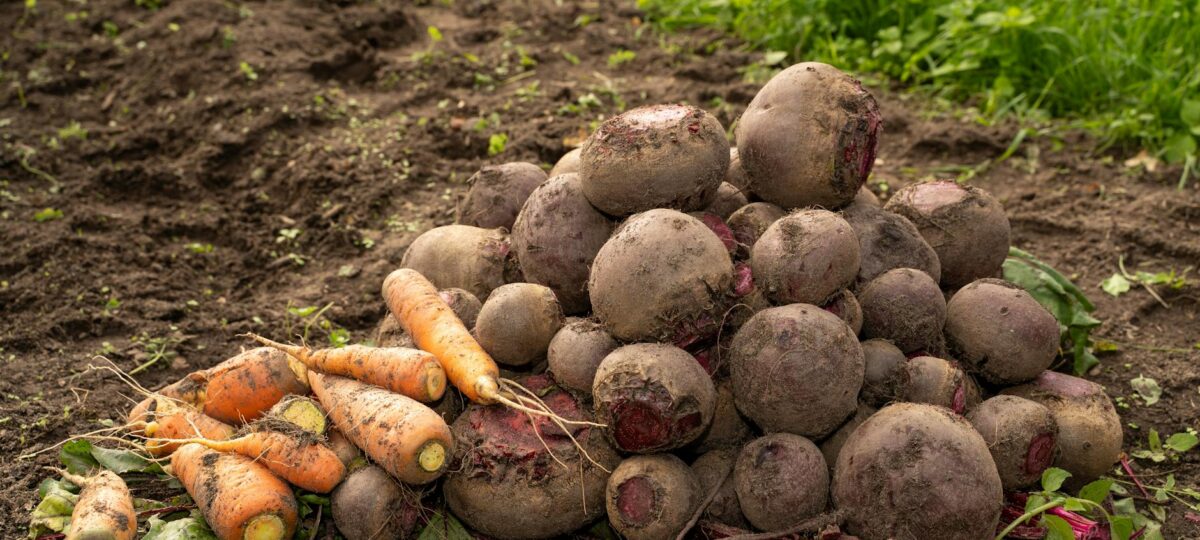
Direct sow in late March or April and harvest golf-ball-sized beets by early June. At this size they’re sweet and tender — better than larger roots in most cooking. Leave them longer if you prefer bigger beets, but I always pull some early. Reliable on chalk soil. Sow successionally every two weeks, and pick the young leaves as a spinach substitute while waiting for the roots.
Broad beans — sown Feb/March, harvest June
If you started broad beans in February or March, they’ll be flowering and producing by June. This is one of the most genuinely satisfying early harvests — the pods are heavy, the beans sweet and tender, and a single row produces generously for four to six weeks. Pinch out the growing tips once the lower flowers have set pods — this encourages pod development and deters blackfly, which always target the soft growing tips first.
What’s the quickest vegetable to grow from seed in the UK?
Radishes — ready in as little as 4 weeks from sowing outdoors. Salad leaves are close behind at 5–6 weeks and keep producing once cut.
Can I get a harvest before June if I start in April?
Yes — salad leaves and radishes sown in April can be harvested by late May. Spring onions will be ready by mid-June, and spinach by the end of May with a warm April.
The early-season harvest rhythm
Radishes and salad in April; spring onions and spinach in May; mange tout and broad beans in June. That three-month sequence — built from a few packets of seeds and a couple of hours in March — is the foundation of a productive growing season. The harvests overlap and reinforce each other; by June the garden is properly in production.
📋 From the D&L Shop: Planning your growing year? Our Your First Year on the Allotment guide covers every month from clearing the plot to your first proper harvest — written from 15+ years of UK growing experience. £9.99, instant PDF download. Also useful: the Allotment Plot Planner (£4.99) for mapping beds and planning crop rotation. Browse the full shop →
🛡 Our standards: How we research · Editorial policy · Affiliate disclosure · Corrections · Last reviewed: April 2026

About Gareth
Gareth Isherwood is the editor of Danbury & Lovejoy. He has baked bread at home for 25+ years and has 15 years of growing experience across gardens, containers and other growing spaces, including an East Sussex allotment for the past three years. Read his full story →
Was this useful?