Reviewed September 2026.
If your air fryer has a setting called Dry, or Dehydrate, it is not a gimmick. It is the machine doing the least dramatic thing it knows how to do: running the fan with barely any heat behind it. That is also, more or less, the whole job description of a food dehydrator — warm air, moving steadily, for hours. The two appliances are closer relatives than the marketing on either suggests.
So the honest answer to the question is yes, with one large qualification that has nothing to do with whether it works. It is about how much you can do at once. If you want the full method for apple rings — the slice thickness, the lemon water, the test for doneness — that lives on our guide to drying apples in a dehydrator, and every word of it transfers. What follows is only the part that changes when the machine is an air fryer, and it sits alongside the rest of the air fryer cooking guide.
Why the method transfers at all
Drying fruit is not cooking it. There is no browning to chase and no core temperature to reach. You are removing water slowly enough that the outside of the slice does not seal before the middle has given its moisture up — and that is entirely a question of low heat plus air movement, which is the one thing every air fryer is built to do well.
What a dehydrator gives you is a lot of shelf area and a gentle, even draught across all of it. What an air fryer gives you is a small amount of shelf area and a briskly moving one. Neither of those is better in the abstract. They just suit different amounts of fruit.
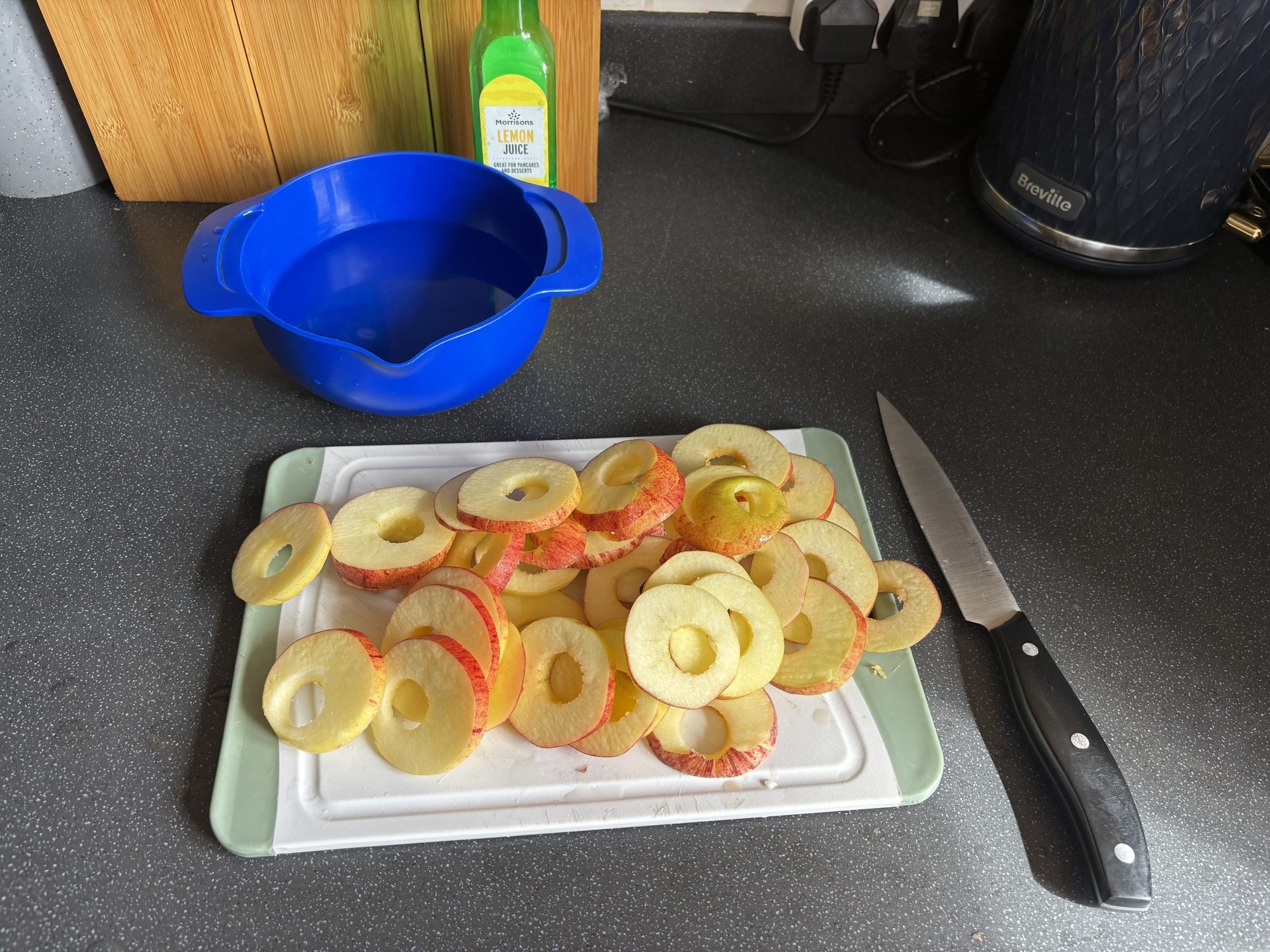
The one number that decides whether this is for you
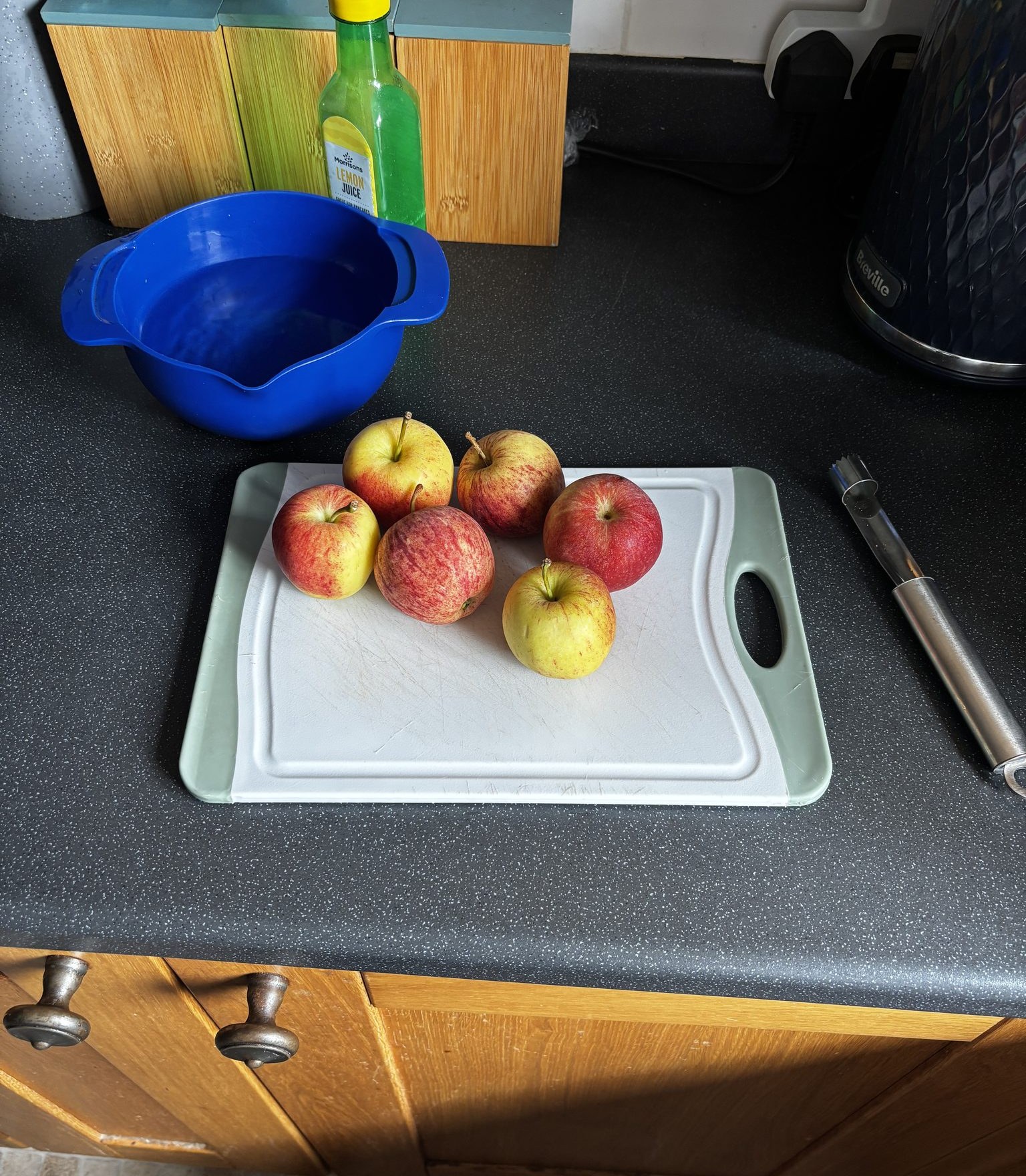
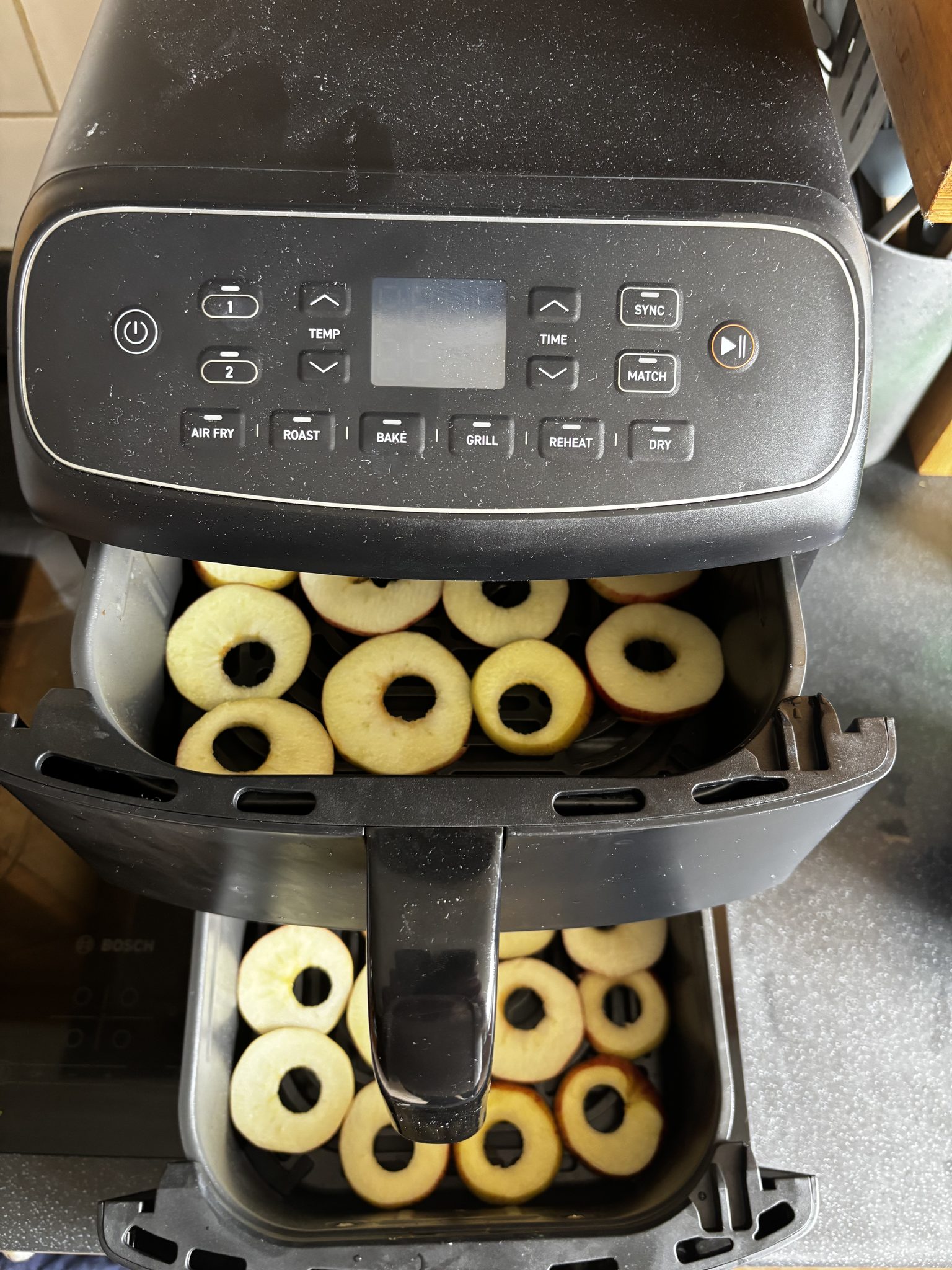
A drawer takes about a dozen apple rings in a single layer. Two drawers, two dozen. Call it half a dozen small apples to fill the machine.
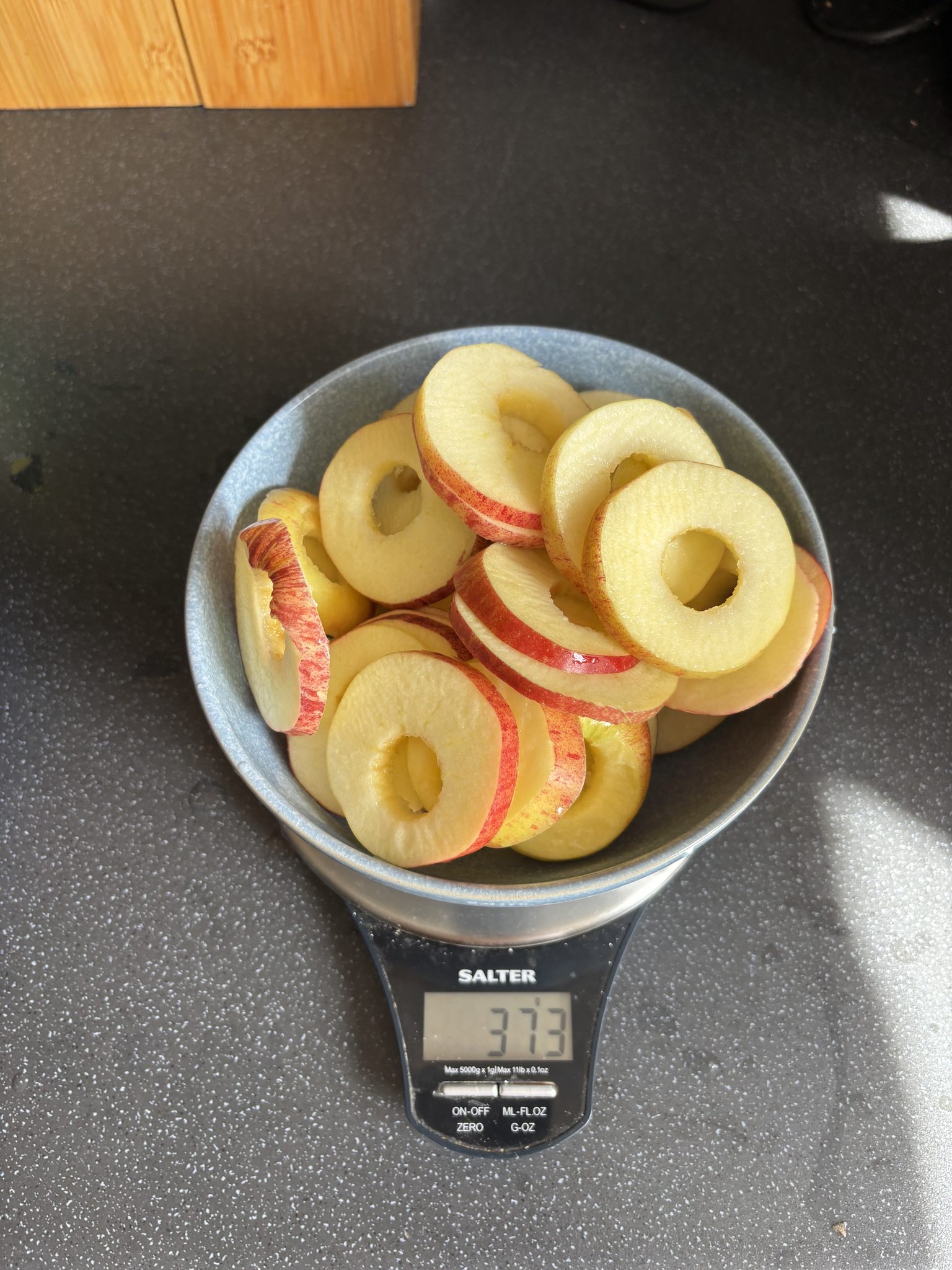
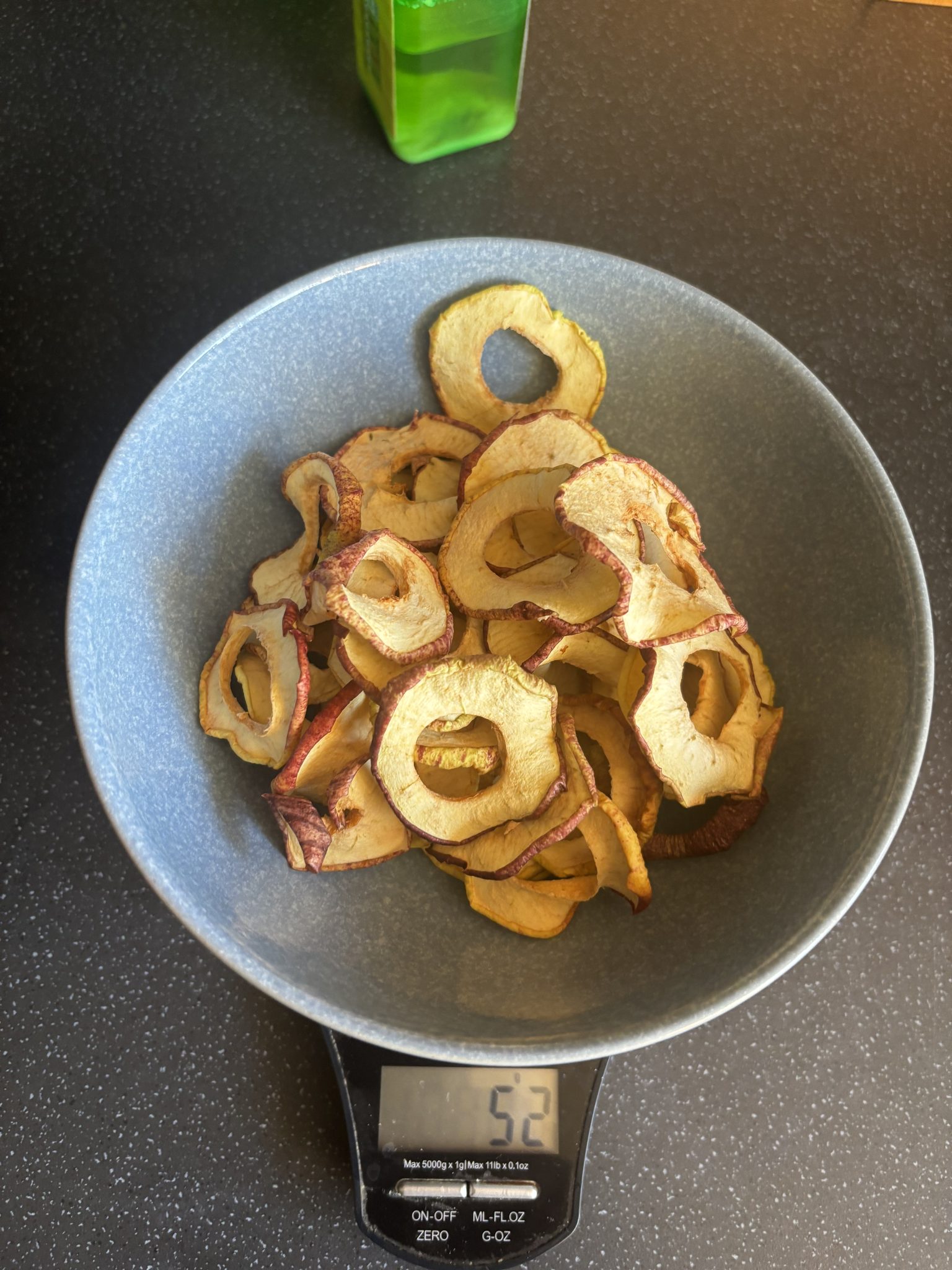
Now put that next to the batch on the dehydrator guide: a kilogram of apples, which gives you about 150 g of dried rings and fills a medium jar. A kilogram is a little over two full loads of a two-drawer machine — and because each load takes most of a day, that is not an afternoon’s work, it is a weekend’s.
It is worth knowing that this limit is about area rather than weight, which is why bigger apples do not help. A drawer holds what a drawer holds; slice a larger apple and you get wider rings, so fewer of them fit side by side. However you divide a kilogram of apples up, it needs about the same amount of shelf to dry on.
That is the real verdict, and it is not really about drying at all. An air fryer is an excellent way to find out whether you like dried apple, to use up the four apples nobody is going to eat, or to do a jar’s worth at a time through the autumn. It is not the answer to a tree in the garden.
Single layer, and mean it
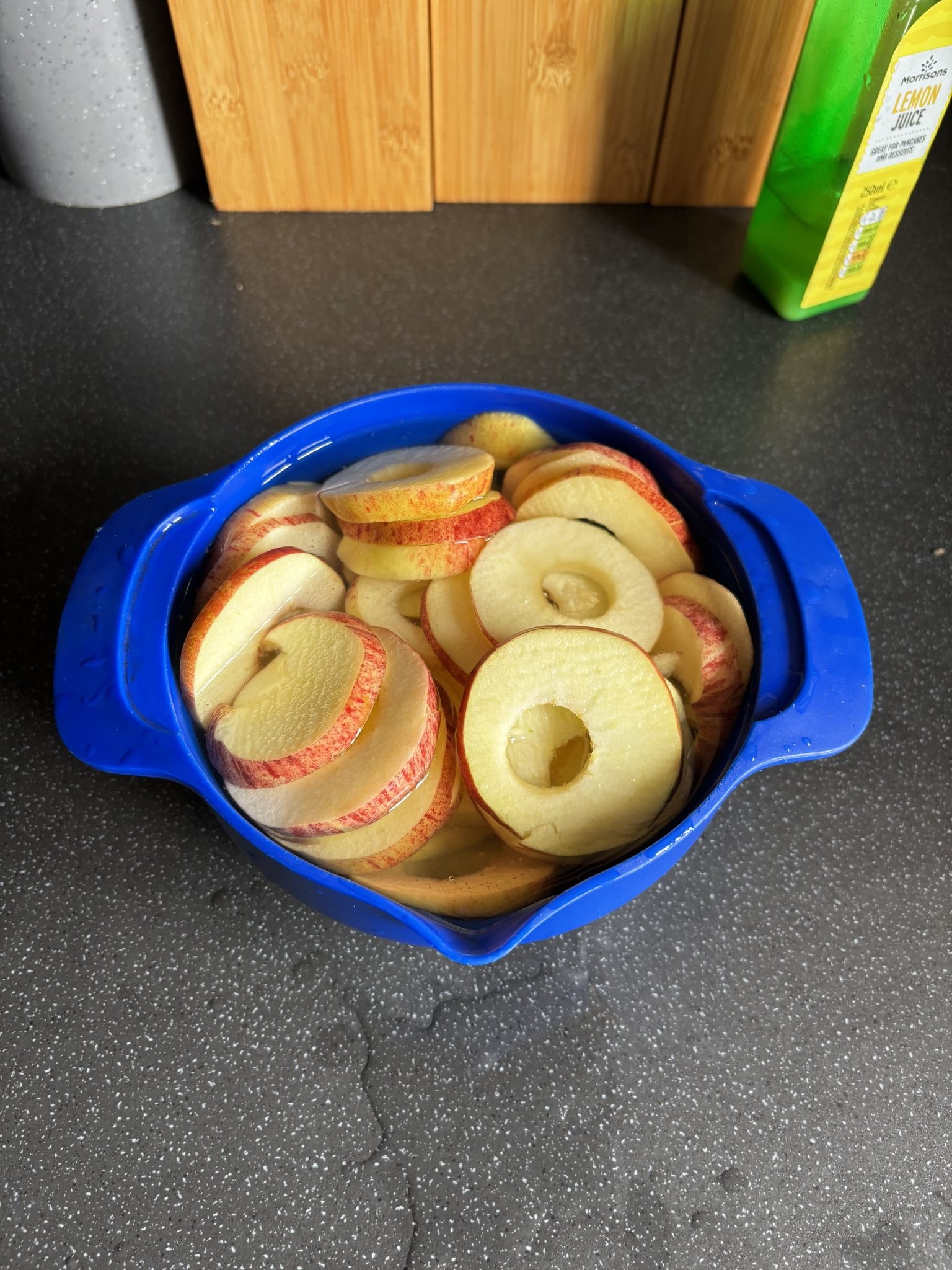
The temptation with a small drawer is to overlap the rings to get more in. It is the one shortcut that will spoil the batch rather than merely slow it.
Air has to reach both faces of every ring. Where two rings touch, the join stays wet long after the rest is done, and a wet patch in a jar of otherwise dry fruit is how the whole jar spoils. A single layer with the rings not quite touching is the whole technique. If that means fewer rings and another run, that is the trade you are making by using this machine, and it is better made deliberately.
The rings will also move. A briskly moving fan is fine with a heavy wet ring and much less respectful of a dry light one, and by the end of a run the slices weigh very little. If yours are shifting and stacking themselves against one edge, a rack or a perforated liner in the drawer will hold them still — and some machines come with one for exactly this.
Start checking earlier than you would with a dehydrator
The dehydrator guide says to start checking at six hours. On an air fryer, start looking at four.
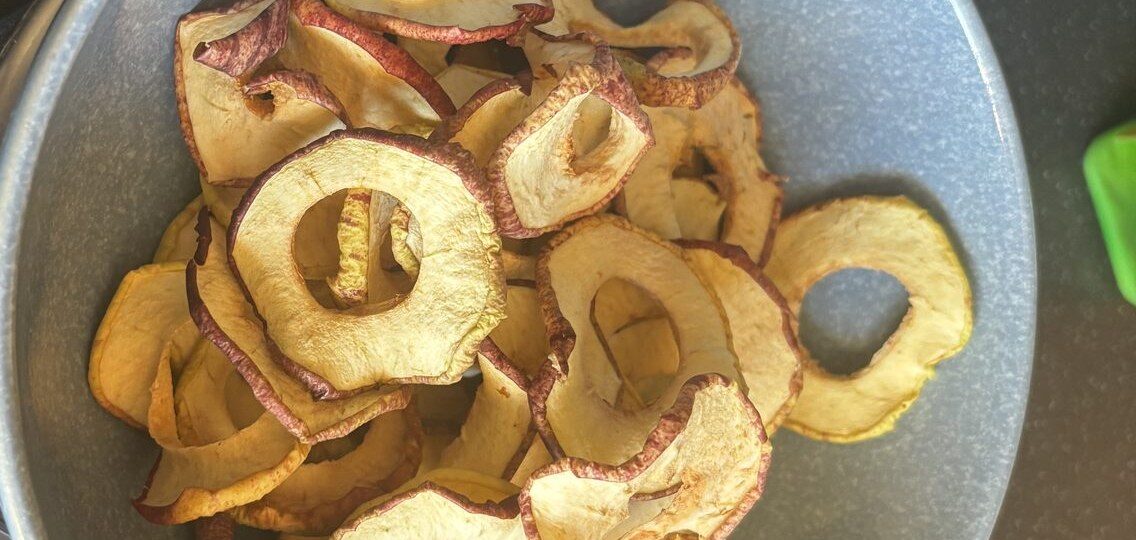
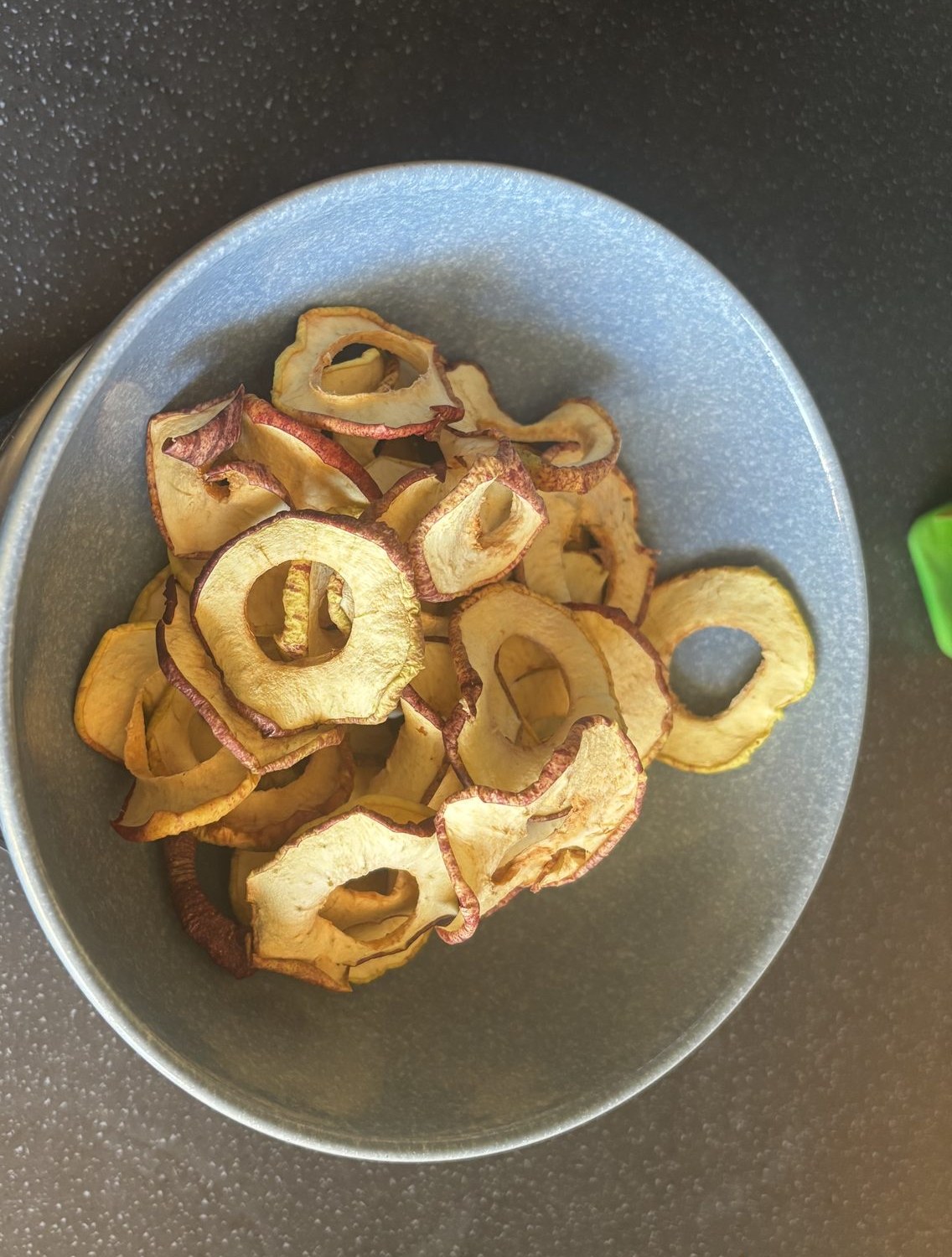
The reason is that faster draught. The same temperature with more air moving over it will get you to done sooner, and apple has a narrow window: it goes from pliable to brittle faster than you expect, and there is no way back. The target on the dehydrator guide is the right one here too — a finished ring is pliable but leathery. Bend one in half and look for any pocket of moisture in the fold. If it is wet, it goes back for another hour. If it snaps, you have gone past leathery into crisp.
Crisp is not a disaster. Apple crisps are a perfectly good thing to have made, and they keep. But they are not what the recipe was aiming at, they will not rehydrate into anything you want in a crumble, and if you were drying for storage you have lost the texture you were drying for. With a machine that runs this briskly, the difference between the two is about an hour of not looking.
One other thing worth knowing before you set a long timer: the setting is not the whole story. A Dry function may well let you set a timer far longer than any fruit needs, which is convenient and also slightly misleading — a timer running to its end is not evidence that the fruit needed that long. Judge by the bend test, not the clock, and take them out when they are right rather than when it beeps.
Where it can go wrong, and it is the same place
If your rings come out hard on the outside and still moist when you bite into them, the temperature was too high, and the fix is the same as it is on any machine — drop it and give them longer. The dehydrator guide’s note on case-hardening covers this properly, and it is worth reading before your first run rather than after it. The short version for fruit is that the low end of the range is where you want to be, and that the faster air makes a too-high setting bite sooner than it would in a dehydrator.
Afterwards, do not skip the boring part
Cool them completely before they go anywhere near a lid. Then condition them: loose in a jar for the best part of a week, shaken daily, and any moisture that appears on the glass means they were not as dry as they looked and need another hour. That step is on the dehydrator guide in full and it is the same regardless of what dried them — it is the difference between fruit that keeps for a year and fruit that grows something in November.
So: worth using, within its limits
If you have an air fryer with a Dry setting and a few apples, use it. It genuinely does the job, the method from the dehydrator guide carries over almost unchanged, and the only adjustments are to look earlier and to accept a smaller batch.
If you have a tree, or a neighbour with a tree, the arithmetic above is the answer: you want shelf area, and that is what a dehydrator is for. Our round-up of food dehydrators looks at five of them at different price points, and the thing to compare is tray area rather than anything on the front of the box. For everything else these machines can do, the air fryer cooking guide is the place to start.
If you are choosing an air fryer and drying matters to you, our review of a stacked two-drawer model has a section on its Dry setting.
Was this useful?