Tomatoes are one of the most satisfying things you can grow from seed, and also one of the most fussed-over. Most of the anxiety is unnecessary. The process is straightforward once you know the honest version — the one that accounts for imperfect windowsills, patchy UK springs, and the fact that most people don’t have a heated greenhouse. This guide is that version.
I grow my tomatoes from seed every year. Sow too early and the seedlings turn leggy and struggle on a dim windowsill; a mid-March sowing usually gives sturdier plants by May than an early-February batch ever manages. In the UK, later is almost always better than earlier.
Some of the links below are affiliate links: if you buy through them we may earn a small commission at no extra cost to you. As an Amazon Associate I earn from qualifying purchases. We only suggest things we would recommend to a friend — see our affiliate disclosure and how we research.
✉ Join the Dispatch — a calm weekly note, every Thursday. Free.
When to sow tomatoes in the UK
The standard advice is late February to mid-April, with earlier sowings only worthwhile if you have a heated propagator and a genuinely light windowsill or greenhouse. A bright south-facing windowsill works for most people if you sow from mid-March onwards — the seedlings won’t get leggy, and you won’t be fighting to keep them alive through the coldest part of late winter.
In the north of England and Scotland, the last frost typically falls later, so aim to sow closer to late March or early April, and don’t plant out until the end of May or early June. In East Sussex, mid-March sowing gives plants ready for a greenhouse or cold frame at the end of April, and for the ground or large pots after the mid-May last frost date.
What you need before you start
The list is short. You need seed compost (not general-purpose — it’s too coarse and too nutrient-rich for seeds), small pots or a module tray, a warm spot for germination, and a light windowsill for growing on. A propagator lid or a clear plastic bag over the pots helps germination but is not essential if the room is warm enough — above 18°C is ideal.
One thing most guides understate: the difference between seed compost and multipurpose compost is real. Seeds sown in rich multipurpose compost often germinate then stall — too many nutrients for small roots to handle, and the texture doesn’t drain freely enough. Use proper seed compost and your germination rate will be noticeably better.
Sowing step by step
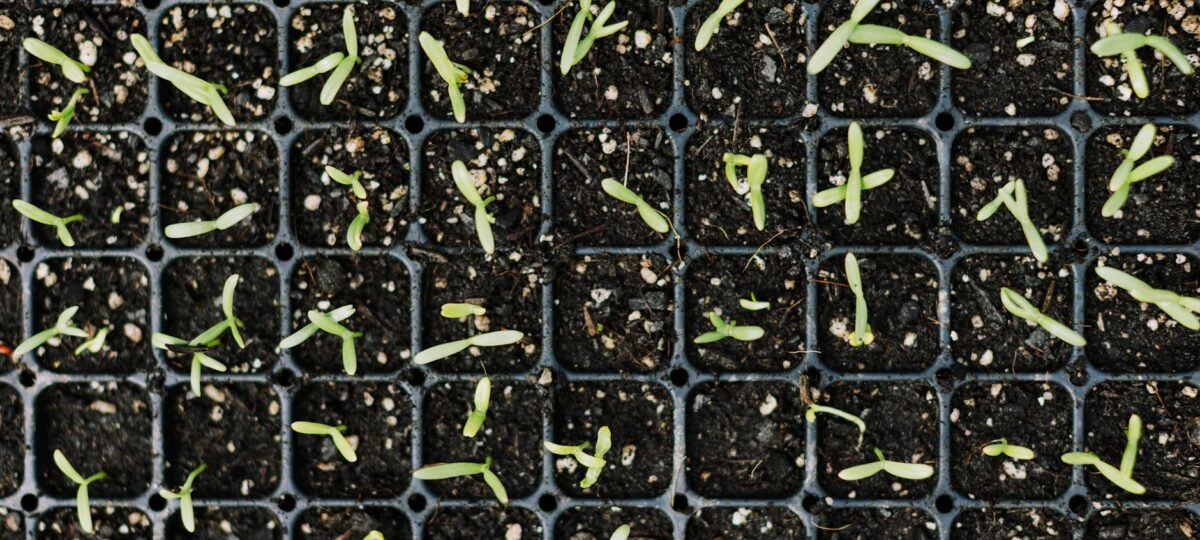
Fill small pots or a module tray with seed compost and firm it down lightly. Water it before you sow, so the compost is moist but not wet. Place two seeds per cell or small pot, about 1cm deep. Cover with a little more compost, label clearly, and put somewhere warm — a propagator, an airing cupboard, or the top of a fridge. Check daily. Most tomato seeds germinate within five to ten days.
Once the seedlings have emerged, move them to your lightest windowsill immediately. They need as much light as possible to avoid becoming thin and leggy. Thin to one seedling per pot once they have their first true leaves. On a south-facing windowsill in late March, seedlings stay compact and sturdy; on a less bright sill, turn them daily to stop them leaning toward the glass.
Potting on and growing on
When the roots start showing at the bottom of the pot or the plant looks noticeably bigger than its container, it’s time to pot on. Move into a 9cm pot, then a 12cm pot, then a final growing container — a large pot, grow bag, or greenhouse border — once the risk of frost has passed. In most of the UK this means after mid-May, or late May to early June in cooler regions.
Tomatoes need consistent watering once they’re in larger containers, regular feeding with a high-potash fertiliser once the first flowers appear, and for cordon varieties, weekly pinching out of the side shoots. Bush and trailing varieties need no pinching and are more forgiving for beginners. With a greenhouse you can grow both: cordons under glass for maximum flavour, bush types in large pots outside for convenience.
Four reliable varieties for UK gardens
Four varieties worth growing
- Gardener’s Delight — the reliable classic. A prolific cherry tomato with a good balance of sweetness and tang. Performs well even in a mediocre British summer.
- Tumbling Tom — ideal for hanging baskets and containers, requiring no pinching and producing cascades of small fruit. Good for anyone without a greenhouse or large growing space.
- Moneymaker — a no-nonsense medium tomato that has been grown in British gardens for generations. It doesn’t win flavour competitions but it’s forgiving, disease-resistant, and consistent. Good first-year choice.
- Sungold — grow this if you want something genuinely special. Golden-orange cherry tomatoes with exceptional sweetness. Benefits from a warmer spot or a greenhouse; worth the extra attention.
Hardening off before planting outside
Tomatoes grown indoors need a gradual transition before going outside. About two weeks before your planting date, start putting the plants outside for a few hours each day in a sheltered spot — increasing the time each day. Bring them in if it gets cold at night. This process, called hardening off, prevents shock and significantly improves survival rates.
On the East Sussex coast this matters particularly because the sea breezes can be cool and surprisingly strong even in May. I harden off against the south-facing wall of my 6×4 shed, which gives shelter and reflected warmth, for ten days before any tomato plant goes into its final position.
Useful picks
Thompson & Morgan carry an excellent range of reliable UK tomato varieties including Gardener’s Delight and Sungold. They also stock grow bags, propagators and module trays if you need any of the kit.
Affiliate link — we may earn a small commission at no extra cost to you.
Browse tomato seeds and plants at Thompson & Morgan →
Some links in this guide are affiliate links. If you buy through them we may earn a small commission, at no extra cost to you.
The short version for UK tomato growers
Sow later than you think you should — mid-March is almost always the right call for most UK growing conditions. Use seed compost, not multipurpose. Don’t let seedlings get leggy on a dim sill. Harden off properly. Feed once flowers appear. These five things, done consistently, will get you a better harvest than any fancy variety or expensive propagator. Gardener’s Delight in a sunny spot is all most people need.
📋 From the D&L Shop: Planning your growing year? Our Your First Year on the Allotment guide covers every month from clearing the plot to your first proper harvest — written from 15+ years of UK growing experience. £9.99, instant PDF download. Also useful: the Allotment Plot Planner (£4.99) for mapping beds and planning crop rotation. Browse the full shop →
Short on bed space? Tomatoes do just as well in large pots or grow bags.
🛡 Our standards: How we research · Editorial policy · Affiliate disclosure · Corrections · Last reviewed: August 2026

About Gareth
Gareth Isherwood is the editor of Danbury & Lovejoy. He has baked bread at home for 25+ years and has 15 years of growing experience across gardens, containers and other growing spaces, including an East Sussex allotment for the past three years. Read his full story →
Was this useful?