August is really two months wearing one name. The first half is the last of high summer — tomatoes that actually taste of something, beans faster than you can pick them, everything eaten outdoors and barely cooked. Then somewhere around the third week the light changes, the first blackberries come good in the hedge, the plums start dropping, and the kitchen quietly turns towards crumbles and preserving pans. It is the only month where the summer glut and the first autumn fruit are on the table at the same time.
It is also, for anyone who grows anything, the month with the least time to cook and the most to cook with. So this is less a list of recipes than an order of priorities: what to deal with first, what will wait, and what is worth putting away for a January that will be glad of it.
First, the glut — and where it is already covered
If you grow vegetables, August arrives as a courgette problem, a tomato problem and a bean problem, usually in the same week. Those three need dealing with before anything else here, because they will not wait and the plants keep producing while you think about it. Rather than repeat ourselves, both have their own plan: what to do with a courgette and tomato glut covers the fritters, the roasted sauce and the freezing, and the runner bean glut plan covers blanching, slicing and what to do with the ones that got away from you. Work through those first; the rest of this is what comes next.
Plums and damsons
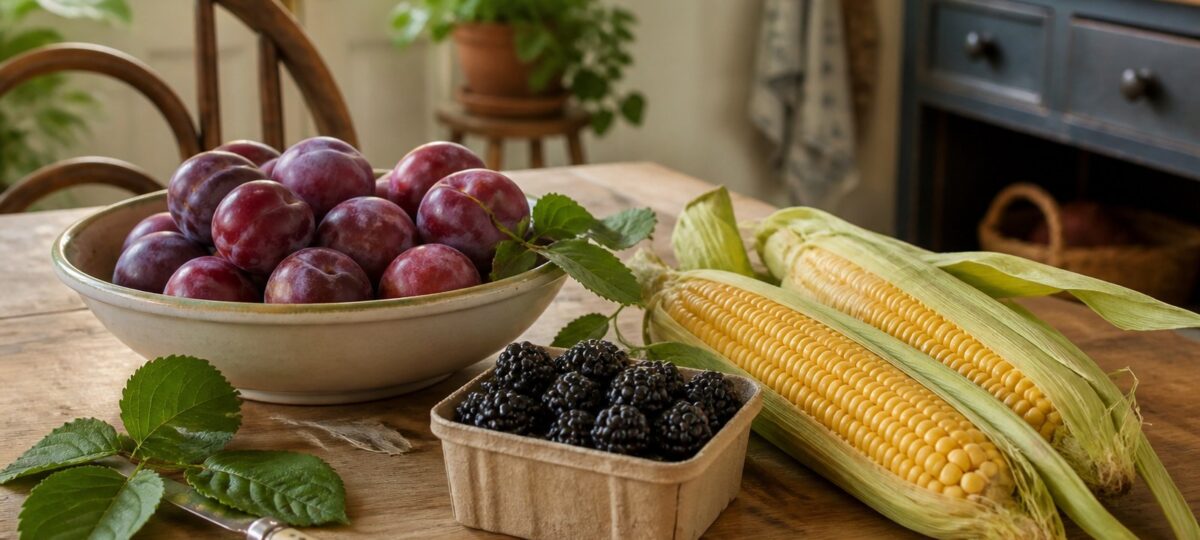
The Victoria plums usually start in the last week or so of August and they do not hang about — a tree goes from not quite ready to windfalls underfoot in about ten days. Eat the good ones raw while they are perfect, because a ripe English plum in season is one of the genuinely great things and it is over quickly. Everything bruised, split or picked up off the grass goes straight into cooking.
Halved and stoned, they roast beautifully with a little sugar and go into a crumble with almost no work — our seasonal crumble is built to take whatever the month is offering. They also make a very good jam without much fuss, since plums carry a decent amount of pectin of their own, especially any that are slightly under-ripe. Damsons are smaller, sharper, a nuisance to stone and worth every minute: they set more reliably than almost any other fruit and make the best dark jam of the year. If you have never made one, the preserving equipment guide covers what is worth owning if you are going to do it every year.
For the freezer: halve and stone before freezing, never after. A frozen plum is almost impossible to stone and you will not enjoy finding that out in November. Open-freeze the halves on a tray, then bag them once solid.
Blackberries
Free fruit, in quantity, for the cost of scratched forearms. Pick from early or mid August, and take the big berry at the tip of each cluster first — it ripens before the others and is markedly sweeter. Pick in dry weather if you can; wet berries collapse and go mouldy within a day, which is how most foraged fruit actually gets wasted.
Blackberries freeze better than almost anything: spread them on a tray, freeze solid, then bag. They keep their shape, and a bag of them in February turned into a crumble is the whole argument for a freezer. If you would rather preserve than freeze, they make a straightforward jam, and a blackberry and apple combination is the classic for good reason — the apples bring the pectin the blackberries lack.
Sweetcorn
Sweetcorn is the one where timing genuinely matters. It begins converting its sugar to starch the moment it is picked, which is why a cob eaten within an hour of cutting is a different vegetable from one that has sat in a lorry. If you grow it, put the water on before you go down the garden. If you do not, buy British in August and September and eat it the same day.
Boiled six minutes and eaten with butter needs no improvement. For a surplus, blanch the cobs for four to six minutes and freeze them whole, or strip the kernels after blanching and freeze those — a fraction of the space, and they go straight from frozen into chowder, fritters or a rice dish.
What is actually cheap this month
August is the one month of the year when the cheapest produce in the shop is also the best, which is emphatically not true in February. Tomatoes are worth eating raw. Cucumbers, courgettes, beans, beetroot and British sweetcorn are all at their lowest, and the first English apples — Discovery, usually — arrive towards the end of the month. If you buy nothing else on the seasonal argument all year, buy tomatoes in August.
The corollary is what to leave alone. Anything forced, imported or out of its season is both expensive and worse now, and root vegetables that will be far better and cheaper in two months can wait. There is more on the year-round version of this thinking in our guide to eating with the seasons.
Putting August away
Almost everything in this list freezes, and August is the month to be ruthless about it, because September brings its own work and you will not come back to this. Roasted tomato sauce in flat bags, blanched beans and sweetcorn, open-frozen plums and blackberries, and whatever fruit did not make it into a jar. If you are freezing seriously, getting the air out is what decides whether it is still good in the spring — the best vacuum sealers do more work in this one month than in the rest of the year combined. Drying is the other route, and a dehydrator handles a heavy tomato or apple crop without you standing over an oven in a warm kitchen.
And then it turns
By the last week of August the evenings are noticeably shorter, the tomatoes are slowing, and you will find yourself wanting something baked for the first time in months. That is the signal to stop trying to keep summer going and start cooking the other half of the year — the crumbles, the first soups, the oven back on. For what needs doing outside while all this is happening, our August jobs on the plot has the running order.
August cooking FAQs
What is in season in August in the UK?
August is the fullest month of the British year. From the plot: tomatoes, courgettes and marrows, runner and French beans, cucumbers, beetroot, carrots, sweetcorn, onions and garlic curing, and the first maincrop potatoes coming up. From the hedge and the orchard: blackberries, early apples, and towards the end of the month the first Victoria plums and damsons. It is the only month where the summer glut and the first autumn fruit overlap.
How do you freeze plums?
Halve and stone them first — a frozen plum is very difficult to stone and you will regret skipping it. Open-freeze the halves cut-side up on a tray, then bag once solid so they do not weld into a block. They come out soft, so use them for crumbles, compotes and jam rather than expecting to eat them raw.
When should you pick blackberries?
From early or mid August through September, taking the biggest berry at the tip of each cluster first — it ripens ahead of the rest and is the sweetest. Pick in dry weather if you can, because wet berries collapse and go mouldy within a day. The old advice not to pick after Michaelmas is folklore rather than food safety, but there is something in it: by October the fruit is genuinely poorer and more often maggoty.
Can you freeze sweetcorn?
Yes, and it is worth doing because sweetcorn starts converting its sugar to starch the moment it is picked. Blanch whole cobs for four to six minutes, cool them in cold water, dry and bag. If freezer space is tight, strip the kernels off after blanching and freeze those instead — they take up a fraction of the room and go straight from frozen into soups and fritters.
What should I cook in August if I do not grow anything?
Buy what the growers have too much of, because that is what is cheap. In August that means tomatoes worth eating raw for once, British sweetcorn, courgettes, beans, cucumbers and the first English apples and plums. It is the one month of the year when the cheapest produce in the shop is also the best, which is not true in February and is worth taking advantage of.
What the kitchen is doing in August is only half of it; five small things earning their keep at ours covers what the plot and the house are up to in the same weeks.
And when the tomatoes finally give out, what to cook in autumn picks the year up again at squash, apples and the first of the roots.
Was this useful?